



Cardiology
Latest News
Advertisement
Video Series
Latest Videos


Shorts

0:45
Why You Shouldn't Rely Only on Office Blood Pressure Checks
13 days ago
by
Keith C. Ferdinand, MD

1:20
The Biggest Obstacle in Implementing Medical AI
19 days ago
by
Joshua Barrios, PhD(+1 more)

0:44
The Heart Surgeon's Dilemma: Stroke Versus Bleeding Risk
23 days ago
by
Marc Ruel, MD, MPH

1:01
Are Heart Failure Patients Being Ignored?
25 days ago
by
Barry A. Borlaug, MD

1:13
The Power of Treating Heart Health Holistically
a month ago
by
Kenneth Bilchick, MD

1:03
The First Effective Therapy for nHCM?
a month ago
by
Ahmad Masri, MD, MS

1:16
Why Primary Care is Key to Closing the Statin Gap
a month ago
by
Michael Blaha, MD
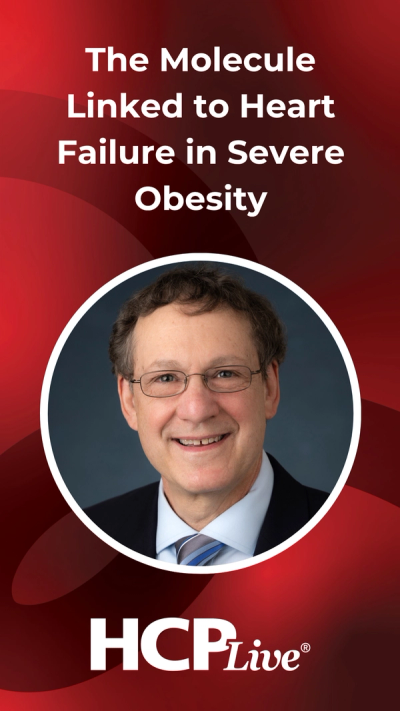
1:08
The Molecule Linked to Heart Failure in Severe Obesity
a month ago
by
David Kass, MD
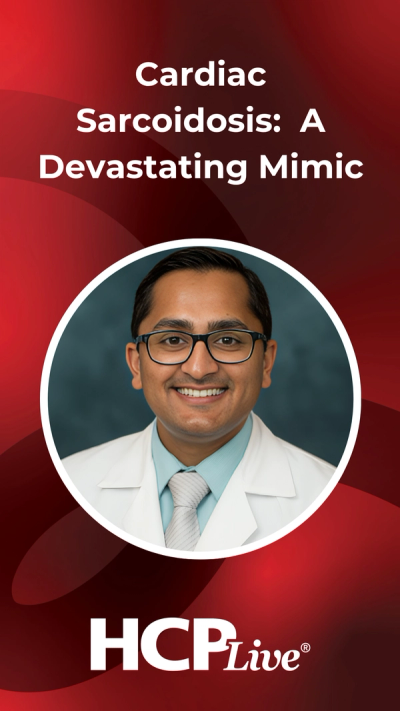
1:09
Cardiac Sarcoidosis: A Devastating Mimic
2 months ago
by
Vaiibhav Patel, MD

1:22
Impact of Mentorship on My Career in Medicine
2 months ago
by
Martha Gulati, MD(+1 more)
Podcasts






CME Content





















































Advertisement
More News

FDA accepted a priority review sNDA for mavacamten in adolescents with symptomatic obstructive hypertrophic cardiomyopathy.
Stay updated with the latest healthcare breakthroughs, including FDA approvals and phase 3 data.
FDA De Novo classification clears Cardiosense PCWP Analysis Software to estimate filling pressures in selected adults with HFrEF.

Lilly reports dose-dependent PCSK9 and LDL-C reductions with single-dose VERVE-102 in interim phase 1b hypercholesterolemia data.
Stay updated with the latest healthcare breakthroughs, including FDA approvals and phase 3 data.
FDA granted priority review to asundexian for secondary prevention after non-cardioembolic ischemic stroke or TIA.
FDA approved baxdrostat as add-on therapy for adults with hypertension not controlled on other medications.
Stay updated with the latest healthcare breakthroughs, including FDA submissions and new cardiology guidelines.
Payam Dehghani, MD, discusses his sub-study of the NACMI registry, following patients with COVID-19 and STEMI who survived to hospital discharge.
Pugazhendhi Vijayaraman, MD, discusses his recent presentation of the final results of LEADR LBBAP, simplifying the lead placement problems faced by earlier models.
Lucas Boersma, MD, PhD, discusses the 1-year results of the Enlighten study, highlighting effective defibrillation, low rate of complications, and high ATP success.
Mehdi Shishehbor, DO, PhD, discusses the 6-month results from his recent study, confirming the efficacy of the LimFlow System in patients with CLTI.
Erin Ferranti, PhD, MPH, discusses the new guidelines and their implications for continued enhancement of both access to and outcomes of postpartum care.
Sameh Sayfo, MD, discusses his recent analysis of the DETOUR2 study, highlighting the efficacy of the DETOUR system for patients regardless of runoff.
Bilchick discusses his recent study, highlighting a reduced risk of atrial fibrillation in patients taking prescription GLP-1 RAs irrespective of weight loss.
Saseen discusses the current dyslipidemia treatment landscape, highlighting current challenges and potential paths forward.
Stay updated with the latest healthcare breakthroughs, including data from DDW and a new podcast episode.
Ahmad Masri, MD, from OHSU, discusses the positive topline results from this phase 3 trial, highlighting a new path forward for nHCM.

Patient education may be the missing piece needed to bridge the gap between hypertension treatments and improved outcomes.
Blaha discusses his study analyzing nonstatin prescriptions from 2019-2024, highlighting the need for further clinical implementation of modern guidelines.
April 2026 saw further updates from ACC.26, plus key trial results, guideline updates, and more.
Lu explains findings that link PCBP1 to the pathogenesis of AARS2-related cardiomyopathy.
The FDA granted Fast Track Designation to coramitug, an investigational anti-TTR antibody designed to clear existing amyloid deposits in ATTR cardiomyopathy.
Kass explains recent findings from a study that suggest myocardial dysfunction in HFpEF may be reversible with weight loss.
Kass explains 2 distinct biological subgroups discovered in HFpEF and how they relate to a paradigm shift.
Advertisement
Advertisement
Trending on HCPLive
1
Ecnoglutide Delivers 35% Greater Weight Loss Than Semaglutide in Head-to-Head Trial
2
Sutezolid Shows Promise as Safer Oxazolidinone in Novel 4-Month TB Regimen
3
Tezepelumab Reduces Severe Asthma Exacerbations by 70% in Phase 4 PASSAGE
4
Q&A: How Does the Current HS Landscape Look? With Kiera Booth, MD
5