


Psychiatry
Latest News
Advertisement
Video Series

Latest Videos






Shorts
1:00
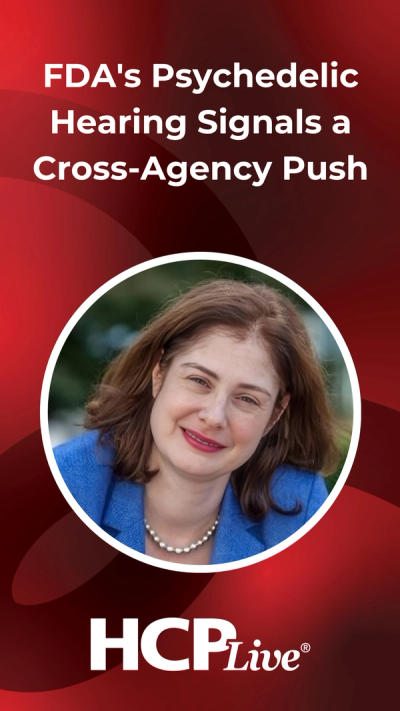
FDA's Recent Psychedelic Hearing: Key Takeaways
a month ago
by
Sarah Norman, MPP

1:00
Psychedelic Research Challenges with Multidrug Placebo
a month ago
by
Josh D. Woolley, MD, PhD

1:00
The Ethics of "Incomplete Disclosure" in Psychedelic Placebo-Controlled Trials
a month ago
by
Josh D. Woolley, MD, PhD

1:00
From Bipolar Patient to TMS Researcher
2 months ago
by
Owen Muir, MD, DFAACAP, FCTMSS

1:03
Accelerated TMS for Rapid Relief of Suicidal Ideation
2 months ago
by
Owen Muir, MD, DFAACAP, FCTMSS

1:17
Why SWIFT TMS May Beat Inpatient Care for Suicidal Ideation
2 months ago
by
Owen Muir, MD, DFAACAP, FCTMSS
1:17
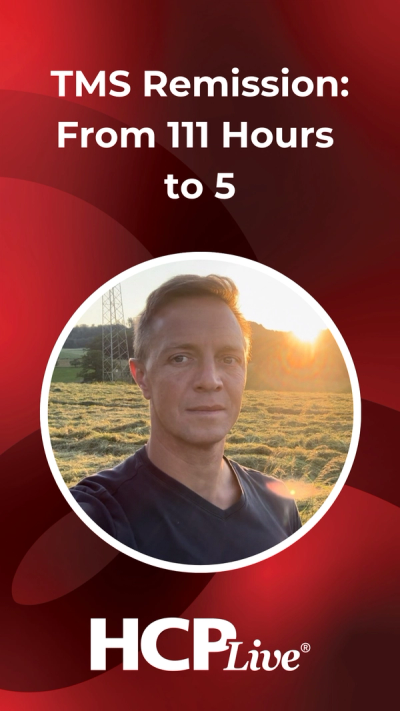
TMS Efficiency: How Treatment Room Time to Remission Has Dropped
2 months ago
by
Jonathan Downar, MD, PhD

1:14
Scaling TMS: Can the World Reach 1 Billion Remissions?
2 months ago
by
Jonathan Downar, MD, PhD

0:47
Why Is Access to Esketamine Clinics So Uneven?
2 months ago
by
Samuel Wilkinson, MD

1:14
TMS, ECT, or VNS: Who's a Candidate for Neuromodulation?
2 months ago
by
Michael E. Thase, MD
Podcasts







CME Content






















































Advertisement
More News

Andrew Cutler, MD, says real-world MDD patients respond to adjunctive cariprazine like trial participants, with gains in mood and function within weeks.

Josh Woolley, MD, PhD, explains why current active placebos fail to mask high-dose psilocybin trials and outlines a framework proposed to fix it.

Stay updated with the latest healthcare breakthroughs, including a new ablation catheter for AFib and progress in the hereditary angioedema pipeline.

SWIFT accelerated Deep TMS resolved suicidal ideation faster than standard dosing, Owen Muir, MD, says.
The FDA granted DT120 (lysergide) ODT Breakthrough Therapy designation for MDD, citing promising phase 3 Emerge data.

Downar outlines the randomized trial needed to confirm optimal TMS dosing and addresses a safety ceiling on total pulses.
A new meta-analysis found total pulse count predicted outcomes in a roughly linear pattern across sham-controlled trials of accelerated rTMS.
Downar says shorter sessions, accelerated schedules, and expanding neuroimaging maps have made TMS effective for more patients in far fewer visits.

A randomized TMS trial found lower DLPFC electric-field strength, not higher intensity, correlated with greater depression improvement.

A biomarker study links immune signaling (IL-7/IL-15) and brain gamma-wave activity to ketamine response in TRD.

New genome-wide data show AERS+ and AERS− subtypes of major depressive disorder diverge in heritability and metabolic genetic correlations.
DT120 ODT produced a 5.4-point placebo-adjusted HAM-A reduction at week 12 in the phase 3 Voyage trial for generalized anxiety disorder.
A genome-wide study of > 460,000 individuals identify 27 loci separating AERS+ and AERS− subtypes of major depressive disorder by metabolic profile.
Resilient Pharmaceuticals has resubmitted its MDMA-assisted therapy NDA for PTSD without a new phase 3 trial, MAPS reported.

Merve Karaca Şahin, MD, discusses fear- and picky-eating-driven ARFID behaviors in children with food allergy.

A prospective controlled study of 234 children finds food allergy raises ARFID-related picky eating and fear scores, but not appetite loss, Merve Karaca Şahin says.
Centanafadine FDA approval, DT120 EMERGE trial results, and COMP360 psilocybin data headline this month's psychiatry coverage.
The first-in-class NDSRI showed significant symptom improvement as early as week 1 across 4 phase 3 trials but carries boxed warnings for suicidality and abuse potential.

John Sonnenberg, PhD, outlines EMERGE trial criteria, dosing sessions, and endpoints for DT120 (lysergide) ODT 100 µg in major depressive disorder.

Boadie Dunlop, MD, discusses COMP360 dosing-day monitoring, treatment resistance, and where psilocybin may fit among existing TRD options.

New 26-week COMP006 data show durable MADRS improvement after 2 COMP360 psilocybin doses in treatment-resistant depression, Dunlop explains.
This week’s headlines include the FDA acceptance of mitapivat and roflumilast applications, the approval of atacicept for IgA nephropathy, and more.

New Phase 3 COMP006 data show durable MADRS improvement in treatment-resistant depression following two doses of synthetic psilocybin.
First half 2026 psychiatry recap: Lumateperone and milsaperidone approvals, ProlivRx for MDD, centanafadine for ADHD, and 3 psychedelic trials.
Q2 2026 psychiatry recap: Lumateperone expands for schizophrenia relapse, DT120 shows phase 3 promise in MDD, and 3 TMS advances for depression care.
Advertisement
Advertisement
Trending on HCPLive
1
Retatrutide Lowers Albuminuria, Glomerular Pressure in Obesity and CKD
2
RAINIER: Povetacicept Cuts Proteinuria, Gd-IgA1 in IgA Nephropathy
3
Sleeve Gastrectomy Improves Heart, Kidney MRI Markers in Youth-Onset T2D
4
I CAN: Ravulizumab Cuts Proteinuria 43% vs Placebo in IgA Nephropathy
5