




Pulmonology
Latest News
Advertisement
Latest Videos




Podcasts
CME Content






















































Advertisement
More News

COPD management evolves with biologics, emphasizing personalized care and treatable traits to improve patient outcomes and address ongoing challenges.
Vogelmeier discusses major changes to the annual COPD report, including a broader threshold for escalating treatment after exacerbation.
COPD is not a complex disease, Polverino explains. It's only complex to treat because of limited understanding.
Polverino stresses the need for prospective analysis to validate CC16 and mucus plugs as viable biomarkers for COPD status.
Bakhos explains the ideal patient population and strategies inherent to LVRS success.
Friedberg explains how an emphasis on physical fitness prior to and after surgery can significantly better long-term outcomes.
Friedberg discusses the inconsistent clinical pathways from disease progression to intervention in patients with a pair of highly deadly lung diseases.
COPD management evolves with targeted biologic therapies, enhancing treatment precision and improving patient outcomes in respiratory care.
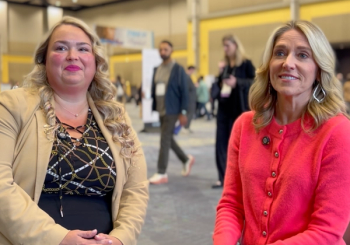
Susan Corbridge, PhD, and Alanna Kavannagh, MSN, CCRN, discuss the role of advanced practice providers on the evolving pulmonary and critical care teams during CHEST 2025.
Following CHEST 2025, Hanania discusses the progress being made toward more tailored, patient-oriented care in airway disorders.

Rogers discusses the evolving definition of clinical remission in asthma and why clinicians must set higher treatment goals.
Roger discusses how new therapies are transforming asthma treatment, enabling potential clinical remission.
Assaf shares insights into how to navigate patient profiles and treatment options to optimize severe asthma care with biologics.

Data from the phase 4 head-to-head EVEREST trial further indicates dupilumab's benefit for type 2 inflammatory airway disease.
Mucus plugs are an increasingly present issue in uncontrolled asthma. Lugogo discusses promising findings from VESTIGE that addresses them.
Maher discussed taladegib's potential to improve FVC, rather than slow decline, in people with idiopathic pulmonary fibrosis.

Late-breaking data at CHEST 2025 support the novel combination therapy, which may be submitted to the FDA in application for patients with OSA in coming months.
Kolaitis discussed interim findings from the ASCENT trial, which showed ability to increase treprostinil dosing while maintaining a safe and efficacious profile.
Castro discusses new data from CHEST 2025 showing the value of baseline blood eosinophils and FeNO in understanding potential dupilumab outcomes.
Imran Satia, MD, PhD, discusses promising phase 2A trial data showing quick and significant improvements in patients' perception of cough frequency and severity.
Hanania discusses the pooled BOREAS and NOTUS post hoc data showing dupilumab protects lung function before and after COPD exacerbations.

Despite clinical definitions suggesting patients recover from exacerbations within 2 weeks of hospital discharge, most patients in a qualitative survey believed they had not achieved recovery within 3 months.

Evidence-based guidelines from emphasize personalized transfusion strategies for critically ill patients, urging clinicians to avoid routine platelet and fresh frozen plasma transfusions during common procedures.
Advertisement
Advertisement
Trending on HCPLive
1
Teplizumab Receives Accelerated FDA Approval for Stage 3 T1D in Children
2
Heart Failure Congress 2026 Highlights, with Manreet Kanwar, MD
3
How to Approach Chronic Urticaria from Allergist and Dermatologist Perspectives
4
FDA Clears First OTC Glucose Monitor for Children
5