





Obstructive Sleep Apnea
Latest News
Advertisement
Latest Videos





Shorts

CME Content




























































Advertisement
More News

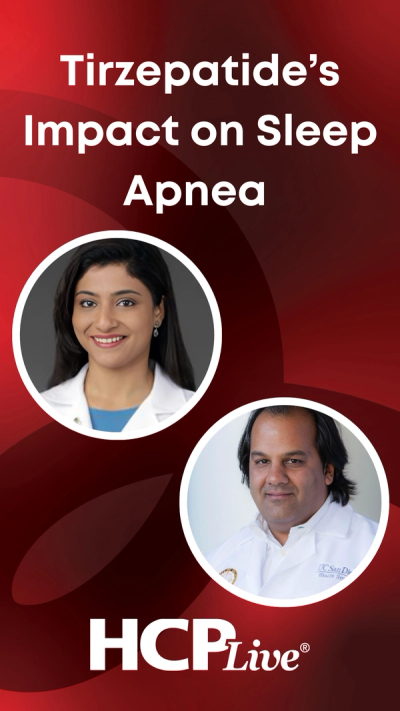
Weeks discusses how tirzepatide is impacting treatment strategies for obstructive sleep apnea and driving collaboration across specialties.

GLP-1 therapies support weight loss, but OSA requires dedicated airway treatment options such as CPAP or neuromuscular stimulation.

Findings highlight an increased risk of MASLD, heart failure, type 2 diabetes, and other cardiometabolic diseases following cycles of weight loss and regain.

At SLEEP 2025, Danny Eckert, PhD, discussed new drug therapies for OSA, including tirzepatide, AD109, potassium channel blockers, and acetazolamide.


New research has indicated that glucagon-like peptide-1 receptor agonists result in lower all-cause mortality and risk of cardiovascular events in patients with concurrent sleep apnea and type 2 diabetes.

Prevot describes her research exploring the relationship between OSA severity and abdominal obesity metrics as well as changes in both metrics following CPAP.

A post-hoc analysis of SURMOUNT-OSA highlights tirzepatide’s consistent benefit across all baseline OSA severity groups.

These data from ATS 2025 point to climate change as a potential influence on the burden associated with obstructive sleep apnea (OSA).

Tirzepatide's approval marks the first and only prescription medicine available for adults with moderate-to-severe obstructive sleep apnea and obesity.

Allegheny Health Network (AHN) implants innovative device to manage central sleep apnea in heart failure patients, reducing mortality rise and improving quality of life.

Nocturnal hypoxia may represent an additional modifiable risk factor for AMD, particularly its neovascular form.

Younger adults (aged 20 – 40 years) with OSA were 3 times more likely to experience any type of CVD event than those without OSA.

Gozal told HCPLive about the issue of the classic approach when diagnosing children with OSA.

Atul Malhotra, MD, discusses the results of the SURMOUNT-OSA trial and how they inform clinicians on the role of tirzepatide in OSA and obesity.

A cohort analysis suggests upper airway collapsibility prevalence may correlate closely to race in patients with OSA.

New study data show patients with OSA may use a fixed CPAP device for a longer daily duration than those with an automatic option.

New data presented at SLEEP 2024 show sleep disorders including insomnia are only linked to worse quality of life when veterans do not also have PTSD.

New analysis from SURMOUNT-1 support the use of GLP-1/GIP agonist tirzepatide to reduce weight in patients with OSA and obesity/overweight.

A late-breaking abstract from SLEEP 2024 shows the effect of mandibular devices on respiratory effort, and its overall impact on OSA.

An alternative device to CPAP shows clinical benefit and long-term patient adherence in new SLEEP 2024 trial data.
Topline data from the SURMOUNT-OSA studies provide insight into the effects of tirzepatide in OSA with obesity, with Lilly disclosing plans for a regulatory submission mid-year.

A new study found patients with a BMI of 32 to 35 have lower odds of responding to the hypoglossal nerve stimulation for OSA compared to patients with a lower BMI.

With limited CBTi-trained psychologists, investigators assessed the effectiveness of a self-guided digital CBTi as another option, so people don’t have to turn to pills.

After 5 years, laparoscopic Roux-en-Y gastric bypass cured OSA in 55.1% of patients, and only 20% of patients still had moderate or severe OSA.
Advertisement
Advertisement
Trending on HCPLive
1
The Case for Routine Kidney Screening, With Pranav Garimella, MBBS, MPH
2
FDA Approves Obinutuzumab (Gazyva) for Idiopathic Nephrotic Syndrome
3
Zilurgisertib Receives FDA Approval for FOP in Patients 12 and Older
4
FDA Approves Baricitinib for Adolescents With Severe Alopecia Areata
5