





Pulmonology
Latest News
Advertisement
Video Series








Latest Videos


Shorts

0:58
Add-on ALIS Cuts MACLD Recurrence Rates
5 days ago
by
Jakko Van Ingen, MD, PhD

0:46
Tozorakimab Cuts COPD Exacerbations Across Eosinophil Levels
9 days ago
by
Frank C. Sciurba, MD

1:10
Why Dupilumab Beats Omalizumab in Asthma Treatment
12 days ago
by
Guy Brusselle, MD, PhD

1:12
Not Every Patient With Bronchiectasis Responds the Same to Brensocatib
a month ago
by
Mark Metersky, MD, FCCP

0:42
1 Year of Brensocatib: Evolving Bronchiectasis Care
a month ago
by
Ashwin Basavaraj, MD, FCCP, ATSF

0:39
Who to Select for Viral Prophylactic COVID-19 Therapy?
2 months ago
by
Juanita Mora, MD

0:36
Why COVID-19 Boosters Are Still Important
2 months ago
by
Juanita Mora, MD

1:12
Long-Term Insulin Resistance Linked to Interstitial Lung Changes
4 months ago
by
Sarath Raju, MD

1:07
Phase 3b ENCORE: ALIS Achieves 88% Culture Conversion in MAC Lung Disease
4 months ago
by
Charles L. Daley, MD

1:01
Could an OTC Supplement Prevent Post-TB Deaths?
4 months ago
by
Robert Wallis, MD
Podcasts
CME Content




























































Advertisement
More News

Stay updated with the latest healthcare breakthroughs, including Bayer's finerenone expanding to type 1 diabetes-associated CKD.

Read 6 late-breaking updates from ERS Congress 2026 that clinicians managing respiratory disease should know.
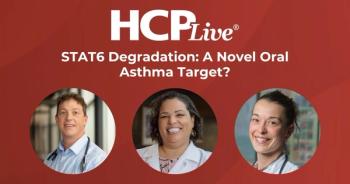
At ERS 2026, pulmonologists framed oral STAT6 degradation—led by Kymera's KT-621—as a potential biologic-like, access-expanding approach.

Bhatt also discusses how these findings inform the choice between dupilumab and mepolizumab under GOLD 2026.
Wuyts, of University Hospitals Leuven discusses interim FIBRONEER-ON open-label extension data showing nerandomilast's favorable safety profile.

However, Connect Biopharma's phase 2 Seabreeze STAT Asthma trial's primary treatment-failure end point missed statistical significance.

Wechsler, of National Jewish Health discusses how oral STAT6 degraders like KT-621 could offer a mechanistically distinct treatment option.
Wechsler walks through verekitug's mechanism, VALIANT's design, key efficacy and safety findings, and what's next for TSLP-targeted asthma therapy.
Phase 2b subgroup data showed lunsekimig's exacerbation benefit scaled with asthma severity and biomarker levels.
Lugogo, ofUniversity of Michigan, discusses how oral STAT6 degraders like KT-621 could expand biologic-like asthma treatment beyond highest severity.

Semaglutide was linked to fewer asthma attacks and COPD flare-ups than sulfonylureas, with no effect seen for other GLP-1 therapies.

Sciurba, of University of Pittsburgh, discusses full phase 3 OBERON and TITANIA results, including stronger responses in current smokers.
The oral STAT6 degrader achieved deep STAT6 suppression, up to 63% EASI reduction, and gains in asthma and rhinitis scores by week 4.
Hurst discusses data showing durably raised protective AAT levels in patients with alpha-1 antitrypsin deficiency.
Olivier Sitbon, MD, PhD, reviews PDGF-targeted therapy in PAH, from imatinib's IMPRES trial to new prodrug and antibody approaches.
Dell discusses an analysis of VOYAGE showing dupilumab more than doubled the odds of favorable asthma outcomes in children, regardless of baseline ICS dose.

Castro, of University of Kansas discusses interim phase 1b data showing rapid, durable suppression in patients with mild to moderate asthma.

At ERS 2026, John Oppenheimer, MD, discusses how PERFORM supports earlier escalation in patients with uncontrolled, infrequently exacerbating asthma.
ADVANCE Outcomes at ERS 2026 demonstrated improved odds of improvement and reduced odds of worsening.

The oral RARβ/γ agonist improved FVC and reduced fibrotic biomarkers over 12 weeks in a phase 2a trial presented at the ERS Congress 2026.

A COPD genetic risk score was linked to reduced lung function growth from birth to age 6, but only in children with high air pollution exposure.

Kyle Hogarth, MD, urges physicians to complete Alpha-1 testing during every COPD or asthma workup, warning that skipped tests delay diagnosis.

Paired airway and tissue sampling from 100 patients found greater microplastic burden in those with lung cancer.
August 2026 pulmonology highlights include deupirfenidone's positive phase 2b ELEVATE-IPF results, FDA Fast Track for LTI-03, and more.

Nurse practitioners discuss escalating biologic therapy for asthma and COPD, mucus plugging data, and access barriers.
Advertisement
Advertisement
Trending on HCPLive
1
The Case for Routine Kidney Screening, With Pranav Garimella, MBBS, MPH
2
FDA Approves Obinutuzumab (Gazyva) for Idiopathic Nephrotic Syndrome
3
Zilurgisertib Receives FDA Approval for FOP in Patients 12 and Older
4
FDA Approves Baricitinib for Adolescents With Severe Alopecia Areata
5