



Pulmonary Fibrosis
Latest News
Advertisement
Latest Videos
Podcasts
CME Content






















































Advertisement
More News

Deupirfenidone 825 mg reduced 26-week FVC decline by 91.0 mL versus placebo in the phase 2b ELEVATE-IPF trial in idiopathic pulmonary fibrosis.

The Fast Track designation adds to LTI-03's prior Orphan Drug status as Rein Therapeutics advances the Phase 2 RENEW trial in IPF.
Highlights include an exploratory nerandomilast mortality analysis, the first North American bronchiectasis guideline from CHEST, and more.

Pooled FIBRONEER trial data show nerandomilast reduced the risk of death by up to 43% versus placebo, though the analysis was post hoc.

John Giacona, PhD, PA-C, discusses building a comprehensive multidisciplinary care team for interstitial lung disease and how APPs should engage with clinical evidence.
John Giacona, PhD, PA-C, discusses the cardiology perspective on screening for and managing pulmonary hypertension in interstitial lung disease.
June 2026 pulmonology news includes conversations with experts at the ATS and APAPP conferences, and cytisinicline's CRL.
Catch up on key FDA approvals, major trial updates, and critical clinician insights from the last 3 months.
June 2026 pulmonology news includes conversations with experts at the ATS and APAPP conferences, and cytisinicline's CRL.
Stay updated with the latest healthcare breakthroughs, including FDA approvals and phase 3 data.

Results from the phase 3 TETON-1 study presented at ATS 2026 showed inhaled treprostinil preserved lung function and reduced clinical worsening risk in IPF.
FDA approvals broaden ALYFTREK and TRIKAFTA eligibility to nearly 95% of US cystic fibrosis patients using a functional, mechanism-based variant criterion.
January 2025 saw new data and guidelines in asthma, COPD, and pulmonary fibrosis.

GRI-0621 shows promise as a safe, effective treatment for idiopathic pulmonary fibrosis, improving biomarkers and lung function in a Phase 2a trial.

Patients with idiopathic pulmonary fibrosis treated with the STAT3 inhibitor TTI-101 had greater reductions in lung fibrosis scores and IL-6 levels than placebo at 12 weeks.
The pulmonology year in review highlights FDA approvals and pivotal data readouts.
Maher discussed the new FDA approved drug, marketed as Jascayd, and its impact for idiopathic pulmonary fibrosis.
An audio recap of the top 5 stories in healthcare news from the week of 10/5-10/11.

The therapy was well-tolerated in the phase 2a ENV-IPF-101 trial, with mostly mild-to-moderate TEAEs related to treatment.
The new therapy, marketed as Jascayd, previously demonstrated safety and efficacy in the phase 3 FIBRONEER-IPF trial.
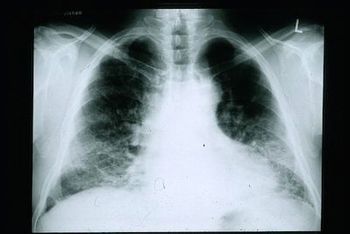
Endeavor BioMedicines' Taladegib gains orphan drug status for idiopathic pulmonary fibrosis, showing promise in improving lung function and patient outcomes.

Yale researchers developed an AI model that illuminates critical details about—and possible treatments for—idiopathic pulmonary fibrosis. It could do so for many other diseases.
Discover the latest advancements in pulmonology, including innovative treatments for asthma, COPD, and pulmonary sarcoidosis, showcased at ATS 2025.

In this interview, nerandomilast’s safety profile in idiopathic pulmonary fibrosis (IPF) and progressive pulmonary fibrosis (PPF) is highlighted.
This interview highlights phase 3 trial data on nerandomilast’s use in idiopathic pulmonary fibrosis (IPF) and progressive pulmonary fibrosis (PPF).
Advertisement
Advertisement
Trending on HCPLive
1
From Injectable to Oral: Optimal Durable Clearance Across the IL-23 Class
2
Upadacitinib Tops Nemolizumab on Skin, Itch Targets in Indirect Analysis
3
Advances in Treating High-Impact Psoriasis from EADV 2026
4
8 Endocrinology Headlines You Missed in Q3 2026
5