

The FDA-approved update adds phase 3 HYPERION data on adults diagnosed with PAH within the past year.

Victoria Johnson joined MJH Life Sciences in 2020 and has written for NeurologyLive, CGTLive, and is now an assistant managing editor for HCPLive and RheumatologyLive. She doesn’t have enough time for her numerous hobbies. You can reach her at [email protected].
The FDA-approved update adds phase 3 HYPERION data on adults diagnosed with PAH within the past year.

Philadelphia-area PAH specialists discuss real-world patient mismatch with trial criteria, drug sequencing, and insurance access barriers.
The sNDA for amikacin liposome inhalation suspension is supported by phase 3b ENCORE trial data, with a PDUFA date of January 28, 2027.
Read 6 late-breaking updates from ERS Congress 2026 that clinicians managing respiratory disease should know.
At ERS 2026, pulmonologists framed oral STAT6 degradation—led by Kymera's KT-621—as a potential biologic-like, access-expanding approach.

However, Connect Biopharma's phase 2 Seabreeze STAT Asthma trial's primary treatment-failure end point missed statistical significance.

Semaglutide was linked to fewer asthma attacks and COPD flare-ups than sulfonylureas, with no effect seen for other GLP-1 therapies.
The oral STAT6 degrader achieved deep STAT6 suppression, up to 63% EASI reduction, and gains in asthma and rhinitis scores by week 4.

ADVANCE Outcomes at ERS 2026 demonstrated improved odds of improvement and reduced odds of worsening.

The oral RARβ/γ agonist improved FVC and reduced fibrotic biomarkers over 12 weeks in a phase 2a trial presented at the ERS Congress 2026.

A COPD genetic risk score was linked to reduced lung function growth from birth to age 6, but only in children with high air pollution exposure.

Paired airway and tissue sampling from 100 patients found greater microplastic burden in those with lung cancer.
August 2026 pulmonology highlights include deupirfenidone's positive phase 2b ELEVATE-IPF results, FDA Fast Track for LTI-03, and more.

Nurse practitioners discuss escalating biologic therapy for asthma and COPD, mucus plugging data, and access barriers.
PAH specialists discuss sotatercept, risk-based escalation, and access barriers shaping pulmonary arterial hypertension care.
The FDA is expected to complete its review by late April 2027, based on positive phase 3 results from the TETON-1 and TETON-2 trials in IPF.
The HCPLive editorial team previews late-breaking abstracts across COPD, asthma, IPF, PAH, and AATD ahead of ERS Congress 2026 in Barcelona.

Dallas allergist-immunologists discuss real-world use of non-steroidal topicals in AD, steroid phobia, and the nematode story.

PAH specialists discuss upfront combination therapy and the disconnect between guidelines and community practice.
The Fast Track designation adds to LTI-03's prior Orphan Drug status as Rein Therapeutics advances the Phase 2 RENEW trial in IPF.

Academic pulmonologists from Mass General, Duke, and Cleveland Clinic discuss biologic selection, mucus plugging, and more.
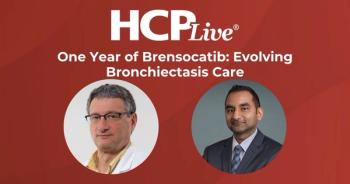
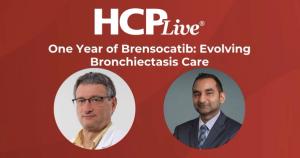
One year after brensocatib's FDA approval, 2 pulmonologists describe real-world response and a new CHEST guideline.
Mark Metersky, MD, and Ashwin Basavaraj, MD, discuss novel therapy brensocatib on the 1-year anniversary of its FDA approval.
The bispecific TSLP/IL-13 inhibitor BEL512 met its primary endpoint and all secondary endpoints in adults with chronic rhinosinusitis with nasal polyps.

Sonelokimab hit its primary ACR50 end point and all key secondary end points in biologic-naive patients with psoriatic arthritis in the phase 3 IZAR-1 trial.
Merck's sBLA seeks to extend clesrovimab-cfor (Enflonsia) coverage to children under 2 years at increased risk for severe RSV during their second season.

Tomashefski discusses where AATD diagnoses go missed and why APPs are positioned to close the gap.
Highlights include an exploratory nerandomilast mortality analysis, the first North American bronchiectasis guideline from CHEST, and more.

The conditional recommendations cover antibiotic therapy, long-term prevention strategies, airway clearance, and more.

Pooled FIBRONEER trial data show nerandomilast reduced the risk of death by up to 43% versus placebo, though the analysis was post hoc.

Published: February 7th 2025 | Updated: February 25th 2025
August 12th 2026


