

Participants in a phase 3 OLE had a mean monthly attack rate of 0.08.

Victoria Johnson joined MJH Life Sciences in 2020 and has written for NeurologyLive, CGTLive, and is now an assistant managing editor for HCPLive and RheumatologyLive. She doesn’t have enough time for her numerous hobbies. You can reach her at [email protected].
Participants in a phase 3 OLE had a mean monthly attack rate of 0.08.

Sebetralstat has a PDUFA date of June 12, 2025, for treating HAE in patients 12 years and older.
Afif El-Hasan, MD of Kaiser Permanente in California joins host Albert Rizzo, MD, to discuss the acute effects of wildfire smoke on air quality.

Three subgroup analyses of the phase 3 NAVIGATOR study are set to be presented at the AAAAI/WAO Joint Congress.

Alvotech and Teva announced that the biosimilar will be interchangeable with the reference after ustekinumab-auub’s exclusivity expires in April 2025.

In new data to be presented at AAAAI, the therapy was well-tolerated in people as young as 2 years old.

By week 52, remibrutinib and placebo-to-remibrutinib groups had similar levels of urticaria control.

Chalmers discussed how brensocatib’s potential approval may transform the currently empty treatment landscape for bronchiectasis.

Pitolisant was evaluated for the supplemental indication in the phase 3 INTUNE study, which did not meet its primary outcome of reducing excessive daytime sleepiness.

Data from 3 pooled phase 3 studies in children, adolescents, and adults will be presented at the AAAI/WAO Joint Congress.
Alvotech and Teva expect the review to be completed in the fourth quarter of 2025.

At week 12, a higher proportion of participants on rilzabrutinib 1200mg a day (60.9%) achieved AAS7 scores of 0 than placebo-treated participants (30.8%).

Targeted Genomics’ GHR test uses NGS to detect genetic variants in genomic DNA isolated from at-home collected saliva samples.

At 6 months, baseline monthly rates of 0.45 for mild, 1.54 for moderate, and 0.14 for severe attacks were reduced to 0.10, 0.08, and 0.00, respectively.
Bernstein discussed recent and upcoming research and management of angioedema in patients with urticaria.
Around half of participants had insufficient vitamin D levels.
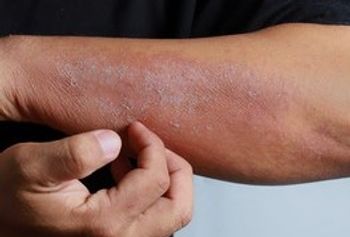
Fifteen of 16 patients with chronic ulcers in a small study had positive patch test to common wound care products.
These findings were from a 52-week analysis of a Phase-2 trial in participants with chronic spontaneous urticaria.

Avapritinib 25mg daily significantly improved quality of life (QoL), disease control, and basal serum tryptase (BST) levels.

Boehringer plans to soon submit a new drug application for nerandomilast for treating PPF to the FDA.
Emblaveo combines aztreonam, a monobactam antibiotic, and avibactam, a β-lactamase inhibitor.

Approved under the name Dupixent in September 2024, the biologic is the first of its kind approved for COPD.

Brensocatib, also a potential first-in-class DPP1 inhibitor, has a PDUFA date of August 12, 2025.

Despite being aware of its value in treating asthma, specialists were uncertain about integrating ITT into patient care.


This pulmonology month in review highlights recent research on diagnosing asthma and new pivotal trial data.

Frevecitinib is a novel inhaled dry powder therapeutic in development for asthma that remains inadequately controlled by SOC inhaled maintenance therapies.

The study also revealed a predominant T2-low asthma endotype in majority Puerto Rican and Black or African American youth populations.

Among multiple issues were confusing and conflicting misdiagnoses of asthma.

Peter Kranke, MD, MBA, MME, and colleagues call for clarifications to the August 2024 recommendations with more real-world considerations.