

Participants described how payer requirements and documentation of steroid exposure shape biologic access.

Victoria Johnson joined MJH Life Sciences in 2020 and has written for NeurologyLive, CGTLive, and is now an assistant managing editor for HCPLive and RheumatologyLive. She doesn’t have enough time for her various hobbies. You can reach her at vjohnson@mjhlifesciences.com.
Participants described how payer requirements and documentation of steroid exposure shape biologic access.

In an interim extension analysis presented at NACFC 2026, 37.5% of young children with CF in a PERT substudy stopped enzyme therapy on the regimen.
Day 2 highlights from Phoenix covering PE intervention trials, pulmonary hypertension diagnostics, ILD telomere biology, and more.

In 503 patients with ILD, telomere length below the 10th percentile was linked to UIP pattern on CT and higher MIL-UIP scores but not greater fibrosis extent.

Clinicians described how steroid exposure from multiple prescribers shapes biologic decisions in asthma and COPD.

APPs described earlier recognition of type 2 disease, documentation strategies for payers, and the role of specialty pharmacy in biologic access.

Participants described how they use risk assessment, payer requirements, and patient preference to sequence PAH therapies.

Plasma and exhaled breath sphingolipid signatures differed between IPF and fibrotic hypersensitivity pneumonitis.

A post hoc analysis linked more purulent patient-reported sputum to higher neutrophil elastase activity and greater bronchiectasis disease activity.

Advanced practice providers described how documentation, specialty pharmacy support, and payer requirements shape biologic selection and timing.

Participants said payer criteria and patient goals often outweigh mechanism when choosing biologics, and that shared decision-making is harder in COPD.

Participants described how comorbidities, payer formularies, and patient preference shape biologic choice in asthma and COPD.

Repeated oral steroid bursts are the main trigger for starting a biologic, while therapy for non-type 2 inflammation COPD remains an unmet need.

A roundup of updates spanning PsO, atopic dermatitis, alopecia areata, vitiligo, palmoplantar pustulosis, cutaneous sarcoidosis, and discoid lupus.
A roundup of highlights from EADV Congress 2026 in Vienna, spanning dupilumab real-world data, pipeline biologics, and a first-in-class oral agent.

Topline phase 3 ALOFT-IPF data show admilparant 60 mg improved 52-week FVC vs placebo in IPF, while the 120 mg dose missed statistical significance.

Remibrutinib doubled complete Total Fric Score response vs placebo at week 12 in RemIND, becoming the first therapy approved specifically for SD.

The first controlled study of GLP-1 receptor agonists and nail health found nail detachment in 39% of users versus 9% of controls at EADV 2026.

Check out highlights from news published on Day 1 of the EADV Congress 2026, spanning CSU, atopic dermatitis, HS, and more.

The international SkinObservatory study found climate-related skin disease disproportionately affecting low-income nations at EADV 2026.
The FDA-approved update adds phase 3 HYPERION data on adults diagnosed with PAH within the past year.

Philadelphia-area PAH specialists discuss real-world patient mismatch with trial criteria, drug sequencing, and insurance access barriers.
The sNDA for amikacin liposome inhalation suspension is supported by phase 3b ENCORE trial data, with a PDUFA date of January 28, 2027.

Read 6 late-breaking updates from ERS Congress 2026 that clinicians managing respiratory disease should know.
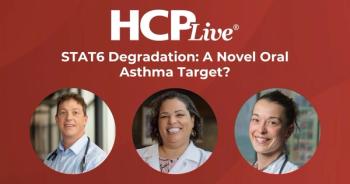
At ERS 2026, pulmonologists framed oral STAT6 degradation—led by Kymera's KT-621—as a potential biologic-like, access-expanding approach.

However, Connect Biopharma's phase 2 Seabreeze STAT Asthma trial's primary treatment-failure end point missed statistical significance.

Semaglutide was linked to fewer asthma attacks and COPD flare-ups than sulfonylureas, with no effect seen for other GLP-1 therapies.

ADVANCE Outcomes at ERS 2026 demonstrated improved odds of improvement and reduced odds of worsening.

The oral RARβ/γ agonist improved FVC and reduced fibrotic biomarkers over 12 weeks in a phase 2a trial presented at the ERS Congress 2026.

A COPD genetic risk score was linked to reduced lung function growth from birth to age 6, but only in children with high air pollution exposure.

Published: February 7th 2025 | Updated: February 25th 2025

August 12th 2026


