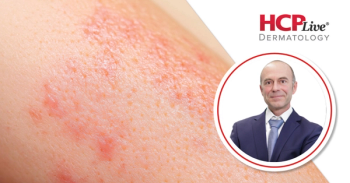
Stephan Weidinger, MD, PhD, discusses 5-year ADlong data showing durable skin clearance and itch control with lebrikizumab in atopic dermatitis.
Experts unpack where new eczema creams fit, and why insurance hurdles and steroid fear keep patients from faster itch relief.
The pathophysiology involves a dual defect in skin barrier function and type 2 immune dysregulation, driven primarily by IL-4 and IL-13 with downstream IgE class switching, eosinophil tissue infiltration, and increasingly recognized neuroimmunologic contributions through mast cell–nerve interactions.² Topical corticosteroids (TCS) and calcineurin inhibitors have anchored atopic dermatitis treatment for decades, and the 2023 AAAAI/ACAAI Joint Task Force (JTF) guidelines reinforced their primacy — awarding strong recommendations with high certainty for both in patients aged 3 months and older across all severity levels.³ Three additional topical drug classes have since received FDA approval for AD: the JAK1/JAK2 inhibitor ruxolitinib cream (Opzelura; Pfizer/Incyte), the aryl hydrocarbon receptor agonist tapinarof cream 1% (Vtama; Dermavant), and the PDE4 inhibitor roflumilast cream (Zoryve; Arcutis) — expanding the non-biologic armamentarium for patients who remain insufficiently controlled on older agents but are not yet candidates for systemic therapy.⁴⁻⁶
Against this backdrop, HCPLive convened a panel of allergist-immunologists and advanced practice providers from the Chicago metropolitan area for an interactive roundtable focused on topical therapy decision-making, guideline integration, and real-world barriers to prescribing newer agents in AD. The forum was moderated by Nicole Chase, MD, an allergist-immunologist in private practice in Minneapolis–St. Paul and associate professor of medicine at the University of Minnesota, and included peers representing Endeavor Health, private multi-site allergy practices in the Chicago suburbs, and a solo community allergy practice in Muncie, Indiana, allowing the discussion to surface both the clinical and structural factors governing topical agent selection in settings where patients frequently arrive after having already navigated primary care, urgent care, and dermatology without adequate control.
The discussion surfaced a near-universal pattern in the panel's prescribing: TCS first, then calcineurin inhibitors, then dupilumab — with the 3 newer topicals rarely filling the gap. Several panelists described prescribing calcineurin inhibitors or crisaborole not with clinical intent but to satisfy insurance step-therapy documentation requirements before dupilumab prior authorization, a routine workaround described candidly across the group.
Among the 3 agents, topical ruxolitinib generated the most clinical confidence. Trial data from TRuE-AD1 and TRuE-AD2 demonstrated an IGA treatment success rate (clear or almost clear, ≥2-point improvement from baseline) of approximately 53% with 1.5% ruxolitinib cream at week 8 versus approximately 15% with vehicle, alongside a mean 2-point reduction in peak pruritus NRS score within 12 hours of first application — a rapid itch-relief finding confirmed anecdotally in at least one panelist's practice within 15 to 20 minutes.⁴ The 20% body surface area label restriction was the most commonly cited practical barrier, given that patients presenting to allergists disproportionately exceed this threshold after failing primary care management.
Topical tapinarof was the most novel and theoretically appealing agent: ADORING 1 and 2 demonstrated IGA success in approximately 46% to 50% of patients, and the ADORING 3 open-label extension found a mean treatment-free interval of 79.8 days (standard deviation 81.4) after achieving complete clearance — a feature the panel identified as potentially compelling to steroid-phobic or maintenance-resistant patients.⁵,⁷ Tapinarof's worm-derived natural origin was also discussed as a possible persuasion tool for patients seeking non-pharmaceutical alternatives to TCS. Roflumilast drew the most skepticism: its IGA success rate of approximately 30% at week 4 against a vehicle response rate of approximately 15% yielded the narrowest drug-vehicle separation of the three agents, and its week-4 primary endpoint was viewed as a less meaningful benchmark than the week-8 data available for the other agents.⁶ Its freedom from the stinging and burning that limits crisaborole was, however, specifically noted as an advantage in younger pediatric patients.
The panel devoted significant discussion to a parallel set of barriers operating at the patient level. Panelists described a clinical environment in which TikTok-driven narratives around topical corticosteroid withdrawal syndrome are actively undermining adherence to first-line therapy, while alternative topical products such as beef tallow are gaining traction among steroid-phobic patients and their parents.
Adolescents were identified as the patient group most affected by this dynamic, with 1 panelist noting the challenge of simultaneously managing TCS phobia and FDA black-box warning anxiety around calcineurin inhibitors in the same appointment. The panel discussed practical patient communication strategies: framing biologics as "an injectable medication for asthma" rather than a biologic for health-literacy-sensitive patients; asking patients to identify the activities their atopic dermatitis prevents before introducing a treatment plan; and using what 1 panelist termed a fire analogy to explain maintenance therapy — "You have to get it out and prevent the embers from burning," she described her approach to dosing consistency.
Most panelists apply gestalt severity assessment in practice and described response to therapy itself as the most practical surrogate for severity classification — a clinically elegant observation the moderator surfaced explicitly: patients who do not respond to appropriately applied TCS and calcineurin inhibitors are, by that definition, at least moderate. Structural barriers mirrored the clinical ones: insurance prior authorization was the primary hurdle for all 3 focal agents, with at least 1 panelist abandoning tapinarof entirely after a single denial. Health system–employed clinicians lack access to non-biologic samples under institutional conflict-of-interest policies, creating a de facto prescribing disadvantage relative to private practice. Multiple panelists noted they had never been visited by pharmaceutical representatives for these topical agents — a striking gap given allergy's substantial atopic dermatitis volume — and several are now using AI to draft prior authorization letters and generate cross-trial comparisons in the absence of head-to-head evidence. As Thompson noted: "If I don't know how well it will work, am I going to want to put in the effort for something that may not work?" The panel's collective wish list for industry included streamlined specialty pharmacy routing with built-in prior authorization support, more consistent representative access to allergist practices, patient education materials with greater skin-of-color representation, and clearer step-therapy documentation guidance.