


Cardiology
Latest News
Advertisement
Video Series

Latest Videos
Shorts
0:44
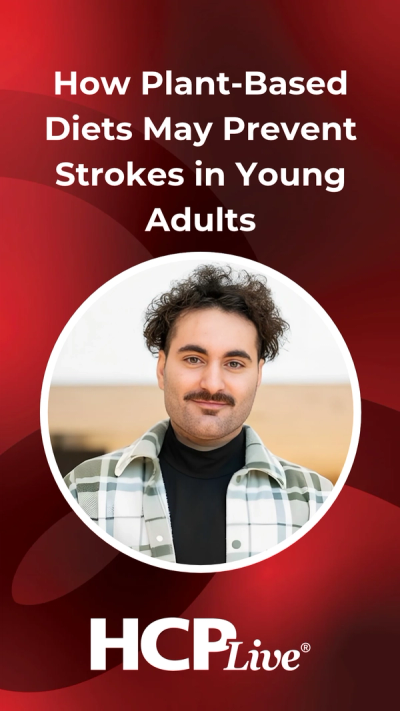
How Plant-Based Diets May Prevent Strokes in Young Adults
6 days ago
by
Shakar Kutal
1:18
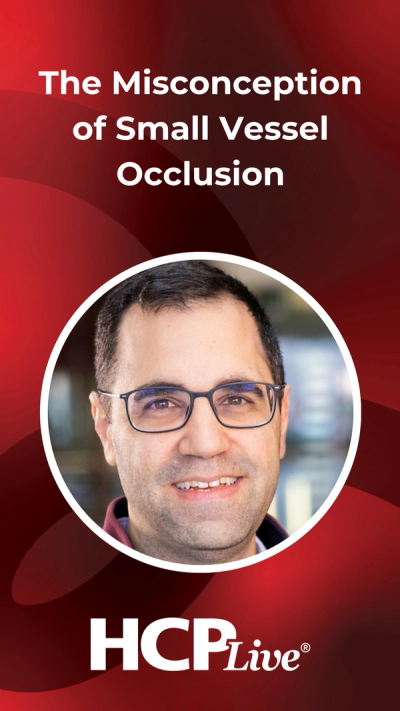
The Misconception of Small Vessel Occlusion
7 days ago
by
Raed Joundi, MD
1:16
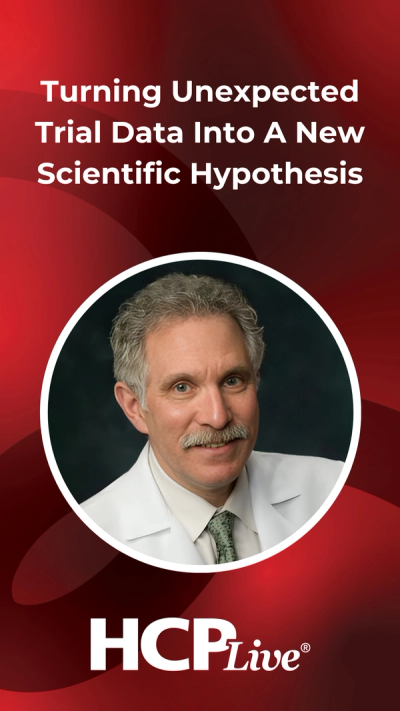
Turning Unexpected Trial Data Into A New Scientific Hypothesis
a month ago
by
James Udelson, MD

1:11
Integrating New Treatments into Busy Clinical Workflows
a month ago
by
Mustafa Ahmed, MD
1:16
PCSK9 Inhibitors: Lowering LDL vs. Preventing Heart Attacks
a month ago
by
Ninel Hovnanians, MD

1:21
A Paradigm Shift in Pediatric Heart Treatment
a month ago
by
Joseph Rossano, MD, MS
1:00
CKM Guidelines Guide Clinicians Through Critical Metabolic Risk Factors
2 months ago
by
Heather Johnson, MD

0:53
Overcoming the Complexity Paradox in Heart Failure Treatment
2 months ago
by
John Ostrominski, MD
1:20
How Lipid Lowering Makes You More Resilient
2 months ago
by
Robert P. Giugliano, MD

0:53
Using Machine Learning to Personalize Patient Outreach
2 months ago
by
Ankeet Bhatt, MD, MBA
Podcasts



CME Content










































Advertisement
More News
Stopping statins was noninferior at 2 years in adults 70 and older without CVD, but events were higher over full follow-up (12.7% vs 9.2%).

Asundexian lowered ischemic stroke without more major bleeding across low, intermediate, and high Framingham risk groups (all P interaction > .25).

Adding spironolactone lowered 3-month home SBP by 7.7 mm Hg vs standard care in 160 stroke survivors with uncontrolled hypertension.

A systolic target below 120 mm Hg lowered major cardiovascular events vs below 140 mm Hg in 4368 patients with prior ischemic stroke or TIA.

Chronic hypertension in pregnancy was tied to 30% higher odds of critical congenital heart disease in a study of 44 million US births.

Ahmad Masri, MD, MS, highlights HCM agents to watch in 2027, including sotagliflozin and EDG-7500, and how MAPLE-HCM challenged beta-blocker use.

Ahmad Masri, MD, MS, discusses the move toward medical therapy in HCM, the nonobstructive treatment gap, and imaging's role in diagnosis and follow-up.

Low-frequency cannabis use was linked to 23% higher odds of self-reported cardiovascular disease and 40% higher odds of stroke in a BRFSS analysis.

Compared to metformin, GLP-1 RAs were linked to more normoglycemia reversion and less diabetes progression in 256,492 adults with prediabetes.

Pelacarsen cut lipoprotein(a) by 78.4% at 12 months but did not reduce MACE vs placebo in 8322 patients with cardiovascular disease (HR, 1.02).

Despite lowering free IL-6 and hsCRP, monthly ziltivekimab did not reduce 3-point MACE vs placebo in 6376 patients with ASCVD and CKD.
Marat Fudim, MD, discusses his analysis of a US cohort from the POSEIDON study, which found a potential association between CVI and HF severity.
Tobias Uhe, MD, discusses the results of the Find-AF 2 Watch trial, examining 2 different smart watches as AF monitors in patients with a recent ischemic stroke.
Shakar Kutal, a doctoral researcher at Helsinki University, discusses his study evaluating the role of dietary factors in early-onset CIS among young adults.

In 20 patients with PAH, lower baseline RVEF was linked to greater RV functional recovery and PVR reduction after 24 weeks of sotatercept, per a CHEST 2026 abstract.
Katie Harris, PhD, discusses her MRI substudy of the TRIDENT trial, evaluating the role of T2 lesions, white matter hypersensitivity, and brain volume on dementia.
Raed Joundi, MD, discusses the implications of his substudy of OCEANIC-STROKE and how it could change secondary prevention in ischemic stroke care.
Raed Joundi, MD, discusses his substudy of the OCEANIC-STROKE trial, demonstrating the safety of Bayer’s investigational FXIa inhibitor across the spectrum of infarct patterns.
John Cleland, MD, PhD, discusses the results of the HF-TRACK study and the potential for the Heartfelt device to improve HF outcomes among monitored patients.
Rami Kahwash discusses his presentation at HFSA 2026, which highlighted the real-world efficacy of cardiac contractility modulation therapy.

Hugh Gallagher, MBBS, PhD, discusses a 27% lower point estimate for cardiovascular events with aspirin that was not significant.

Lorundrostat cut systolic BP by 9.6 mm Hg and UACR by 52.2% vs placebo in participants with CKD and uncontrolled hypertension in Launch-HTN.

The ENRICH-AF trial ultimately did not demonstrate edoxaban’s efficacy, highlighting the need for further stroke prevention strategies for this patient population.

Phoom Narongkiatikhun, MD, discusses sleeve gastrectomy reducing LV mass, kidney volume, and albuminuria and boosting medullary FSOC in youth-onset T2D.
Fabiano Cavalcante, MD, discusses his secondary analysis of the DISTAL trial, which revealed minimal association between IVT and the effect of EVT in MDVO strokes.
Advertisement
Advertisement
Trending on HCPLive
1
Asundexian Receives FDA Approval for Secondary Stroke Prevention
2
Zabopegdutide Improves Fibrosis, MASH Resolution at 48 Weeks
3
RNA Editing With WVE-006 Restores Functional AAT, Cuts Z-AAT in AATD
4
Efinopegdutide Improves MASH Resolution, Fibrosis in Phase 2b Trial
5