Now Playing
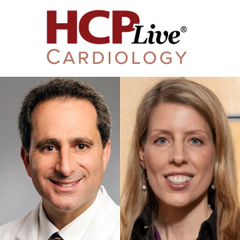
Laurence Sperling, MD, and Eugenia Gianos, MD, discuss the historical context and underutilization of lipoprotein apheresis in part 1 of a 3-part video series.
00:00 - Introduction to the Scientific Statement on Lipoprotein Apheresis
01:25 - Importance of the Central Illustration in the Scientific Statement
03:17 - Historical Context and Evolution of Lipoprotein Apheresis
On October 07, 2024, the American Heart Association (AHA)
At 18 pages in length, citing 104 references, and featuring a multitude of charts and colorized graphics, the scientific statement’s specific aim is to provide an overview of the history of lipoprotein apheresis, mechanisms of action, cardiovascular and renal outcomes data, indications, and options for treatment. Composed on behalf of several AHA councils, including the Council on Arteriosclerosis, Thrombosis, and Vascular Biology; Council on Cardiovascular and Stroke Nursing, and Council on Clinical Cardiology, the document was created by a volunteer writing committee chaired by Laurence Sperling, MD, Katz Professor in Preventive Cardiology and founder of the Emory Center for Heart Disease Prevention.
In this HCPLive Special Report, Sperling is joined by committee vice-chair Eugenia Gianos, MD, director of Cardiovascular Prevention at Northwell Health, for a deep dive into the AHA’s scientific statement, their personal experiences with lipoprotein apheresis, and future considerations in the evolving landscape of lipodology.
In the introduction video featured above, Sperling explains the importance of raising awareness of this underutilized treatment for patients with severe hypercholesterolemia, including familial hypercholesterolemia (FH) and elevated lipoprotein(a) [Lp(a)]. Gianos highlights key points from the statement, focusing on the specific patient populations that benefit most from this therapy, such as those with homozygous and heterozygous familial hypercholesterolemia, as well as those with elevated Lp(a) levels. Both experts emphasize the importance of the central illustration in the statement, which concisely presents the treatment’s benefits, including reductions in LDL, Lp(a), and inflammation markers.
Laurence Sperling has no disclosures to report. Relevant disclosures for Gianos include Amgen, AstraZeneca,Eli Lilly and Company, kaenka, Novartis, and Med-IQ.
References: