






Family Medicine
Latest News
Advertisement
Latest Videos




Podcasts





CME Content























































Advertisement
More News

The UT Health infectious disease specialist reviews new vaccine and treatment options, as well as the threat of an RSV-flu-COVID "triple-epidemic" in this winter season.

A new literature review shows that globally, a majority of both men and women with schizophrenia experience some form of sexual dysfunction.

The advisory committee's vote may trigger an FDA decision to remove more than 250 cough medicine products from the market, or require a reformulation of such items.
The agency anticipates the decision to update monovalent formulas of the Pfizer, Moderna, and future COVID-19 vaccines to reflect circulating variants will become an annual practice.

Crinetics announced findings from the PATHFNDR-1 trial showing the investigative oral daily drug may provide patients with the rare disease an alternative from recurring injection therapy.

A recently authorized device for autism detection showed promising accuracy in research across US specialty clinics. The lead author shares his thoughts on a new podcast.

An analysis of life expectancy growth since the 1930s suggest more than 50 countries have surpassed the US—with the gap compared to the leading countries widening in that time.

Alcendor discusses the recent uptick in cases and hospitalizations, as well as the latest variants of concern and developments in 2023-24 booster doses.

The adjusted odds of vision testing decreased by 41% for uninsured and 24% for publicly insured participants versus those with private insurance.

Vistagen reported significant improvement of physician- and patient-reported anxiety among trial participants who underwent an anxiety-inducing public speaking exercise.

Clayton, a primary investigator in the drug's pivotal trials, discusses what the historic FDA approval means for managing PPD in women.
The approval marks the first indication for a postpartum depression drug—one that which has been touted for its rapid-acting effect and sustained benefits.

The baseline data for the initial 1000 participants recruited into the TX-YDSRN show 79.6% were diagnosed with a primary depressive disorder.

Investigators discuss the potential of psychedelic drugs as a new approach to treating mental illnesses, highlighting their therapeutic benefits and the need for further research to understand their effects, safety, and accessibility.

During the early pandemic period, video telehealth use increased among all veteran groups but differences were observed among American Indian/Alaska Native veterans.
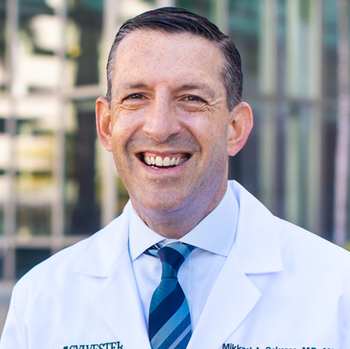
Dr. Mikkael Sekeres discusses the approval of quizartinib (Vanflyta) and how it impacts the treatment of acute myeloid leukemia.
This approval is the first for an FLT3 inhibitor and it's specifically indicated for patients who have FLT3-ITD.

After restrictions, the number of youth more than 1 hour away from a clinic almost doubled to 50%, indicating that half of all youths face increased travel times to access essential gender-affirming care.

The study presents a machine learning algorithm utilizing ECG data during CPAP titration that can effectively forecast sleep apnea events.
The long-awaited approval for VP-102 makes this treatment the first available therapy for the pox virus-borne skin disease.

Skyrocketing rates of HCV have aligned with the opioid epidemic—and evidence the need for universal pregnancy screenings.

Though many countries established guidelines and strategies to eliminate the virus by 2030, the region is still behind on newborn virus management.

Structural discrimination, such as sexism and racism, can exacerbate mental health challenges, leading to higher suicidal thoughts and behavior rates among multiple marginalized individuals.

Because early detection of PPD is crucial and its prevalence is growing in the US, the condition poses significant risks to both maternal and neonatal health.

Data corresponding with DSM-IV symptoms were gathered around ages 18, 21, and 23 years and the primary outcome was depression at age 24.
Advertisement
Advertisement
Trending on HCPLive
1
From Injectable to Oral: Optimal Durable Clearance Across the IL-23 Class
2
Ritlecitinib Stabilizes Vitiligo in Tranquillo Trial, With Iltefat Hamzavi, MD
3
Advances in Treating High-Impact Psoriasis from EADV 2026
4
FDA Updates Sotatercept Label, ERS Releases PAH Guidelines Based on HYPERION Data
5