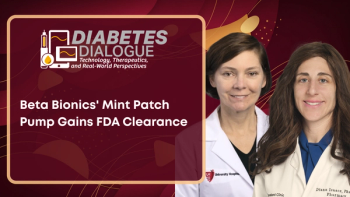
Diana Isaacs, PharmD, and Natalie Bellini, DNP, discuss the FDA's recent approval of Bayer's finerenone in concomitant CKD and T1D.
In our October 2023 endocrinology month in review, our editorial team highlights regulatory updates, pipeline news, and conference data capturing the attention of the field during the month.
The month of October 2023, like the year as a whole, has been fast-paced and packed with relevant news for those in the field of diabetes management. In our October 2023 endocrinology month in review, our editorial team highlights the FDA news, pipeline updates, and conference news defining the past month.
On October 23, 2023, Insulet Corporation announced the US Food and Drug Administration had granted 510(k) clearance to their Omnipod 5 App for iPhones. The move makes Insulet Corporation the first and only company to offer a tubeless AID system with full control from a compatible Android and iOS smartphone, according to the company’s announcement.
The clearance comes less than 2 years after the Omnipod 5 Automated Insulin Delivery (AID) system received clearance from the FDA for use in patients aged 6 years and older with
On October 20, 2023, Zydus Lifesciences Limited, an India-based company with a portfolio of generic medications, announced the FDA had approved sitagliptin tablets in 25 mg, 50 mg, and 100 mg formulations as an adjunct to diet and exercise to diet and exercise for improving glycemic control in people with
According to Zydus Life Sciences Limited the approval is based on research, development, regulatory and manufacturing work performed by teams within their company and sitagliptin ZITUVIO™ has undergone quality testing for Nitrosamines and potential genotoxic impurities as per current regulatory standards.
In 2022, semaglutide and tirzepatide dominated headlines and discussions in the world of diabetes and obesity management. In 2023, this has not only continued but become an even greater emphasis in ongoing discussions surrounding optimal management of both the diabetes and obesity epidemic.
As part of our October 2023 endocrinology month in review, we are spotlighting pipeline updates for both the aforementioned agents as they seek to expand their foothold with additional indications in the future.
On October 10, 2023, Novo Nordisk announced it would be discontinue the FLOW trial based on a recommendation from the trial’s independent Data Monitoring Committee indicating an interim analysis of the
During early October, the medical community was offered further insight into the potential of tirzepatide in the form of trial results from SURMOUNT-3 and SURMOUNT-4, which were presented at ObesityWeek and the European Association for the Study of Diabetes Annual Meeting, respectively. In this episode of
In the preview below, hosts discuss their takeaways from SURMOUNT-3.
As mentioned above, the early half of October featured a slew of major meetings and scientific conferences, including EASD 2023 and ISPAD 2023. In this portion of our month in review, we are highlighting a trio of top stories from these meetings.
Data from a phase 1/2 trial of VX-880 were presented at EASD 2023, with results suggesting half of the people with type 1 diabetes treated with stem cell-derived islet cells (VX-880) achieved insulin independence. Presented by Trevor Reichman, MD, the study found all 6 participants experienced an improvement in glycemic control and a significant reduction in their externally administered insulin needs.
Results from the AiDAPT trial, which were also presented at EASD 2023, suggest hybrid closed-loop insulin therapy significantly improved maternal glycemic control during pregnancy in women with type 1 diabetes. Presented by Helen Murphy, MD, results of the trial, which examined the use of a hybrid closed loop system relative to standard care, indicate the time-in-range benefits were enabled by a reduction in maternal hyperglycemia alongside an increase in nocturnal time in the target range.
Related:
Use of teplizumab (Tzield) was linked to the preservation of β-cell function in children and adolescents with newly diagnosed type 1 diabetes, according to results of the PROTECT trial. Presented at ISPAD 2023, results of the trial suggest use of teplizumab was associated with a significant slowing of the decline of C-peptide levels relative to placebo therapy in people with stage 3 autoimmune type 1 diabetes, but further analysis indicated numerical trends for key secondary endpoints, such as time in range, HbA1c, and total insulin doses, failed to reach statistical significance.
Related: