Brendon Neuen explains why finerenone's mechanism supports combining it with immunosuppressive therapy in glomerulonephritis.
Brendon Neuen explains why finerenone's mechanism supports combining it with immunosuppressive therapy in glomerulonephritis.
Brendan Neuen breaks down the full FIND-CKD primary and secondary endpoint data, subgroup consistency, and safety signals.

Brendan Neuen, MBBS, PhD, joins Shikha Wadhwani, MD, MS, to unpack FIND-CKD's GN subgroup data and 23% risk reduction.
VISIONARY enrolled 510 high-risk IgAN patients globally. Learn how the trial's design and anti-APRIL mechanism were built to target disease at its root.

Dana Rizk, MD, joins hosts Brendon Neuen and Shikha Wadhwani to unpack 2-year VISIONARY data showing sibeprenlimab stabilizes eGFR in IgAN.
The phase 3 TURING trial found rituximab slashed relapse rates in adults with minimal change disease and FSGS, offering a steroid-sparing alternative.
David Cherney, MD, PhD, discusses REMODEL trial insights into how semaglutide reduces albuminuria and impacts kidney fat and fibrosis pathways.
Martin de Borst, MD, PhD, discusses IV iron use in transplant recipients through an RCT focused on exercise capacity, function, and quality of life.
Vlado Perkovic, MBBS, PhD, discusses APPLAUSE-IgAN data showing iptacopan reduced eGFR decline and lowered kidney event risk in IgA nephropathy.
Hiddo Heerspink, MD, PhD, highlights ASSIST trial data showing atrasentan reduced proteinuria by 25% on top of SGLT2 inhibitors in IgA nephropathy.
Neuen reflects on new FIND-CKD data suggesting finerenone’s benefit in nondiabetic chronic kidney disease and highlights urgency of early screening and combination therapy.

Discover groundbreaking insights on SGLT2 inhibitors and their impact on kidney health, cardiovascular outcomes, and patient care at ASN Kidney Week.

Neuen is joined by Richard Pratley, MD, and Muthiah Vaduganathan, MD, MPH, to discuss the evolving landscape of CKM trial design.
Neuen describes varying treatment effects with 4 different classes of IgAN therapeutics and future opportunities for personalized treatment.
Neuen reviews recent advances in IgAN treatment and findings from a systematic review and meta-analysis guiding their use in clinical practice.

Host Brendon Neuen is joined by guests Tor Biering-Sørensen and Kristoffer Skaarup to discuss NUDGE-CKD and implementation trial design.
Discover groundbreaking insights on the VISIONARY trial, IgA nephropathy treatment, and the future of kidney care with expert Vlado Perkovic, MBBS, PhD.
Brendon Neuen, MBBS, PhD, is joined by Rajiv Agarwal, MD, MS to explore the concept of simultaneous initiation of SGLT2i and nsMRA in CKD and T2D.
In the final segments of this 4-part episode, the discussion focuses on the use of HCEs in different kidney disease trials.
In part 3 of 4 from this episode, the discussion focuses on potential limitations to HCEs and addressing skepticism around their use in nephrology.
In part 2 of 4 from this episode, the discussion focuses on hierarchical composite endpoints and their use in nephrology trials and research.
In part 1 of 4 from this episode, the discussion focuses on traditional composite endpoints in nephrology trials and the use of HCEs.
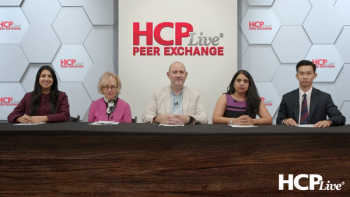
Panelists summarize the key points discussed regarding the evolving landscape of IgA nephropathy treatments, highlighting the importance of addressing unmet needs, the significance of reducing proteinuria, and the role of emerging therapies in modifying disease progression, ultimately emphasizing the necessity for personalized treatment approaches and effective communication with patients to improve clinical outcomes.
Panelists discuss how shared decision-making is essential when considering emerging treatments vs established therapies, emphasizing the importance of aligning treatment choices with patient preferences and values to enhance adherence and optimize outcomes in IgA nephropathy care.
Panelists discuss how the approval of atrasentan is expected to significantly affect the treatment landscape for IgA nephropathy by offering a novel therapeutic option that targets both proteinuria reduction and the underlying immune dysregulation associated with the disease.
Panelists discuss how the NefIgArd study findings contribute valuable insights into the efficacy of emerging therapies for IgA nephropathy, emphasizing their role in reducing proteinuria and improving patient outcomes.
Panelists discuss how the PROTECT study’s results enhance the understanding of emerging therapies for IgA nephropathy, focusing on their potential to reduce proteinuria and modify disease progression.
Panelists discuss how the ALIGN trial data inform the development and potential impact of emerging therapies for IgA nephropathy, particularly focusing on their efficacy in reducing proteinuria and addressing disease pathology.
Panelists discuss how the ALIGN trial data inform the development and potential impact of emerging therapies for IgA nephropathy, particularly focusing on their efficacy in reducing proteinuria and addressing disease pathology.
Panelists discuss how emerging therapies are expected to address the unmet need for treatments that not only reduce proteinuria but also target the underlying immune dysfunction associated with IgA nephropathy.
December 11th 2024
December 11th 2024