





Schizophrenia
Latest News
Advertisement
Latest Videos



CME Content




























































Advertisement
More News

A 6-year mirror analysis of risperidone, once-monthly paliperidone palmitate or once-monthly aripiprazole concludes suggesting the regimens may serve as an alternative to clozapine.

The treatment represents the only FDA approved orally dissolving sublingual film for this patient population.

Clinical decision support intervention resulted in a rate of change in total modifiable CV risk that was 4% lower among intervention patients compared to control.

Melatonin is seen as the most promising treatment in this patient population.

The treatment met the pre-specified primary endpoint of significantly less weight gain in the ENLIGHTEN-Early trial.

There was an elevated risk of violence perpetration in both men and women with schizophrenia spectrum disorder.

Ineligible patients with schizophrenia have a higher risk of hospitalization for a number of reasons, including suicide attempts.

Brexipiprazole has been previously approved for adults with schizophrenia and adults with major depressive disorder.

Between 20-30% of patients with schizophrenia do not respond to the first-line antipsychotic treatment.
Six-month paliperidone palmitate is the only twice-yearly injectable treatment for patients with schizophrenia.

There are a number of ongoing clinical trials testing psychedelics as a treatment for psychiatric disorders.

There was little difference in hospitalization and mortality rates between vaccinated schizophrenia patients and vaccinated control patients.

Schizophrenia PRS was linked to increased disorganized symptom dimension scores.

Severe mental disorders had the highest odds ratios for the risk of mortality.

On this episode of Coping After COVID, Dr. Craig Chepke discusses the challenges for schizophrenia patients.
The oral combination therapy can also be used as acute treatment for manic or mixed episodes.
A panel of experts in schizophrenic psychiatric care share their thoughts on the practice, patients, and treatment based on their years of experience.

Joe Avelino, RN, BSN, MHSA, CPHQ, and Rahn Bailey, MD, DFAPA, explain protocols a practice can follow when managing a patient with schizophrenia who is frequently hospitalized or has other medical conditions.

New data show high rate of depressive symptoms in patients with NTFE schizophrenia.

New data show adverse childhood experiences can cause personality changes proximal to trauma, rather than developing later in life.

While treatment options do not impact 30-day readmissions, they can influence hospital length of stay and costs.
Henry Nasrallah, MD, and Rahn Bailey, MD, DFAPA, discuss how to switch a patient from oral to a long-acting injectable antipsychotic from their own experience.
Joe Avelino, RN, BSN, MHSA, CPHQ, reviews the benefits of using long-acting injectables (LAIs) and Henry Nasrallah, MD, reviews his techniques for getting patients to accept LAIs and continue with them.
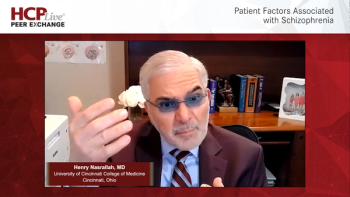
Henry Nasrallah, MD, discusses patient factors that lead to long-acting injectable treatment in patients with schizophrenia.
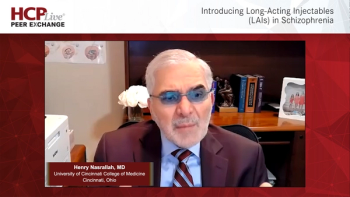
Henry Nasrallah, MD, recalls the history behind long-acting injectables in patients with schizophrenia.
Advertisement
Advertisement
Trending on HCPLive
1
The Case for Routine Kidney Screening, With Pranav Garimella, MBBS, MPH
2
FDA Approves Obinutuzumab (Gazyva) for Idiopathic Nephrotic Syndrome
3
What The FDA Psychedelic Hearing Means for Psychiatrists
4
The HCPFive: Top News for Healthcare Providers from the Week of 09/20
5