
This summary, featuring 4 leading experts, provides an overview of what dermatologists may look forward to during the AAD 2025 Annual Meeting.
This summary, featuring 4 leading experts, provides an overview of what dermatologists may look forward to during the AAD 2025 Annual Meeting.

A preview of 5 phase 3 clinical trials being presented during the AAD 2025 annual meeting's late-breaking sessions.
John Barbieri, MD, MBA, discusses recent data examining factors associated with formation of benzene in OTC benzoyl peroxide products.

This quiz, the first in a series of 4, tests your knowledge on prevention and treatment of actinic keratosis based on the 2021 AAD guidelines.

Counting down the most impactful news at major medical meetings, it’s the HCPLive Five! This edition shares 5 important updates from the American Academy of Dermatology (AAD) 2024 meeting.

In this post-AAD 2024 interview, Stein Gold commented on her team’s two recent sub-analyses of the phase 4 IMMpulse studies on risankizumab for psoriasis.

A post-AAD 2024 discussion on the importance of tailoring acne and rosacea management to individual patients’ needs, focusing more attention on diverse skin types and backgrounds.

In this AAD 2024 interview, Bunick highlights several new findings on the use of topical isotretinoin for treatment of congenital ichthyosis.

Alexis discusses clinical and demographic hurdles in treating skin of color for conditions like atopic dermatitis, and the potential of research like that being done in tapinarof cream 1%.

Blauvelt discusses the future research of higher-dose risankizumab for patients with psoriasis—and why it may be "disruptive in the treatment space."
Alexis spoke in this AAD interview about his team’s results regarding lebrikizumab for adults and adolescents with moderate-to-severe atopic dermatitis and skin of color.

Gelfand discusses the convenience of phototherapy, and how its efficacy may complement biologic regimens in patients with psoriasis.

These data presented at AAD 2024 highlight deuruxolitinib’s efficacy in the treatment of adults with moderate-to-severe alopecia areata.

Another segment of Silverberg’s interview at AAD 2024 featured a discussion on safety data and the larger implications of these phase 3 findings for eczema management.

This interview at AAD featured a discussion with Silverberg on nemolizumab’s efficacy and safety at Week 48 among patients with moderate-to-severe atopic dermatitis.
Blauvelt discusses the impetus for his phase 2 trial looking at the ability to mitigate pivotal psoriasis memory T cells with risankizumab.
These study findings, presented at AAD 2024, were the results of a recent analysis conducted to assess long-term outcomes among patients with psoriasis.

In this segment of his AAD interview, Hamzavi discussed more about his team’s findings on upadacitinib as well as their implications and future in terms of research.
In a phase 3 trial that featured approximately half of participants with skin of color, tapinarof cream 1.0% provided consistent benefit for patients identified as White, Black, or Asian.

Kim discusses the state of dermatology innovation and applied care, as well as his involvement in a new company in the space.

In this interview segment, Lebwohl discusses the implications of his team’s late-breaking data on bimekizumab for clinical practice.

In this interview at AAD 2024, Porter discussed her team’s phase 2 findings on hidradenitis suppurativa the impact of ruxolitinib cream among those with Hurley Stage I and II.
Kimball discusses her team’s new late-breaking data regarding the safety and effectiveness of lutikizumab in treating the symptoms of moderate-to-severe HS in adult non-responders to anti-TNF therapy.
This AAD 2024 interview features a discussion with Lebwohl on his team’s new late-breaking data, covering long-term findings on bimekizumab.
These phase 3 findings from AAD 2024 suggest patients treated with baricitinib may continue to see scalp, eyelash, and eyebrow hair regrowth with specific dosing regimens.
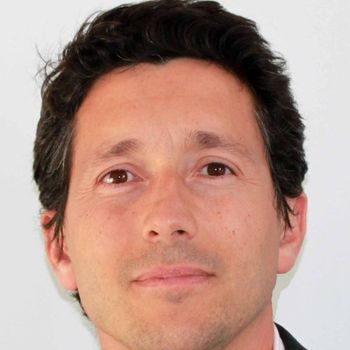
Thierry Passeron, MD, PhD, discusses the potential benefit of upadacitinib as an oral systemic therapy in patients with nonsegmental vitiligo.
The pioneer in neuroimmune research and itch physiology discusses how treatment innovation has evolved dermatology—and what still needs to be changed in practice.
In this interview at AAD 2024, Porter discusses recent data from the SUNSHINE and SUNRISE trials on secukinumab for patients with HS.
Phototherapy is consistently beneficial for patient-reported and clinical outcomes regardless of the location, according to late-breaking data at AAD 2024.
Data from the phase 2 KNOCKOUT study show risankizumab's sustained benefit in reducing memory cells over 52 weeks in psoriasis patients.