




Surgery
Latest News
Advertisement
Latest Videos





CME Content




























































Advertisement
More News

Dr. Leng discusses the progression of dry AMD patients in the IRIS registry from early stages to potential GA, as well as the benefit in narrowing the clinical definition of intermediate dry AMD.

At AAO 2021, Dr. Sahel discussed the findings of the PIONEER trial on the combination of an optogenetics device and gene therapy in treatment of RP.

Dr. Avery discusses the positive results of RGX-314 gene therapy, noting dramatic reduction in need for therapy, with stable vision and good thickness results

Dr. Dhoot discusses data on visual acuity from the phase 3 KESTREL and KITE trials, comparing brolucizumab to aflibercept at 52 weeks.
The Director of Retina Services at Wills Eye Hospital joins to discuss the historic FDA approval granted for a novel method of ophthalmic care: a permanent implant that allows for vision-saving formula therapy to treat the eye continually.

Dr. Khanani highlights data from MERLIN showing noninferiority of brolucizumab to aflibercept in nAMD treatment, but a higher rate of intraocular inflammation.

Dr. Sheth discusses the data from the late-breaking Phase 2B ALTISSIMO study.

Dr. Singh discusses the aging population in ophthalmology care, advances including port delivery systems, and the potential rapid uptake of faricimab in treatment.
Dr. Singh discusses results from TENAYA and LUCERNE on faricimab compared to afilbercept in patients with nAMD.

Dr. Sternberg discusses step therapy in wetAMD treatment and his opinions in favor of its use.

Dr. Lally discusses the effect of avacincaptad pegol treatment on the progression of geographic atrophy and intermediate age-related macular degeneration.

Dr. Haller discusses issues in diversity and inclusion in retina, but provides avenues for solutions and what needs to come next.
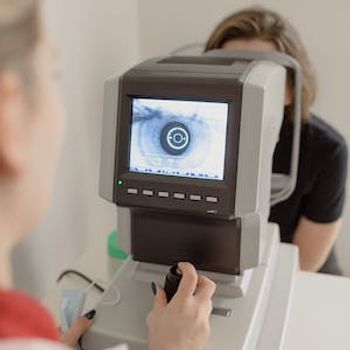
Genetic evidence show increased alcohol intake may be a causal risk factor for GA, while increased lifetime smoking was associated with risk of advanced AMD.

Hospital systems were able to effectively mitigate challenges during COVID-19, with 24-hour time-to-surgery benchmarks unchanged from before to after the pandemic.
The novel PDS implant will allow patients with retina disease to receive continuous anti-VEGF formulation for up to 6 months between refills.

Veeral S. Sheth, MD, MBA, discusses what ophthalmologists will need to learn about PDS application for patients with AMD.

Data show 5 of 20 patients with history of MBS in the study experienced the primary composite outcome of IMV and/or death by day 7.

Factors associated with decreased receipt of ophthalmic telehealth care included older age, male sex, and patients with an educational level of high school or less.

Investigators noted the relationship of reading performance with visual acuity supports the validity of reading performance as end point in clinical trials.

The mean number of injections per year was 6.2 ± 1.4 injections following 1 year of treatment in 2007 - 2010 and 8.3 ± 2.0 injections in 2016 - 2017.

Only 1 patient died due to HCV-related complications following liver transplantation.

Baseline VA show slight improvement in aflibercept versus ranibizumab treated eyes, (42.5 letters versus 36.9 letters).

Students who received eyeglasses through a school-based vision program achieved better reading scores, but sustained impact not observed after 2 years.

The approval of ranibizumab-nuna marks the first ophthalmology biosimilar to become FDA approved in the United States.
The wound care matrix is composed of hydrolyzed fish collagen infused with cod liver oil and other plant-derived oil and wax to aid in the natural wound healing process.
Advertisement
Advertisement
Trending on HCPLive
1
The Case for Routine Kidney Screening, With Pranav Garimella, MBBS, MPH
2
Anti-Alpha-Gal Antibodies Block IgE Binding in Alpha-Gal Syndrome
3
Nearly 9 in 10 US Adults With CKD Don't Know They Have It, With Pranav Garimella
4
Weekly Insulin Efsitora Alfa (Onswik) Gains FDA approval for Type 2 Diabetes
5