

Catch up on major trial results, groundbreaking FDA decisions, and key clinician insights from major endocrinology conferences.
Catch up on major trial results, groundbreaking FDA decisions, and key clinician insights from major endocrinology conferences.

Blumenthal discusses his presentation at the 10th Annual Heart in Diabetes meeting, in which he compared the current US and European dyslipidemia guidelines.

Gideon Hirschfield, FRCP, PhD, discusses phase 2b results from VISTAs, evaluating volixibat in PSC

Rajani Katta, MD, on navigating the diet-skin connection: evidence, myths, and clinical ownership.
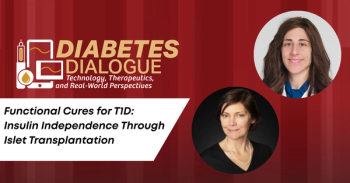
Diabetes Dialogue cohosts Diana Isaacs, PharmD, and Natalie Bellini, DNP, cover recent data released by Eledon regarding tegoprubart for type 1 diabetes.
Ersodetug showed target engagement and hypoglycemia reduction trends in phase 3 cHI study but missed primary endpoints in SunRIZE trial.

Heather O'Connell, PA-C, an allergy and asthma PA, describes how she uses clinical research and structured follow-up to shift patient thinking about the nose-lung connection, and why APPs bring a distinct advantage to that conversation.
Igudesman highlights satiety, diet quality, and macronutrients, among other endpoints, as important additional methods beyond weight loss for managing T1D.
O'Connell, an allergy and asthma PA, says the united airway concept has direct implications for how providers from different specialties recognize, refer, and communicate with one another about the same patient.

This episode covers the recent release of new data on Eledon’s tegoprubart for islet cell transplantation in patients with T1D.

At Maui Derm NP+PA Summer 2026, Matthew Zirwas, MD, shares cases of a factory worker with PPD allergy and a chronic spontaneous urticaria patient with persistent facial dermatitis.

Jessica Glennie, MSN, APRN, says the first formal ATS clinical guidelines on interstitial lung abnormalities are filling a real gap — but integration into practice is still catching up.
Lindsay Fourman, MD, discusses early real-world data exploring the use of GLP-1 receptor agonists alongside metreleptin in lipodystrophy.
Matthew Zirwas, MD, on why adult-onset atopic dermatitis is the most undertreated condition in dermatology and how diagnostic criteria are driving years of delayed care.

Dawn Eichenfield, MD, discusses off-label treatment rationale, biologics, JAK inhibitors, and care gaps in rare pediatric skin conditions.
With nerandomilast offering a more tolerable alternative to nintedanib and pirfenidone, Jessica Glennie, MSN, APRN, says the threshold for initiating antifibrotic therapy in early or stable disease is moving up.

Donna Culton, MD, PhD, explains why autoimmune blistering diseases often look nothing like the textbook and how to pursue the diagnosis anyway.
Igudesman discusses her presentation at ENDO 2026, during which she covered the importance of managing obesity with lifestyle changes in patients with T1D.

Stefan Weiss, MD, on recognizing mast cell disorders in the dermatology clinic and how avapritinib is reshaping treatment for indolent systemic mastocytosis.

The topic of precision medicine in dermatology is explored in this segment of Bunick's interview at RAD 2026.
This interview at RAD highlights FDA-approved therapies in the atopic dermatitis treatment armamentarium.

John Giacona, PhD, PA-C, says identifying pulmonary hypertension early, distinguishing its type, and engaging critically with clinical evidence are paramount.

This June episode of the podcast highlights one clinicians journey and experiences as a woman physician in the dermatology and rheumatology fields.

Hear Anu Lala, MD, discuss how she turned a moment of childhood fascination into a lifelong career of caring for patients.
Heather O'Connell, PA-C, makes the case that missing rhinitis, nasal polyps, or NSAID sensitivity is costing patients exacerbations and hospitalizations.
Matthew Zirwas, MD, on using dupilumab and lebrikizumab to guide patch testing decisions and the 2 most missed allergens in eczematous disease.
First placebo-controlled phase 3 METRE-PL data show prevalent metabolic burden in familial partial lipodystrophy (FPLD) despite standard therapy.

In the latest Skin of Color Savvy episode, Umayr Shaikh, MPH, shares how his work is shaping his medical career.

John Sonnenberg, PhD, reflects on Emerge phase 3 topline data for DT120 in MDD, including MADRS outcomes, remission rates, and what comes next.

This episode covers the recent trial of the Signos weight loss platform, indicating weight loss that could challenge GLP-1 receptor agonists.