
Lance Sloan, MD, discusses his recent sub-analysis of the CATALYST trial, investigating whether hypercortisolism limits the efficacy of GLP-1s.
Lance Sloan, MD, discusses his recent sub-analysis of the CATALYST trial, investigating whether hypercortisolism limits the efficacy of GLP-1s.

Sarath Raju, MD, discussed a study that found persistent IR was associated with higher ground glass opacity on CT, suggesting metabolic inflammation may drive early ILD development.

An EPICS-III study investigator discusses the mechanism of action of saroglitazar to treat patients with PBC.

Functional air trapping in emphysematous lung regions may predict pneumothorax after BLVR, per ATS 2026 data presented by Isam Albaba, MBBS, from Temple University.
Amit Gupta, MBBS, DNB, joins the show to discuss diabetes treatment in a traditionally underserved population and to address the IDF’s work in moving it forward.

Natasha Mesinkovska, MD, PhD, speaks on the potential impact that an additional approved therapy like upadacitinib could have on younger patients with alopecia areata.
This interview on a possible upcoming therapeutic option for severe alopecia areata highlights information regarding upadacitinib (Rinvoq) and its potential.

Payel Gupta, MD, discusses how IgE, FeNO, and type 2 comorbidities inform biologic choice and when a lack of response warrants switching agents.

Phase 2 findings presented at ATS 2026 by Gerald Criner, MD, show pegtarazimod cut supplemental oxygen needs in hospitalized AE-COPD patients for up to 60 days.

This segment of the May episode of The Medical Sisterhood highlights key points regarding the impacts of role models on young patients in dermatology.

This segment of the latest Skin of Color Savvy episode highlights clinician viewpoints surrounding sun protection and skin cancer.
Ketan Dhatariya, MD, PhD, MS, joins the show to discuss how therapies for diabetes have evolved in the UK in comparison to the US.

Phase 4 PASSAGE data from ATS 2026 show tezepelumab reduced exacerbation rates across a diverse real-world cohort, including smokers, adolescents, and patients with comorbid COPD.

Trang Ly, PhD, MBBS, joins the show to discuss Insulet’s recent advancements in automated insulin delivery and the trajectory of the Omnipod platform.
Vivian Fonseca, MD, explains data showing nearly half of patients with T2D discontinued GLP-1 therapy within 1 year, reducing their likelihood of achieving weight loss and HbA1c goals.
Timothy Garvey, MD, discusses petrelintide’s efficacy in patients with overweight and obesity, as well as its comparably low incidence of gastrointestinal effects.
Carel le Roux, PhD, discusses the full results from SYNCHRONIZE-1, a trial investigating Boehringer Ingelheim’s dual GLP-1/glucagon agonist.
Shah explains proactive ketone monitoring, home DKA prevention strategies, and the future of continuous ketone monitoring.
Viral Shah, MD, outlines the case for earlier ketone detection across diabetes types, the limitations of urine testing, and what CKM technology may change in clinical practice.

Eugene Wright, Jr., MD, joins the show to discuss the current state of technological integration into diabetes care, from glucose monitors to insulin delivery and beyond.
Buse discusses phase VESPER results, berobenatide's weight loss potential, and expectations for the upcoming phase 3 program
VESPER-1 and VESPER-3 findings highlight the potential of berobenatide, an investigational ultra-long-acting GLP-1 RA, for overweight or obesity with or without type 2 diabetes.
Alexis Marcotte-Chénard, PhD, discusses his presentation on “exercise snacks” and how they can lower blood pressure and improve HbA1c in sedentary patients.
Sood discusses emerging diabetes technologies, from automated insulin delivery to dual glucose-ketone monitoring, at ADA 2026.
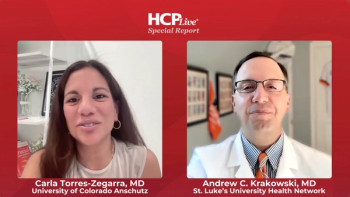
In the final segment, the clinicians evaluate the guideline's nuanced positioning of phototherapy relative to newer systemic agents and highlight a gap.
Krakowski and Torres-Zegarra discuss how to initiate the conversation about systemic therapy with families and review the guideline's drug hierarchy.
The experts review the guideline's approach to topicals for active atopic dermatitis, covering the appropriate use of topical corticosteroids and more.
This segment examines how the guideline navigates the tension between GRADE-based evidence thresholds and long-established clinical practices.
This discussion highlights disease prevention and the foundational role of moisturization, with the experts examining emollient use.
Pediatric dermatologists introduce the first pediatric-specific evidence-based guidelines for atopic dermatitis and discuss.