

Jennifer Soung, MD, and Mona Shahriari, MD, discuss trust-building, psychosocial burden, and treatment fit in psoriasis care for diverse skin tones.
Jennifer Soung, MD, and Mona Shahriari, MD, discuss trust-building, psychosocial burden, and treatment fit in psoriasis care for diverse skin tones.
As AI continues to evolve at a breakneck pace, catch up on some of the ways it’s already been implemented in cardiovascular care.
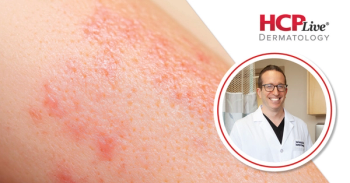
Friedman outlines how dermatologists can track cumulative corticosteroid exposure, identify at-risk patients, and improve patient adherence with handouts.
Jennifer Soung, MD, and Mona Shahriari, MD, discuss diagnosing psoriasis in diverse skin tones and why severity scores overlook dyspigmentation.
In this segment from the latest episode of Diabetes Dialogue, Diana Isaacs, PharmD, and Natalie Bellini, DNP, discuss the FDA's recent approval of finerenone for CKD with T1D.
David Berg, MD, discusses his meta-analysis of 3 major trials of dapagliflozin, which determined its efficacy in reducing cardiovascular death risk.
SOCS leaders explain SOCS Serves, a toolkit-based program connecting dermatology volunteers with students and underserved communities.
Kazem Rahimi, MD, discusses his recent IPD analysis highlighting the consistent relative risk reduction of first cardiovascular event with BP-lowering drugs.

Woolley separates intoxication from delirium and defends aggressive masking instead of a shift to comparative efficacy trial designs.

Selvanayagam shares his thoughts on whether ICDs’ improvements in sudden cardiac death are worth the reduced quality of life.
Fluconazole was linked to improved Mayo and Harvey-Bradshaw scores; Iliev outlines the placebo-controlled trial needed next.

Raj Chovatiya, MD, PhD, discusses how the oral TYK2 inhibitor zasocitinib may affect scalp, nail, and hand psoriasis, clearance speed, and once-daily dosing.
Joseph Selvanayagam, MBBS, discusses the potential of implantable cardioverter-defibrillators to reduce sudden cardiac death among younger patients.
Weill Cornell investigator Iliyan D. Iliev, PhD, explains why fluconazole, not nystatin, cleared gut Candida in IBD.
Josh Woolley, MD, PhD, says active placebos fail to mask high-dose psilocybin and propose combining drug classes with authorized incomplete disclosure.
Raj Chovatiya, MD, PhD, explains where oral TYK2 inhibitor zasocitinib may fit in psoriasis treatment after the FDA accepted its NDA under priority review.
Astrid Paul Nordin, MD, PhD, discusses the results of the IDEAL-AF trial, highlighting the efficacy of including LVZ on top of PVI.
George Vasquez-Rios, MD explains the barriers in GN care that ASN's new compendium may address.
A new ASN compendium curates scattered GN care guidance into one living resource, says nephrologist George Vasquez-Rios, MD

Anjali Owens, MD, discusses the long-term extension of the EXPLORER-HCM trial, demonstrating mavacamten’s safety and efficacy up to 5 years after initiation.
In his paper, Josh D. Woolley, MD, PhD, proposes multidrug active placebos and limited disclosure to finally mask high-dose psilocybin trials.

Where does Ameluz PDT fit next to Mohs surgery for skin cancer? Neal Bhatia, MD, on candidacy, adoption, and open questions.
Sten Rubertsson, MD, PhD, discusses the results of the DISCO study, which compared immediate to deferred angiography in patients without ST-elevation following cardiac arrest.
Brendon Neuen explains why finerenone's mechanism supports combining it with immunosuppressive therapy in glomerulonephritis.

John Ostrominski, MD, discusses his analysis of the FINEARTS-HF trial, which showed finerenone’s improvements despite CKD, ASCVD, and/or metabolic disease.

Jonathan Piccini, MD, discusses his presentation at ESC 2026 discussing the potential benefits of catheter ablation in concomitant HFpEF and AF.
Luke Laffin, MD, discusses his secondary analysis of the phase 2 KARDINAL trial, which demonstrated substantial improvements in uncontrolled hypertension.

Wechsler discusses why less frequent dosing matters to patients with severe asthma, plus VALIANT's safety profile and what's next for the field.

Robert Giugliano, MD, breaks down his prespecified subanalysis of the VESALIUS-CV trial, evaluating evolocumab’s effect on cardiovascular mortality.
Phase 2 VALIANT data show the anti-TSLP receptor antibody sharply reduced exacerbations in patients with high eosinophil counts.