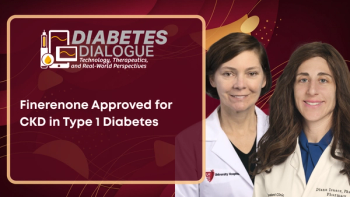
Diana Isaacs, PharmD, and Natalie Bellini, DNP, discuss the FDA's recent approval of Bayer's finerenone in concomitant CKD and T1D.
Internal Medicine World Report
Magnetic Stimulation Improves
Motor Function in Stroke Patients
Repetitive transcranial magnetic stimulation (rTMS) to the unaffected hemisphere decreases reaction time and improves motor function in patients with stroke. In a recent study, 10 patients who had stroke within the previous 12 months and whose motor function had stabilized received 3 rTMS sessions 1 hour apart or sham treatment. Active rTMS consisted of a 1-Hz magnetic field administered for 10 minutes over the primary and premotor cortex of the unaffected side. Compared with the sham treatment group, patients receiving rTMS showed significant decreases in simple and choice reaction times and improved performance on the Purdue Pegboard test with the affected hand (Neurology. 2005;64:1802-1804).
about 21 years ago
Growth Factors Help Combat Neutropenia in the Elderlyabout 21 years ago
The Challenges of Pain Management in the Elderlyabout 21 years ago
Diabetes, Poor Drug Compliance Predict Uncontrolled Hypertensionabout 21 years ago
Investigators Call for an Overhaul of Current Treatment Guidelinesabout 21 years ago
Paced Breathing May Attenuate White Coat Hypertensionabout 21 years ago
H Pylori Infection Linked to Low Esophageal Cancer Riskabout 21 years ago
Hypercholesterolemia Linked to Decreased Dementia Riskabout 21 years ago
Caffeine Improves Nocturnal Hypoglycemia in Diabeticsabout 21 years ago
Silent Myocardial Ischemia Common in Stroke, TIA Patients