

Ashkan Shoamanesh, MD, explains ENRICH-AF's mixed stroke and bleeding results, and a dosing signal that may point to a safer approach.
Ashkan Shoamanesh, MD, explains ENRICH-AF's mixed stroke and bleeding results, and a dosing signal that may point to a safer approach.

Ashish Sarraju, MD, discusses phase 1 data showing a single dose of Kylo-11 durably reduced lipoprotein(a) through 48 weeks.
Luke Laffin, MD, discusses 1-year data showing CTX310 produced durable reductions in ANGPTL3, LDL cholesterol, and triglycerides.

CMR GUIDE found ICD implantation did not significantly reduce sudden cardiac death or dangerous arrhythmia versus a loop recorder in LVEF 36-50%.
Ronald Witteles, MD, explains why CARDIO-TTRansform's miss doesn't undermine TTR silencers as a class for treating ATTR-CM.
Phase 2b LUMINARA results showed the oral relaxin agonist AZD5462 improved echocardiographic measures of cardiac function in patients with chronic heart failure.

The Met-HeFT trial and a companion meta-analysis found metformin did not significantly improve cardiovascular outcomes in patients with HFrEF.

Lisa Swanson, MD, on treating professional failure as a source of direction and resilience in her LEADderm 2026 talk.

Adam Friedman, MD, traces dermatology's yes-first culture to residency competition, previewing an unrehearsed LEADderm 2026 negotiation exercise.

A roundup of the top cardiology news out of ESC Congress2026 on day 2, spanning primary prevention, novel therapies, and antibiotic stewardship.
Adam Friedman, MD, discusses saying no strategically as a career skill in a LEADderm 2026 table talk on managing opportunities.

New MILOS data show bempedoic acid-based therapy translated to meaningful reductions in predicted 10-year cardiovascular risk.

Anjali Vaidya, MD, breaks down sotatercept's distinct effects on RV afterload, structure, and function in pulmonary arterial hypertension.

The REACT study found silent atherosclerosis in 57.1% of adults without known cardiovascular disease, a burden largely missed by the SCORE2 risk tool.
Steven Nissen, MD, shares key takeaways on AAV8, CTX310, and Kylo-11 gene and molecular therapies presented at ESC Congress 2026.
A longitudinal survey found PSVT disrupts patients' daily activities, sleep, and emotions between episodes.

Despite failing to display a clinically significant reduction in all-cause death or hospitalization for cardiovascular events, the trial did highlight evolocumab’s LDL-C-lowering capacity.
CTX310, a CRISPR-Cas9 therapy targeting ANGPTL3, sustained deep LDL and triglyceride reductions at 1 year after a single infusion, per ESC 2026 data.
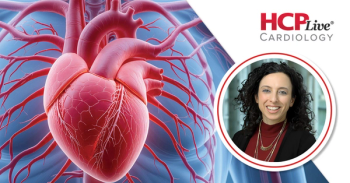
Erin Michos, MD, MHS, explains why hypertension risk rises earlier in women and how aldosterone and menopause drive that risk.
POET-II found tailored antibiotics cut treatment duration by a third in left-sided infective endocarditis without compromising safety, per ESC 2026 data.
Gaetano De Ferrari, MD, breaks down VESALIUS-CV findings on evolocumab and first MI prevention across major infarct subtypes.
PREMIUM found prasugrel monotherapy before primary PCI raised ischemic risk vs DAPT in STEMI despite less major bleeding, per ESC Congress 2026 data.
Philippe Gabriel Steg, MD, discusses the full results of the terminated trial, reflecting on their impact on the ongoing LIBREXIA-AF and LIBREXIA-Stroke trials.
The phase 2 TRANQUILITY trial found the IL-6 antibody pacibekitug produced sustained, dose-dependent reductions in hs-CRP in patients with chronic kidney disease.

Milvexian added to standard antiplatelet therapy did not lower MACE or increase intracranial/fatal bleeding versus placebo after ACS.
The ENRICH-AF trial found edoxaban did not significantly reduce stroke or systemic embolism but increased major bleeding in patients with AF and prior intracranial hemorrhage.
STAREE findings show atorvastatin reduced major cardiovascular events by 30% in older adults without known cardiovascular disease, but disability-free survival was unchanged.
Karolinska Institute's Johannes Blom, MD, PhD, explains why colorectal cancer screening's real-world mortality benefit has been underestimated.

Mahboobeh Mahdavinia, MD, says annual follow-up, not initial specialist access, is the missing piece in food allergy resolution disparities.

A roundup of the biggest cardiology news out of ESC Congress on day 1, spanning new guidelines, a phase 3 miss, and 2 practice-informing trial readouts.