

Stress led all triggers, and a sense of an impending attack was the most reliable prodrome in patients with HAE-C1INH in the US HAEA Scientific Registry.
Stress led all triggers, and a sense of an impending attack was the most reliable prodrome in patients with HAE-C1INH in the US HAEA Scientific Registry.

Stay updated with the latest healthcare breakthroughs, including the FDA approval of insulin efsitora alfa-gobe (Onswik).

Approval is based on 36-week data from BRAVE-AA-PEDS, in which 42% of patients on the 4 mg dose achieved a SALT score of 20 or less, compared with 5% on placebo.
The FDA approved once-daily oral zilurgisertib for FOP in patients aged 12 years and older after the phase 2 PROGRESS trial showed reduced new heterotopic ossification vs placebo.
In this segment from the latest episode of Diabetes Dialogue, Diana Isaacs, PharmD, and Natalie Bellini, DNP, discuss the FDA's approval of a new basal insulin for T2D.
Approval covers patients aged ≥2 years with frequently relapsing or steroid dependent disease in complete remission.
An Ochsner transplant surgeon discusses 10,000 transplants and how new tools are expanding who can receive an organ.

As the FDA weighs its first psychedelic approval, Sarah Norman, MPP, says training, credentialing, and reimbursement are lagging while patients are already asking.
In this segment from the latest episode of Diabetes Dialogue, Diana Isaacs, PharmD, and Natalie Bellini, DNP, discuss UACR screening for patients with CKD and T1D.
Pranav Garimella discusses what a potential USPSTF kidney screening recommendation could mean for high-risk adults and primary care.
Lozach outlines how the Corticosteroid Stewardship Alliance plans to bring clinician data and adverse event costs to payers and lawmakers.

Andrea Murina, MD, weighs whether she would recommend medicine to her own children amid AI, physician burnout, and evolving residency training standards.

Two monoclonal antibodies isolated from malaria-exposed donors blocked patient IgE from binding key alpha-gal allergens and suppressed basophil activation.
Topical steroid withdrawal advocate Briana Banos urged clinicians to stay curious and treat patients as experts on their own bodies.

Vogelmeier, of Philipps-University of Marburg discusses pooled data showing reduced COPD exacerbations, though most effectively in former smokers.
Manju Dawkins, MD, discusses Skin Angels, why clinicians belong in dermatology innovation, and her work to reduce injection pain and needle anxiety.
As the USPSTF considers evidence for updated CKD screening guidance, Garimella discusses gaps in kidney disease detection and what the review should capture.
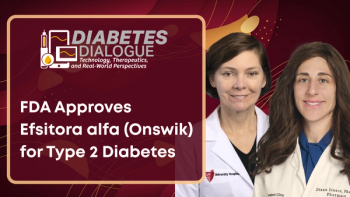
Discover how newly cleared weekly basal insulin efsitora reshapes type 2 diabetes care—QWINT results, hypoglycemia edge, and dosing tips.

FDA clears Eli Lilly’s Onswik weekly insulin from QWINT trials, cutting injections for type 2 diabetes while matching daily basal control.
Jennifer Soung, MD, and Mona Shahriari, MD, discuss trust-building, psychosocial burden, and treatment fit in psoriasis care for diverse skin tones.

Iliyan D. Iliev, PhD, discusses how fluconazole targets gut Candida to improve disease activity in IBD.
As AI continues to evolve at a breakneck pace, catch up on some of the ways it’s already been implemented in cardiovascular care.
Friedman outlines how dermatologists can track cumulative corticosteroid exposure, identify at-risk patients, and improve patient adherence with handouts.

Two 12-week phase 3 trials and a 43-week extension will test 8 mg and 16 mg HLP003 added to antidepressants, with APPROACH enrollment now complete.

Interim ProACt data show adjunctive cariprazine may work within 2 weeks, easing reluctance to augment antidepressant therapy in MDD, Andrew Cutler, MD, says.

This preview of EADV 2026 provides a teaser of new data and interviews being highlighted at this Vienna dermatology conference.

Phase 2b AMPLIFIED data show a 42.7% UACR drop in AMKD with modest proteinuria; AMPLITUDE interim data are due early 2027.
Jennifer Soung, MD, and Mona Shahriari, MD, discuss diagnosing psoriasis in diverse skin tones and why severity scores overlook dyspigmentation.

Agusti, chair of the GOLD Board of Directors, discusses which COPD diagnostic bottleneck AI is closest to solving and more.
George Vasquez-Rios, MD, explains how the ASN's GD-C Compendium curates glomerular disease guidance for general clinicians and specialists alike.