

Saakshi Khattri, MD, discusses a new JAAD dual Th17/type 2 signature study and what it means for personalized psoriasis care this awareness month.
Saakshi Khattri, MD, discusses a new JAAD dual Th17/type 2 signature study and what it means for personalized psoriasis care this awareness month.

An individual participant data meta-analysis found antihypertensive therapy reduced cardiovascular events only in patients with at least 80% medication adherence.

The ESC and ERA issued their first joint guideline recommending universal CKD screening and expanded use of risk-modifying therapies in patients with cardiovascular disease.

Mahboobeh Mahdavinia, MD, says racial gaps in food allergy resolution reflect access to care, not biology.

A new study has indicated the correlation between EHT and atrial myopathy, which in turn contributes to potential ischemic stroke incidence.

The updated ESC guidelines make sweeping changes to HF terminology, eliminating HFmrEF and recategorizing acute HF for patients with slower symptom development.

Both apixaban and rivaroxaban resulted in improved risk of stroke, systemic embolism, major bleeding, and cardiovascular death compared to no anticoagulation.

SURPASS-CVOT showed tirzepatide is non-inferior to dulaglutide for cardiovascular events in more than 13,000 adults with type 2 diabetes.
Laura J. Maursetter, MD, discusses the case for standardized kidney screening protocols, transplant access, and medical education reform for the correctional population.

The ESC, ACC, AHA, and WHF jointly replaced numerical MI typing with primary, secondary, and procedure-related categories, announced at ESC Congress 2026.
Ahmad Masri, MD, MS, discusses his presentation of the full results of the ACACIA-HCM trial at the ESC Congress 2026.

CARDIO-TTRansform data presented at ESC 2026 showed no significant reduction in cardiovascular mortality or recurrent events with eplontersen versus placebo in ATTR-CM.

The approval adds brepocitinib (Lisraya), an oral JAK/TYK2 inhibitor, as the first agent specifically studied and approved for dermatomyositis in adults.

Brendan Neuen, MBBS, PhD, joins Shikha Wadhwani, MD, MS, to unpack FIND-CKD's GN subgroup data and 23% risk reduction.
Saakshi Khattri, MD, discusses new oral psoriasis options and AAD 2026 weight-loss combination-therapy data in psoriatic disease.
Mahboobeh Mahdavinia, MD, PhD, discusses new FORWARD data showing peanut and shellfish allergies resolve far less often than milk, soy, or wheat.

LEADderm 2026 brings dermatology leaders to Newport Beach, California, August 29-30, for sessions on leadership, AI in education, and career growth.

The Phase 3 CROSSING trial showed tezepelumab improved histologic remission and dysphagia symptoms through week 52 in eosinophilic esophagitis.

A phase 2 study found the EAP regimen achieved optimal stem cell mobilization in most patients with multiple myeloma or lymphoma, with low plerixafor need.

Downar outlines the randomized trial needed to confirm optimal TMS dosing and addresses a safety ceiling on total pulses.
Cleveland Clinic's Ali Mehdi, MD, MEd, on the limits of current IgA nephropathy risk tools and where phenotyping could take treatment next.

Baseline structural damage accounted for most of the variance in placebo-arm radiographic progression across 6 PsA trials.
Laura J. Maursetter, MD, discusses why early kidney disease screening and continuity of care are especially critical for justice-involved patients.
In this episode of Diabetes Dialogue, co-hosts Diana Isaacs, PharmD, and Natalie Bellini, DNP, are joined by Casey Halpern, MD, to discuss SynchNeuro's investigational, non-invasive EEG-based glucose monitor.

IMPACT-PLuS investigator Jennifer A. Dantzer says predictive biomarkers and formal remission testing remain unanswered questions in peanut OIT.
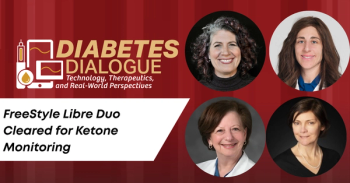
In this episode, co-hosts Isaacs and Bellini are joined by Eden Miller, DO, and Davida Kruger, NP, to discuss the FDA's recent clearance of the FreeStyle Libre Duo ketone monitor.

Daraxonrasib (Rasonque) extended median survival to 13.2 months versus 6.7 months with chemotherapy in a phase 3 trial.

Jennifer Soung, MD, and Mona Shahriari, MD, discuss diagnosing psoriasis in diverse skin tones and building patient trust and adherence.
Saakshi Khattri, MD, discusses mental health screening gaps in psoriasis and a new Th17/type 2 immune signature study pointing toward personalized care.
A new meta-analysis found total pulse count predicted outcomes in a roughly linear pattern across sham-controlled trials of accelerated rTMS.