
Clinicians across specialties explain how health misinformation is reshaping patient decisions, delaying care, and undermining trust.
Lana Pine is the editor of HCPLive Rheumatology. She is an experienced editor and technical writer with a demonstrated history of working in the banking and publishing industries. In her free time, she enjoys cooking, yoga, listening to podcasts, and drawing. She can be reached via email at [email protected].
Clinicians across specialties explain how health misinformation is reshaping patient decisions, delaying care, and undermining trust.
Pooled results from two Phase 3 trials show DFD-29 achieved a 62.7% IGA success rate and significantly greater lesion reduction than both doxycycline and placebo.

At Week 52, icotrokinra achieved clear/almost clear skin in 72% of patients with scalp psoriasis and 85% with genital psoriasis, with consistent safety and durable responses.

Multidisciplinary management and patient-centered care are critical for optimizing outcomes in complex or severe psoriasis cases.

This case study underscores how fragmented care and weight bias can contribute to late-stage MASH diagnosis.
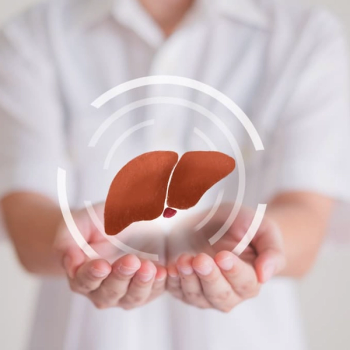
A patient’s near-fatal journey from undiagnosed fatty liver disease to liver transplant highlights the urgent need for better screening and stigma-free communication.

A total of 82.3% of patients in the biosimilars group and 90.9% in the reference drug group achieved an ACR20 response.
The biosimilars month in review highlights recent FDA approvals and emphasizes new data demonstrating clinical equivalence and the potential impact on treatment options.

Primary and secondary pharmacokinetic parameters through day 75 were similar across treatment arms.
The approval was based on the clinical, non-clinical, and analytical data proving eculizumab-aagh's bioequivalence to the reference drug.

Adalimumab-adbm is now available at a 92% discount from the reference drug list price through GoodRx.

Health literacy was categorized as problematic in 36.2% of patients and insufficient in 15.1%.
The biosimilars month in review underscores the efficacy and safety of biosimilars in rheumatology, including recent studies supporting the growing confidence in these treatments across disease spaces.
Robust clinical data showed ustekinumab-ttwe demonstrated similar safety and efficacy compared with the reference product.
Aflibercept-mrbb showed comparable safety, efficacy, pharmacokinetics, and immunogenicity compared with the reference product.

At 8 months follow-up, 86.0% of patients with rheumatoid arthritis were in remission and 94.2% exhibited low disease activity.

Patients in the spesolimab cohort demonstrated rapid improvements in DLQI scores compared with placebo, which were maintained through week 48.

Responses were highly durable throughout 4 years of bimekizumab treatment.

Significantly greater improvements were reported at week 2, which were sustained through week 12, in patients receiving the halobetasol propionate/tazarotene lotion compared with the vehicle cohort.

Overall, 189 (74.1%) patients treated with brodalumab achieved PASI 75, 133 (52.2%) achieved PASI 90, and 98 (38.4%) achieved PASI 100.

Lisa Swanson, MD, explains how building resiliency is crucial for coping with burnout.
Lisa Swanson, MD, discusses the pathogenesis of atopic dermatitis and why she does not recommend elimination diets for her pediatric patients.
The new approval expands the treatment area by 4 times the previously approved area—from 25 cm2 to 100 cm2.

Lisa Swanson, MD, discusses the recent advancements in pediatric dermatology and emphasizes the importance of correctly diagnosing conditions to improve patient outcomes.

The Council recommends the elimination of unnecessary clinical efficacy trials and establishing global regulatory comparators.
The biosimilars month in review highlights recent FDA approvals and successful comparison trials.
In our nephrology month in review for May 2024, we spotlight the biggest news from the NKF and ERA meetings, including the latest updates in IgA nephropathy, C3 glomerulopathy, chronic kidney disease, and more!

At 1 year, patients with treated with IL-23 switched or swapped biological treatment less frequently compared with IL-12/23, IL-17, and TNF-α inhibitors.

Healthcare professionals who were aware of the safety and efficacy of biosimilars were more likely to prescribe or switch patients to a biosimilar.
December 24th 2025

September 7th 2023

November 17th 2023

October 19th 2023

