






Allergy
Latest News
Advertisement
Latest Videos







CME Content












































Advertisement
More News
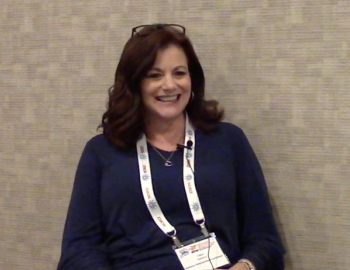
Dawn Rotellini, COO of the National Hemophilia Foundation, discusses how recent policy changes seeking to improve access to and create new therapies for patients with rare diseases.

A review of novel drug approvals in 2018 found more than half of all novel approvals were for rare diseases and that 2018 also saw more novel drug approvals for rare disease than any other year.
Dawn Rotellini, chief operating officer of the National Hemophilia Foundation, discusses the important of including patient advocacy groups in annual meetings such as the NORD Summit.

A new analysis of an open-label extension study of the phase 3 PREVENT study is providing further evidence of the safety and efficacy of the treatment of the neuromyelitis optica spectrum disorder.

A new study presented at NORD Summit 2019 found rare disease is underrepresented in published literature and, more often than not, articles are not available in open-access journals.
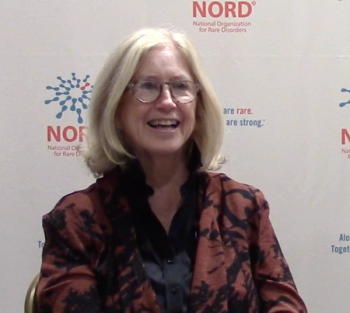
Moira Gunn, PhD, professor of bioentrepreneurship at the University of San Francisco, discusses why it is important for primary care providers to keep up-to-date on rare disease developments.
Dawn Rotellini, chief operating officer of the National Hemophilia Foundation, discusses the impact recent advances in technology and changes in policy focusing on rare diseases have impacted the disease state of hemophilia.
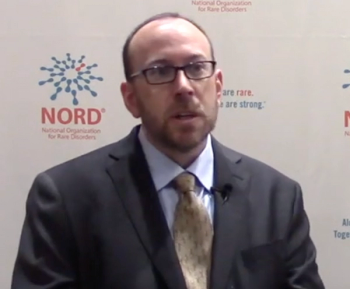
Lucas Kempf, MD, associate director of the FDA's Rare Diseases Program, discusses the impact of recent policy changes that center around increasing access to and creating new therapies for rare disease.
The indication expands the therapy to include newly diagnosed and persistent adults ITP patients who have had an insufficient response to therapy.

Following the ground-breaking LEAP findings in 2015, and updated clinical guidelines in 2017, there's a noted disparity of adherence among pediatric clinics.
New findings from the 12-week pivotal JADE MONO-1 trial show the JAK1 inhibitor's benefit in skin clearance and itch relief.
The United States Food and Drug Administration has accepted a BLA for Viaskin Peanut from DBV Technologies for the treatment of peanut-allergic children ages 4 to 11, which previously withdrew a BLA in 2018 after request from the FDA requested additional data on its manufacturing procedures and quality controls.
New phase 2b data shows the JAK1 inhibitor is beneficial for moderate to severe adult atopic dermatitis.

How new agents, improved study outcomes, and priority on diagnosis has bettered the state of dermatologic care.
From immunotherapy to biologics, the field of allergy pharmacotherapy is looking promising.
How can physicians and specialists navigate testing options and potential risk factors to ensure patients are diagnosed and treated expediently and accurately?
There has been significant changes in understanding surrounding food allergy testing. What do parents need to know?

After receiving FDA approval for add-on adult severe chronic rhinosinusitis with nasal polyps treatment this June, the biologic has reported significant improvement in 24- and 52-week outcomes.
On this episode of the DocTalk Podcast, Lakiea Wright, MD, of Brigham and Women's Hospital and Thermo Fisher Scientific, discusses the impact of changing seasons and climate on allergies and asthma.
The Allergenic Products Advisory Committee voted in favor Friday to support the BLA data for what could become the first drug indicated for food allergy desensitization.

A new extended trial for the liquid immunotherapy shows two-thirds of allergic children were able to consume at least 750 mg of peanut after 3-5 years.

A 600-city analysis of particulate matter found daily exposure is linked to worsened mortality rates, particularly in areas with higher mean temperatures.
The epicutaneous immunotherapy patch BLA was previously submitted to the FDA last year, but withdrawn due to concerns over manufacturing procedure and quality control.
New phase 3 data will evidence an FDA application for the biologic as an add-on therapy for patients aged 6-11 years with AD.

A new cohort shows FLG loss-of-function variations are often different among AD pediatric patients with different ancestries.
Advertisement
Advertisement
Trending on HCPLive
1
Q&A: Mucus Plugging, Multimorbidity, and GOLD 2027, With Gerard Criner, MD
2
IL-33 Biologics and the 2027 GOLD Report, With Dave Singh, MD
3
Enlicitide Lowers LDL-C Consistently Across PREVENT CVD Risk Categories
4
Omalizumab Biosimilar CT-P39: Quality of Life Gains Precede CSU Control
5