Though constipation as a side effect of opioid therapy is generally considered a tolerability issue that can be treated with over-the-counter laxatives, opioid-induced constipation may still lead to serious gastrointestinal complications.
Though constipation as a side effect of opioid therapy is generally considered a tolerability issue that can be treated with over-the-counter laxatives, opioid-induced constipation may still lead to serious gastrointestinal complications.

In addition to treating episodes of major depression, Brintellix (vortioxentine) has demonstrated superiority to placebo on measures of cognitive function in adult patients with major depressive disorder (MDD).

The US Food and Drug Administration (FDA) has approved Xiaflex (collagenase clostridium histolyticum) as the first non-surgical treatment for Peyronie's disease.
Mary Lynn McPherson, PharmD, BCPS, CPE, FASPE, shows healthcare professionals how to apply an equianalgesic opioid dosing chart to 12 complicated patient cases requiring an opioid switch.

In a clinical review published in Clinical and Experimental Gastroenterology, researchers from Iwate Medical University in Japan evaluated the long-term safety and efficacy of the novel serotonin-receptor agonist ramosetron in patients suffering from diarrhea-predominant irritable bowel syndrome (IBS-D).

Even when it's administered in a low-dose form that resists gastric acid and prevents tablet dissolution in the stomach, aspirin therapy causes peptic ulcer and increases the risk of 30-day mortality resulting from gastrointestinal (GI) disorder progression.

The US Food and Drug Administration (FDA) has approved Noven Pharmaceuticals Inc.'s once-daily Brisdelle (paroxetine) capsules to reduce moderate to severe hot flashes and night sweats that can last up to five years in menopausal women.

Recognizing that melatonin secretion from the gastrointestinal (GI) tract improves abdominal pain in irritable bowel syndrome (IBS) but decreases with age, Polish researchers from the Medical University of Lodz aimed to define the effect of administering melatonin in postmenopausal women with different predominating IBS symptoms.
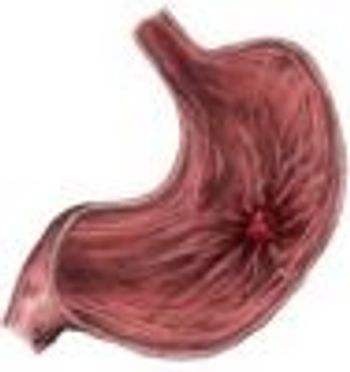
Though it's common medical knowledge that an ulcer eating a hole through a patient's stomach requires immediate surgical treatment as a result of its life-threatening nature, new findings from a team of Danish researchers urge physicians to beat the clock in performing emergency surgery on perforated peptic ulcers (PPU).

A high-potency probiotic supplement that mimics the effect of morphine in the gut may reduce the development of visceral pain in irritable bowel syndrome (IBS).

Treating postherpetic neuralgia patients with the oral opioid agonist tramadol may significantly reduce moderate to severe nerve pain.
While past studies suggest variability in physicians' chronic pain treatment decisions based on patients' sex and race, few have considered the degree of providers' self-insight into the influence of such demographics on their treatment decisions.
Citing an increased risk of liver injury observed in recent clinical trials, the US Food and Drug Administration (FDA) has limited Samsca (tolvaptan) treatment to 30 days and recommended the oral selective vasopressin V2-receptor antagonist be discontinued in patients with signs of liver disease or symptoms of liver injury.

The US Food and Drug Administration (FDA) today approved Kcentra [prothrombin complex concentrate (human)] for the urgent reversal of anticoagulation induced by vitamin K antagonist (VKA) therapies such as warfarin in adult patients with acute major bleeding.

After noticing the ample adverse effects of second-line Helicobacter pylori eradication treatments that utilize tetracycline, furazolidone and proton-pump inhibitors, one group of gastroenterologists set to work adding a probiotic compound to the regimen in an attempt to increase the stomach bacteria's eradication rate while curbing those unwanted effects.

As an adjunct to diet and exercise, Amarin's lipid-regulating agent Vascepa (icosapent ethyl capsules) is indicated to reduce triglyceride levels in adult patients with severe hypertriglyceridemia, or very high triglyceride (TG) levels greater than or equal to 500 milligrams per deciliter (mg/dL).
Approved by the FDA nearly four years ago, Otsuka Group's once-daily Samsca (tolvaptan tablets) is indicated to raise serum sodium levels in nonurgent patients with hyponatremia.

Though the causes of acute pancreatitis are unknown in roughly a quarter of its worldwide patient population, a recent analysis published in JAMA Internal Medicine has discovered a link between increased risk of the disease and medicines containing cortisone.

Though original results of the five-year Spine Patient Outcomes Research Trial (SPORT) determined surgically-treated spinal stenosis (SpS) patients showed significant advantage in body pain and physical function after two years than their nonsurgically-treated counterparts, a subgroup analysis published in the Feb. 15 issue of Spine found patients who received epidural steroid injections (ESI) in the SPORT study exhibited a worse outcome through four years' follow-up, regardless of surgical or nonsurgical treatment.
April 9th 2013