


Gastroenterology
Latest News
Advertisement
Video Series








Latest Videos



Shorts

0:54
Environmental Triggers of Inflammatory Bowel Disease
3 days ago
by
Elizabeth Spencer, MD, MS

0:43
Can Nonstick Pans Increase IBD Risk?
2 months ago
by
Elizabeth Spencer, MD, MS
0:32
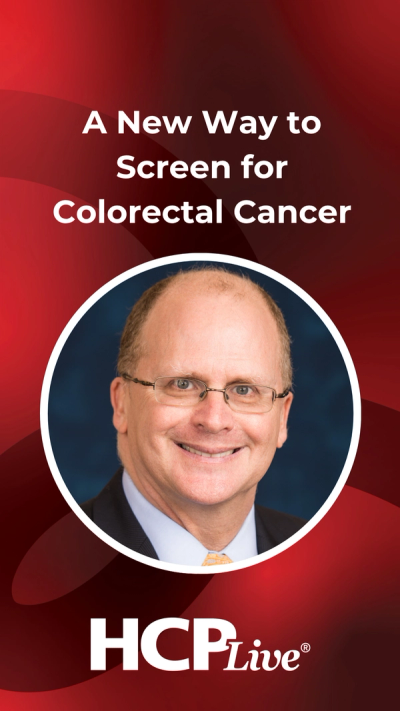
A New Way to Screen for Colorectal Cancer
2 months ago
by
Mark Fendrick, MD

0:43
Linaclotide’s Expanded FDA Approval for Pediatric FC Patients
4 months ago
by
Julie Khlevner, MD, AGAF

2:17
Are Clinicians Overlooking IBS Treatment Risks?
6 months ago
by
Ali Rezaie, MD

0:55
A New Dietary Approach to Crohn’s Disease Management
8 months ago
by
Sidhartha Sinha, MD

2:16
Optimizing Colon Cancer Screening
a year ago
by
Gabriella McCarty, NP
Podcasts




CME Content




























































Advertisement
More News
Gastroenterology in August 2026: RAS inhibitor approval for pancreatic cancer, ABTECT UC data, CRC screening mortality, and GI cancer risk.

The phase 2a study found TEV '408 significantly reduced intestinal damage and inflammation versus placebo at week 8
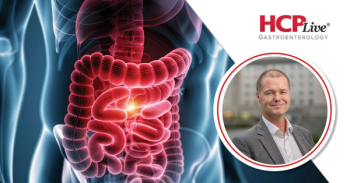
Karolinska Institute's Johannes Blom, MD, PhD, explains why colorectal cancer screening's real-world mortality benefit has been underestimated.
Daraxonrasib (Rasonque) extended median survival to 13.2 months versus 6.7 months with chemotherapy in a phase 3 trial.
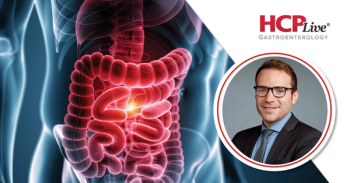
Jordan E. Axelrad, MD, MPH, on selecting first-line IBD therapy, treat-to-target monitoring, and how living with Crohn's shapes patient care.
Remo Panaccione, MD, discusses ABTECT Part 2 data: about 37% of prior non-responders achieved remission, with no new safety signals.
New findings link sugar-sweetened beverages, but not artificial sweeteners, to increased gastric cancer risk, possibly tied to metabolic dysfunction.
2-decade cohort study of 112,284 participants finds sugar-sweetened beverage intake linked to gastric cancer risk, with no link for artificial sweeteners.

PFAS found in cord blood linked to childhood gut inflammation and IBD risk; Elizabeth Spencer, MD, explains what it means for patients.
How FDA Approval of SimpleScreen CRC Could Expand Colorectal Cancer Screening With Mark Fendrick, MD
FDA approves Freenome's SimpleScreen CRC blood test for colorectal cancer screening in average-risk adults aged 45 years and older.
FDA approves Freenome's SimpleScreen CRC blood test for colorectal cancer screening in average-risk adults aged ≥45 years.

Newly published phase 2b RELIEVE UCCD data show strong 14-week results for duvakitug in ulcerative colitis and Crohn disease.

Freenome reported updated SimpleScreen CRC results showing 80.4% colorectal cancer sensitivity and 90% specificity.
Review the biggest gastroenterology news from the first half of 2026, including FDA updates, IBD advances, and key clinical trials.
Catch up on Q2 GI headlines you may have missed, including an expanded FDA approval for linaclotide, a submission for risankizumab SC induction in Crohn’s, and more.
Catch up on phase 3 data for tulisokibart and obefazimod, expert perspective on linaclotide's expanded FDA approval, and more.

Abivax’s ABTECT Part 2 showed Week 44 responses and safety consistency with obefazimod in refractory UC patients.

Stay updated with the latest healthcare breakthroughs, including phase 3 data, new clinical findings, and regulatory updates.

Tulisokibart became the first anti-TL1A therapy to achieve clinical remission in a phase 3 ulcerative colitis trial.

Brian Lacy, MD, PhD, of Mayo Clinic discussed the stepwise approach to diagnosing non-IgE mediated food hypersensitivity at EAC 2026.
Gastroenterologist Brian Lacy, MD, PhD, discusses how to differentiate HAE, MCAS, and eosinophilic GI disorders in patients with unexplained abdominal pain and bloating.

Khlevner, MD, discusses the expanded FDA approval of linaclotide for children aged ≥2 years with functional constipation.
Catch up on GI regulatory actions and top headlines from DDW in this May month in review.
Stay updated with the latest healthcare breakthroughs, including FDA approvals and phase 3 data.

Study 108 interim data show 68% of UC patients remained in clinical remission at week 144 after de-escalating from 50 mg to 25 mg obefazimod daily.
Advertisement
Advertisement
Trending on HCPLive
1
The Case for Routine Kidney Screening, With Pranav Garimella, MBBS, MPH
2
FDA Approves Obinutuzumab (Gazyva) for Idiopathic Nephrotic Syndrome
3
Zilurgisertib Receives FDA Approval for FOP in Patients 12 and Older
4
FDA Approves Baricitinib for Adolescents With Severe Alopecia Areata
5