





Dermatology
Latest News
Advertisement
Latest Videos







CME Content























































Advertisement
More News

The findings from these 2 trials for bimekizumab may lead to greater treatment options for patients with HS, an often debilitating and chronic skin condition.

Positive Phase 3 Results Announced for Nemolizumab Treatment of Atopic Dermatitis, Prurigo Nodularis
The new results from 3 different phase 3 studies presented at EADV on nemolizumab for those with prurigo nodularis and eczema show promise for the treatment.

This new data from the phase 2b trial on povorcitinib could lead to developments in the dermatology space for vitiligo patients.
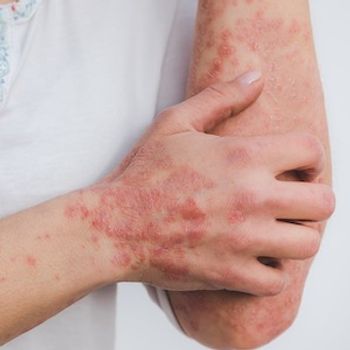
This new data on the negative impacts of skin disease on individuals in 27 countries in Europe demonstrates the lasting impacts of stigmatization.

This new synthetic data set could work as a potential resource for training on AI as well as to help facilitate a consensus among clinicians.

Amid the escalating threat of wildfires due to climate change, the medical and public health communities face an increasing responsibility to develop robust emergency response plans to safeguard patients and healthcare infrastructure.

This interview segment with Dr. Harris-Tryon further explored some of the key points made in her upcoming talk regarding the microbiology of hidradenitis suppurativa.
During this interview, Dr. Harris-Tryon spoke about the most important points covered in her upcoming talk at the 8th Annual Symposium on Hidradenitis Suppurativa Advances.

This new data indicated that BHRA positivity could potentially be implemented as an omalizumab response predictor and showed the potential for off-label use.

This new research into detergent’s impact on human skin barrier dysfunction may lead to investigation by public health authorities in the near future due to its implications.

This new position statement by the Congress of the European Academy of Dermatology and Venereology identified several benefits to the implementation of technological innovations in dermatologic care.

This set of measures may promote a more accurate assessment of HS in patients as well as on their life outcomes, with the goal being shared decision-making in clinical practice.

This study also found a particularly high rate of such obstacles for SGM patients who also identify as being either non-Hispanic Black or Hispanic/Latino.

‘Clearing Up Seb Derm’ Launched to Enhance Awareness of Seborrheic Dermatitis for Diverse Skin Types
The new educational initiative was launched to provide useful insights from dermatologists as well as personal accounts by patients with seborrheic dermatitis with many different backgrounds.

A study of more than 500 patients with severe psoriasis provides further insight into the association between severe psoriasis and cardiovascular disease risk, demonstrating coronary microvascular dysfunction was present in 30% of this cohort.

The company shared anticipation that their BLA decision for bimekizumab to treat adults with plaque psoriasis will not come before the end of this month.

This new data suggests that while the Skindex-16 can help physicians to better assess severity of disease, greater levels of qualitative as well as quantitative research may be needed.

This research indicated that innocuous and noxious thermal as well as mechanical perception was shown to be diminished in lesions of HS patients, suggesting peripheral neuropathy.

In new phase 2b/3 trial data, investigational IL-17A inhibitor izokibep did not meet its primary endpoint for patients with the chronic skin disease.

The new data addressed the lack of studies examining melanoma incidence despite the existence of research examining increases in relative numbers of advanced melanomas during the pandemic.

In this segment of her Q&A interview, Dr. Cotton discussed several major topics covered in her upcoming SHSA Conference presentation on pediatric HS.
This new Q&A interview with Dr. Cotton featured a discussion on the issues facing pediatric HS patients and other topics covered in her upcoming SHSA Conference presentation.

This new research was prospectively gathered in Denmark and involved nationwide, population-based data as well as a uniform approach to melanoma treatment and surveillance.

A population-based cohort study highlighted an association between AD and IBD with risk varying by age, AD severity, and subtype of IBD.

This systematic review highlighted the rise in studies on artificial intelligence and teledermatology for skin cancer, as well as other gaps in related research.
Advertisement
Advertisement
Trending on HCPLive
1
RELIEVE-AD-PEDs: Dupilumab Sustains Adolescent Atopic Dermatitis Control at 1 Year
2
3 Hematology Headlines You Missed in September 2026
3
Top Reason for Leaving HAE Attacks Untreated, Survey Finds
4
Targeting the Disease Mechanism in PFIC, With Hisamitsu Hayashi, PhD
5