































































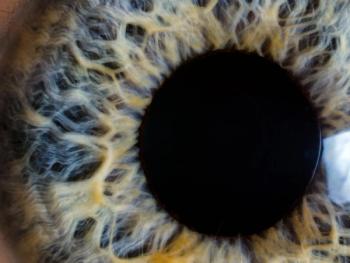
The FDA has granted orphan drug designation to GPLSCD01 for the treatment of limbal stem cell deficiency.
The FDA has granted orphan drug designation to GPLSCD01 for the treatment of limbal stem cell deficiency.

Researchers aimed to determine how prophylactic, topical NSAIDs affected the development of CME, specifically ketorolac tromethamine 0.4% and nepafenac 0.1%.

The model was tested using 402 normal and 708 AMD color fundus images, achieving a 95.45% average accuracy with a 10-fold cross validation strategy and a 91.17% average accuracy with blindfold validation.

The CustomFlex Artificial Iris is customizable by both size and eye color, and indicated for both adults and children.

The FDA approved the first artificial iris for both pediatric and adult patients with aniridia who have an iris that is completely missing or damaged.

Study results show that OHTN may be an early biomarker of hypertension and may herald risk of developing AMD, and perhaps, other conditions caused by vascular disease.

Diabetes causes ELOVL4 to be downregulated, weakening the tight junctions. Researchers hope that replacing these lipids could be a treatment for diabetic retinopathy.

Researchers predicted that the inclusion of these additional factors—such as DME or RVO, and Medicare Advantage plan or private insurance use—would see cost savings in excess of $30 billion.

The researchers hope they will be able to use this template as a drug delivery solution for a variety of eye diseases.
Data is released from a pilot study of X4P-001-IO in combination with nivolumab in patients with clear cell renal cell carcinoma (ccRCC) who are non-responsive to the anti-PD-1 checkpoint inhibitor nivolumab alone.

The effectiveness of this nutritional prophylactic supplement is determined by genetic variation, making genotype group identification an important factor.

Those with the AMD showed greater expression of miRNA-150 than those without, offering evidence that miRNA-150 could be used as a potential biomarker—and drug target—for AMD.

Researchers are using hi-def retinal and neuroimaging techniques to elucidate the relationship between pathology in layers of the retina and downstream brain alterations.
Following the novel gene-editing tech's approval for the treatment of cancer last year, researchers at Roski Eye Institute are exploring its potential to treat ophthalmic disease.

Nanophotoswitches have demonstrated promising results in rats. Will they one day improve transduction in damaged eyes, and restore lost vision in humans?

The burden of ophthalmic disease is rising. How can ophthalmologists rise to meet it?

Intravitreal aflibercept injection showed early signs of activity for patients with moderately severe to severe nonproliferative diabetic retinopathy.

Researchers examined the role of RPE dysfunction in patients with AMD and found this discovery demonstrated hUTC’s potential therapeutic value in the treatment of AMD.

75% of patients with newly-diagnosed, treatment naïve DME received no treatment within 1 year of diagnosis.

The novel immune-based treatment IMCgp100 demonstrated a 1-year survival rate of 73% for patients with heavily pretreated, advanced uveal melanoma.

Voretigene neparvovec demonstrated sustained improvements in vision for patients with biallelic RPE65-mutation–associated inherited retinal disease.
The new indication will allow wearers to use the contacts for up to 6 nights and 7 days continuously.

Outcomes for patients with nAMD in the real-world were inferior to randomized controlled trials due to significant undertreatment.

Researchers hypothesized that making eye care screens free also reduced perceived value of the services.

The majority of eyes treated in the DRCR Protocol S study had resolved, stable or improved NV at each follow-up visit.