































































The phase 2 FILLY trial found that APL-2 injections both monthly and every other month slowed lesion growth compared to sham.
The phase 2 FILLY trial found that APL-2 injections both monthly and every other month slowed lesion growth compared to sham.

The data presented at the American Academy of Ophthalmology indicates dosing IAI with treat and extend resulted in more visual acuity gains when compared to fixed dosing.
According to an analysis of 84,228 online reviews of 7,372 ophthalmologists, the average rating for a physician with a wait time exceeding 15 minutes was 3.903.

In a new study conducted in Taiwan, investigators found that use of metformin to treat diabetes also reduced the risk of AMD development over a 13-year period.

In patients with neovascular AMD, 24% receiving brolucizumab had intra-retinal fluid and/or sub-retinal fluid compared to 37% of aflibercept-treated patients in the HAWK trial.

Peter Campochiaro, MD, professor of ophthalmology and director of the retinal cell and molecular laboratory at Johns Hopkins explains the burdens of receiving frequent anti-VEGF injection treatments.

An anti-PIGF, a plasma kallikrein inhibitor, and a pan RGD integrin antagonist are some of the investigational treatments in the pipeline for diabetic retinopathy and diabetic macular edema.
After a single dose of RGX gene therapy, the mean change in BCVA was +8 letters in cohort 3 and the average number of injections over the course of 6 months was 1.3 in a phase 1 cohort study.

R. Theodore Smith MD, PhD, professor of ophthalmology at the Icahn School of Medicine at Mount Sinai discusses new research to reduce the burden of AMD and how imaging can revolutionize the retina space.
David Brown, a retina specialist discusses how retina and diabetes specialists can coordinate care and education for their patients as well as the outlook for AMD/DME research.
In a phase 2 study, a long-acting, implantable delivery system for ranibizumab allowed patients with wet age-related macular degeneration to go up to 15 months before requiring a refill.

Dilsher Dhoot, MD, discusses the avenues where future research for diabetic macular edema will focus

A new study suggests patients with disorganized retinal inner layers see lesser levels of visual acuity improvement after therapy.

Yutiq, a fluocinolone acetonide intravitreal implant, is indicated for the treatment of chronic non-infectious uveitis that affects the posterior segment of the eye.

A comparison of patients in a pair of European-based studies tracking adherence to the diet found those eating healthier were significantly less likely to develop late-stage AMD.

Novartis files new indication for ranibizumab (Lucentis) for the treatment of retinopathy of prematurity.

Zinc is the second most abundant trace element in the human body after iron, and is present in high concentration in the human eye.

There is a found significant unmet need to develop treatments that limit or protect against scar formation, GA development, retinal thinning, fluid increase, and lesions, as an accompaniment to anti-VEGF therapy.

The findings lend to investigators believe that earlier endpoints for AMD diagnosis are needed.

In animal models, not only did the drug help protect apelin function-deficient models from laser-induced choroidal neovascularization, but it did it through unique mechanisms that were independent of VEGF function.

The Novartis humanized single-chain antibody fragment previously showed improved best corrected visual acuity in patients with nAMD versus aflibercept.
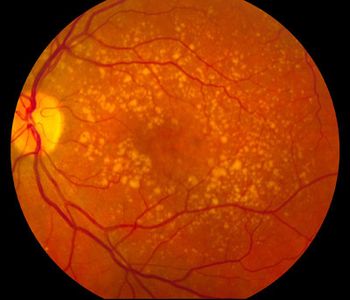
Computers can do as well as clinicians in diagnosing age-related macular degeneration, say investigators who have developed tools based on artificial intelligence to detect the disorder.
The latanoprost ophthalmic emulsion solution reduced intraocular pressure in patients by a mean 6-8 mmHg from baseline in clinical trials.

Onchocerciasis, also known as river blindness, may now be detectable through a urine diagnostic developed by investigators from Scripps Research Institute.

The FDA has granted a rare pediatric disease designation to Lin BioScience’s LBS-008 for the treatment of Stargardt disease.