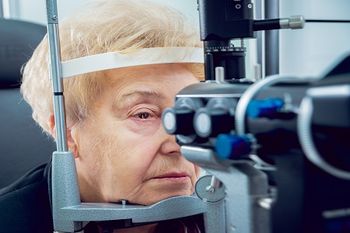





























































Early treatment and completing treatments key to visual acuity improvements in neovasculare age-related macular degeneration.

Early treatment and completing treatments key to visual acuity improvements in neovasculare age-related macular degeneration.

Ajay Kuriyan, MD, discusses what he warns patients to be aware of when seeking out treatment from stem cell therapies and why he believes other physicians should as well.

LADDER study results presented at ASRS revealed efficacy of the PDS was equal to that of monthly ranibizumab.

An oral therapy for aged-related macular degeneration could be on the horizon after displaying efficacy in a recent phase 2 study.

Carl Regillo, MD, who presented 96-week data of brolucizumab at ASRS 2019, discusses how brolucizumab could impact care of wAMD in a real-world setting.

More patients undergoing long-term use anti-VEGF therapy saw improvements in visual acuity than saw declines after 10 years.

Investigators from Wills Eye and Retina Consultants of Austin presented 96-week data from the HAWK and HARRIER trials at ASRS 2019.

Peter Kaiser, MD, presented data from a phase 2 trial examining the safety and efficacy of risuteganib at ASRS 2019.

W. Lloyd Clark, MD, discusses the approaches he uses in his clinical practice to reduce patient noncompliance — specifically, when treating diabetic macular edema.

As physician burnout becomes a more common issue, physician across an array of fields find themselves discussing and formulating ways to circumvent burnout.

Physician from Palmetto Retina Center on deciding between aflibercept, ranibizumab, and avastin for treatment of DME.

Here's a primer for new data and discussions MD Mag will be covering this weekend in Chicago.

Kodiak's KSI-301 was shown to have sustained benefit and safety in a phase 1a study involving patients with severe DME.

Several new generics available to treat neuropathic pain linked to diabetic peripheral neuropathy, fibromyalgia partial onset seizures, and other conditions.

Analysis of 2 phase 3 trials found that 24% of patients experienced new choroidal neovascularization over the course of the 96-week trials.

An analysis of more than 650 eyes find that optical coherence tomography central subfield thickness accounts for only a small proportion of total variation in changes in visual acuity.

Investigators examined anti-VEGF injections claims data among Medicare Part B beneficiaries from 2012 to 2015 and found that aflibercept injections increased by 69% during that time.

A recent study reviewed operating times of ophthalmic procedures before and after transition to a new EHR system in 2 outpatient departments and an ambulatory surgical center.

Patients who received the implant in addition to the surgery showed more positive results than the control group in a randomized, single-masked study.

Ranibizumab was approved for AMD treatment in Korea in 2007, but most supporting trials had been conducted among Caucasian patients.

A review highlights aflibercept’s efficacy in treatment non-responders and points to a couple promising new AMD therapies in development.

Self-reported vision impairment was associated with a greater risk of developing depression and anxiety symptoms in patients 65 and older.

Metformin use associated with a 58% reduced risk of age-related macular degeneration (AMD) in a case-controlled retrospective study.

Aflibercept (Eylea) is an anti-VEGF treatment administered as an intravitreal injection.

The FDA has expanded the indication for incobotulinumtoxinA (Xeomin) to include treating blepharospasm (involuntary blinking) in adults.