


























































Discussing which potential AMD treatments retina specialists are most excited about moving forward.
Discussing which potential AMD treatments retina specialists are most excited about moving forward.
Discussing the most effective ways new therapies can reduce the treatment burden of current age-related macular degeneration treatments.

A submitted column on how to properly care for patients suffering from vision loss from the founder and medical director of Focus Clinics in London.
The IGF-1R inhibitor becomes the first therapy indicated for the rare eye condition.
Results of the Canadian CANTREAT study are debunking the notion anti-VEGF injections with ranibizumab need to take place monthly as opposed to a treat-and-extend regimen.

A decade of fine-tuning proven therapies and embracing advancing clinical technology has put ophthalmology in a rare space.
In March 2020, the therapy has the potential to become the first approved for the rare autoimmune disorder.
A study from SUNY University at Buffalo has found adherence to a Western diet could contribute to the development of late age-related macular degeneration.

A new study of more than 100,000 patients in the UK found patients living in areas with greater amounts of air pollution were at an increased risk of glaucoma.
The FDA gives a green light to MiSight, a single use, contact lens to slow the progression of nearsightedness in children.
Maria Woodward, MD, MSc, discusses the impact of reducing opioid prescriptions following corneal surgery.
Katherine Talcott, MD, of Cole Eye Institute, discusses results of a 5-year study examining endogenous bacterial endophthalmitis at a tertiary care center from AAO 2019.
Sumayya Ahmad, MD, assistant professor of medicine at Icahn School of Medicine at Mount Sinai, discusses results of a study she presented at AAO 2019 that examined the real-world survival rates of penetrating keratoplasty.
Katherine Talcott, MD, of the Cole Eye Institute, discusses the results of a study she co-authored from AAO 2019 that examined visual acuity outcomes after cataract extraction with IOL implantation with diabetic eyes.
Rishi Singh, MD, of the Cole Eye Institute, discusses the results of an analysis of VIEW trial participants he presented at AAO 2019.
Sumayya Ahmad, MD, assistant professor of ophthalmology at Icahn School of Medicine at Mount Sinai, discusses the results of a study she co-authored examining demographic associations with varying forms of astigmatism
Michael Stewart, MD, of Mayo Clinic Jacksonville, discusses the results of 2 phase 2a studies examining the use of AKST4290 in treatment naive and refractory neovascular age-related macular degeneration.

Aleksandra Rachitskaya, MD, of Cole Eye Institute, discusses a presentation she led at AAO 2019 on novel imaging and surgical techniques.
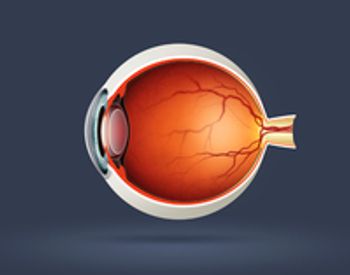
A new study has found that receiving or not receiving topical antibiotics following cataract surgery had no impact on the development of endophthalmitis.
A phase 1b study, which was presented by Charles Wykoff, MD, PhD, at AAO 2019, found the novel anti-VEGF therapy KSI-301 shows promise for treating a slew of retinal diseases.
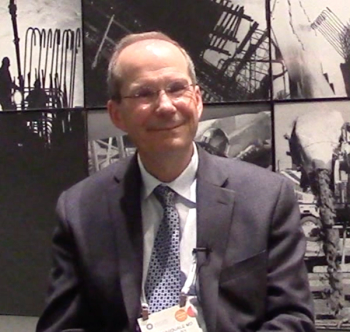
Louis Pasquale, MD, professor of medicine at Icahn School of Medicine at Mount Sinai, discusses how technology and artificial intelligence has been embraced by ophthalmology.
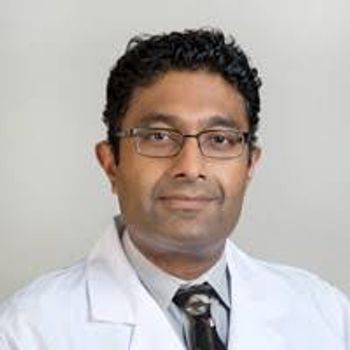
A presentation at AAO 2019 highlighted the ability of the EyeArt screening system to detect diabetic retinopathy with 95.5% sensitivity.
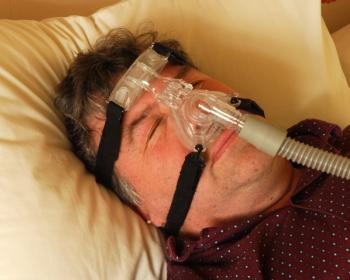
A study presented at AAO 2019 revealed that obstructive sleep apnea could be a risk factor for diabetic macular edema and refractory diabetic macular edema.
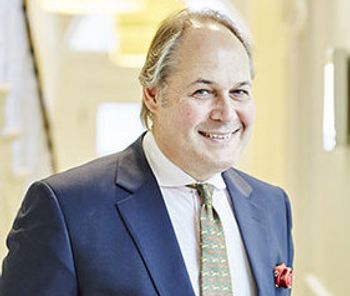
Results of a phase 1 study examining a potential gene therapy for x-linked retinitis pigmentosa showcased improvements in microperimetry and a favorable safety profile.

Raymond Douglas, MD, PhD, professor of ophthalmology and director of the Orbit and Thyroid Eye Disease Center at Cedars-Sinai, discusses results of the phase 3 OPTIC study and what a potential approval of teprotumumab would mean for patients and physicians.