































































While surgeons across the globe have become used to performing procedures with the same equipment as their colleagues there could be some benefit to having tools specifically designed for their individual preferences.
While surgeons across the globe have become used to performing procedures with the same equipment as their colleagues there could be some benefit to having tools specifically designed for their individual preferences.

For patients with retinitis pigmentosa the loss of vision can be a difficult consequence of the condition. An implanted device may not give them back the sight they once had but it can provide a chance to see the world around them in a new way.

Doctors treating patients with age-related macular degeneration face a wide range of complications including the potential dosage for anti-VEGF medications. One question is what role these drugs play in macular atrophy.
Researchers set out to see how prevalent sleep problems are in people with age-related macular degeneration (AMD) at the 34th Annual Scientific Meeting of the American Society of Retina Specialists (ASRS 2016) in San Francisco, California.
David Eichenbaum, MD, an ophthalmologist from Florida, presented data from the HARBOR study at the 34th Annual Scientific Meeting of the American Society of Retina Specialists (ASRS 2016) in San Francisco, California.

A Danish electronic records review found that the need for Eylea or Lucentis injections for wet age-related macular degeneration did not change after cataract surgery. Also, vision improved more when the time from last injection to cataract surgery was shorter than when it was longer.
A retrospective chart review study showed that the location of subfoveal fibrovascular scarring in relation to the retinal pigment epithelium correlated with visual outcome in eyes successfully treated with anti-vascular endothelial growth factor agents for neovascular age-related macular degeneration.

Regular users of oral bisphosphonates had a higher risk of developing wet age-related macular degeneration than non-users, according to results of a recent Canadian study, and the longer the use, the greater the increased risk.

Intraocular injections of methotrexate have been used successfully to treat indeterminate and sarcoid uveitis as well as age-related macular degeneration. Methotrexate injection’s record of success in treating these inflammatory eye diseases prompted researchers to evaluate its efficacy in treating persistent diabetic macular edema.
A phase III study that examined teriflunomide (Aubagio) in a subtype of patients with multiple sclerosis was presented at the 2016 Annual Meeting of the Consortium of Multiple Sclerosis Center (CMSC) in National Harbor, Maryland.

The chronic vision damaged caused by multiple sclerosis may be reversed by using clemastine fumarate, an over-the-counter drug used to treat allergies and colds.
Cataracts are one of the most common diagnosis in eye care but there is still work being done to help treat the condition in the most effective way possible.

Yutao Liu, MD, PhD, Georgia Regents University, discussed how he and his team can potentially target genes to either reduce glaucoma or provide neuroprotection specifically for the mitochondria in the retina.

Henry Kaplan, MD, KY Lions Eye Center, University of Louisville School of Medicine, is focusing his efforts on figuring out how to preserve or recover lost central vision in patients with retinitis pigmentosa.

Neeraj Agarwal, PhD, FARVO, shared his unique perspective of marrying his prior clinical research to his current institutional landscape at the NIH.

Andrew Hartwick, PhD, The College of Optometry at The Ohio State University wants to understand why regardless of normal, standard vision tests, there is still clearly something wrong with pateints' sight.

Aflibercept exerts anti-angiogenic effects against galectin-1, a galactoside-binding lectin protein and novel angiogenic factor associated with proliferative diabetic retinopathy.

Patients with the hereditary degenerative eye disease retinitis pigmentosa (RP) may delay their loss of daytime vision by taking a traditional Chinese plant remedy Lycium barbarum also known as goji berry or wolfberry.
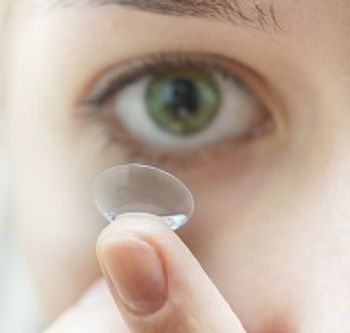
People not blessed with 20/20 vision often choose to wear contact lenses to avoid cumbersome eyeglasses.
Encephalitis can change vision, but it does not alter the retinal structure, a German study found.
Patients afflicted with vitiligo often have significant differences in Schirmer test results, lens, and fundus findings.

Multiple sclerosis patients with histories of neuro-ophthalmic symptoms tend to perform poorly on neuropsychological tasks.

Cats and dogs can be vectors for an eye parasite, a multi-center team in the US Southwest reports. The parasite is called Onchocerca lupi. Six cases, believed to be the first in the US, are reported.
A recent study showed that retinal abnormalities detected through objective electrophysiological measurements may help identify the pathogenesis of major depressive disorder and possibly other psychological conditions.

Researcher report that higher levels of neuronal activity are associated with increased production of myelin in animal models – a finding which may eventually help the development of multiple sclerosis therapies.