Andrea Murina, MD, weighs whether she would recommend medicine to her own children amid AI, physician burnout, and evolving residency training standards.
Matthew Zirwas, MD, on why adult-onset atopic dermatitis is the most undertreated condition in dermatology and how diagnostic criteria are driving years of delayed care.
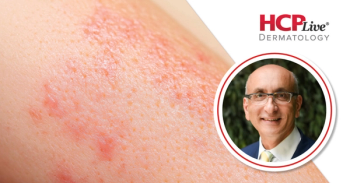
The biggest source of patient harm in dermatology today is not a treatment failure. It is a diagnostic one, according to Matthew Zirwas, MD, of Bexley Dermatology, who noted that 2 out of every 3 patients with atopic dermatitis (AD) are being misdiagnosed and left without appropriate therapy as a result.
At Maui Derm NP+PA Summer 2026 in Colorado Springs, Zirwas presented the session, “Eczematous and Contact Dermatitis: Cases That Will Leave You Scratching Your Head.” In earlier parts of the interview, Zirus discussed how
In this part of his interview with HCPLive, Zirwas discussed underrecognized allergens on his radar, how overlapping allergic contact dermatitis changes his biologic or JAK inhibitor selection approach, and which patient type he believes is most undertreated and poorly matched to current options
The patient Zirwas is most concerned about has no childhood history of rashes, no personal or family history of atopy of any significance, and presents with dermatitis on the extensors and trunk rather than in the flexural distribution that anchors the Hanifin and Rajka diagnostic criteria. By those criteria, this patient does not have atopic dermatitis, but Zirwas estimated that 9 out of 10 of them actually do.
"I see that person… get managed as dermatitis unspecified, allergic contact dermatitis, [and] irritant contact dermatitis," he said. "Lord forbid they get patch tested and there's a positive patch test. Now they're labeled allergic contact dermatitis forever."
What follows, he described, is a years-long cascade of topical agents, short courses of systemic steroids, methotrexate, and phototherapy, treatments selected for a diagnosis that was never correct. The outcome changes rapidly once the right diagnosis is made.
"You give them some IL-13 inhibition, or a JAK inhibitor, or an IL-31 inhibitor, and they suddenly, rapidly, immediately get better," Zirwas said. "That could have happened years ago."
The Hanifin and Rajka criteria, which require flexural lichenification or linearity in adults as a major diagnostic feature, were not designed with adult-onset AD in mind. A systematic review and meta-analysis published in the Journal of the American Academy of Dermatology found that adult-onset AD accounts for approximately 26% of all AD cases and reported that adult-onset disease has distinct clinical characteristics compared to childhood-onset AD, including lower rates of flexural lesions. That phenotypic difference is precisely what causes these patients to fall through the diagnostic floor.2
Zirwas argued that applying the AAD diagnostic criteria rather than Hanifin and Rajka to this population would result in correct diagnoses and earlier access to effective treatment. The distinction matters more now than it did a decade ago, given the number of targeted therapies available across the IL-13, JAK, and IL-31 inhibitor classes.
When the question of whether a patient has allergic contact dermatitis, atopic dermatitis, or both remains genuinely unresolved, Zirwas said the choice of therapy can itself clarify the diagnosis.
If he wants to determine how much of a patient's disease is allergic contact dermatitis versus atopic dermatitis, he trials a biologic. His rationale: biologics do not meaningfully help isolated allergic contact dermatitis, so the response pattern tells him something.
"If it's a combination of both, they may get the atopic dermatitis better, and there might be an ancillary benefit of that improving skin barrier function, so the [allergic contact dermatitis] goes away also," he said. "But [with] isolated ACD, I don't think biologics help."
For patients where the diagnostic question is secondary and the priority is simply getting them better, his preference shifts to a JAK inhibitor.
"It's going to work. It's going to help regardless of whether it's allergic or atopic," Zirwas said. "It really comes down to: do I want to figure it out, or do I just want them to get better?"
Editor’s note: Reported disclosures for Zirwas include GENZYME CORPORATION, Regeneron Healthcare Solutions, Dermavant Sciences, and more.
References