The Liver Keeps the Score: Americans Are Drinking Less, but Alcohol-Associated Liver Disease May Lag
Drinking fell for the first time since COVID-19, but not for adults 50 to 64. Hepatologists explain what clinicians can do to close the gap.
Hepatology in September 2026: brelovitug meets phase 3 AZURE-1 endpoint in hepatitis D, plus new US alcohol use data and ALD insights.
In hepatitis delta virus (HDV) infection, brelovitug, Mirum Pharmaceuticals' monoclonal antibody targeting hepatitis B surface antigen (HBsAg), met the primary endpoint of the phase 3 AZURE-1 trial. The results position brelovitug as a potential second US treatment option for chronic HDV, after bulevirtide (Hepcludex) received accelerated approval in May 2026.
National survey data showed that US alcohol use fell between 2022 and 2024 but rose among adults aged 50 to 64, the age group in which cirrhosis and hepatocellular carcinoma most often present.
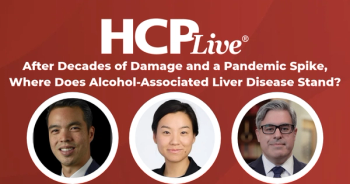
Other findings pointed to risk that standard measures may miss. The weekly alcohol thresholds used to classify steatotic liver disease do not capture binge drinking. Patients with metabolic dysfunction and alcohol-associated liver disease (MetALD) also had higher odds of advanced fibrosis than those with metabolic dysfunction-associated steatotic liver disease (MASLD). Hepatologists Brian P. Lee, MD, MAS, and Frances Lee, MD, discussed screening, drinking thresholds, stigma, and sex differences in alcohol-associated liver disease (ALD).
Liver transplantation coverage focused on capacity and access. The Ochsner Transplant Institute marked its 10,000th organ transplant, and its director, Ari Cohen, MD, MBA, described how machine perfusion and living donation are expanding the donor pool.
On September 28, 2026, Mirum Pharmaceuticals announced that brelovitug met the primary endpoint of the phase 3 AZURE-1 trial in chronic HDV. At week 24, 56% of patients on 300 mg weekly and 45% on 900 mg every 4 weeks achieved both virologic response and alanine aminotransferase (ALT) normalization, compared with 0% with delayed treatment. No serious adverse events were reported with brelovitug. Mirum plans to submit a biologics license application (BLA) in the first half of 2027.
Brian P. Lee, MD, MAS, of Keck Medicine of USC, discusses his Annals of Internal Medicine study showing that alcohol use declined among US adults from 2022 to 2024 but rose among those aged 50 to 64. He covers routine screening with the AUDIT-C and phosphatidylethanol testing, sex-specific heavy drinking thresholds, and fibrosis screening for heavy drinkers older than 50.
Frances Lee, MD, of the Icahn School of Medicine at Mount Sinai, discusses her Digestive Disease Week (DDW) 2026 analysis linking MetALD and ALD to 2.58-fold and 4.55-fold higher odds of advanced fibrosis, respectively, compared with MASLD. She explains why weekly alcohol thresholds can miss binge drinking and how binge patterns should factor into risk assessment.
Frances Lee, MD, who directs Mount Sinai's Alcohol-Associated Liver Disease Program, discusses how alcohol-related stigma affects the path to treatment and why ALD may progress faster in women and younger adults. She covers person-first language, sex differences in blood alcohol concentration, and the combined effects of metabolic risk, alcohol use, and genetic variants such as PNPLA3.
Ari Cohen, MD, MBA, director of the Ochsner Transplant Institute, discusses the program's 10,000th organ transplant and 4,000th liver transplant. He covers long-term care before and after liver transplant, robotic-assisted kidney transplant, machine perfusion, living donation, and gaps in access to transplant evaluation.