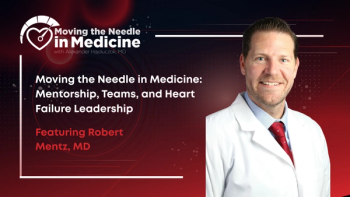
Ahead of the approval, Tatyana Kushner, MD, of Weill Cornell Medicine, joined Liver Lineup hosts Nancy Reau, MD, and Kimberly Brown, MD, to discuss the B-Well data and how HBsAg quantification may shape patient selection.⁶
Listen to the full episode
Quantitative HBsAg testing now determines which patients on antiviral therapy may qualify for bepirovirsen, a finite add-on treatment for chronic hepatitis B.
Clinicians treating
Ahead of the approval, Tatyana Kushner, MD, of Weill Cornell Medicine, joined Liver Lineup hosts Nancy Reau, MD, and Kimberly Brown, MD, to discuss the B-Well data and how HBsAg quantification may shape patient selection.⁶
Listen to the full episode
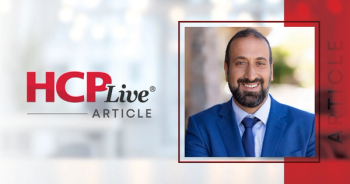
Norah Terrault, MD, MPH, professor of medicine and chief of gastroenterology and liver diseases at the Keck School of Medicine of USC, and a coauthor of the phase 3 B-Well 1 and B-Well 2 trials, discussed the data behind the approval and how clinicians can identify candidates in an interview with HCPLive.
“We really have never had a therapy that, with finite treatment, gives us this rate of S antigen loss or functional cure,” Terrault said. “We now, for the first time, can talk to patients about having the ability to do a finite amount of therapy and achieve functional cure.”
The replicate, double-blind, placebo-controlled trials enrolled adults with noncirrhotic chronic HBV infection on stable nucleos(t)ide analog (NA) therapy across 29 countries. Participants had HBV DNA <90 IU/mL and hepatitis B surface antigen (HBsAg) levels between 100 and 3000 IU/mL at baseline, and were randomized 2:1 to subcutaneous bepirovirsen 300 mg weekly or placebo for 24 weeks.²
Functional cure was defined as HBsAg loss plus HBV DNA below the lower limit of quantification, sustained for ≥24 weeks after stopping all HBV treatment.² At week 72,
During treatment, grade ≥3 adverse events occurred in 16% of bepirovirsen recipients vs 3% of placebo recipients, with ALT elevations the most common.² Bepirovirsen carries a boxed warning for serious liver reactions and thrombocytopenia.¹ Terrault discussed the drug’s
“What we’re going to have to have clinicians do, because I don’t think they’ve been doing it routinely, is to measure that level of hepatitis B surface antigen,” Terrault said.
The indication covers adults without cirrhosis who have received HBV antiviral therapy for ≥6 months, have suppressed HBV, and have HBsAg ≤3000 IU/mL as measured by an FDA-authorized test.¹ The FDA authorized the Roche Elecsys HBsAg II quant II RxDx assay alongside the drug as a companion diagnostic for patient selection.¹ Patients continue their existing antiviral therapy for ≥24 weeks after the final bepirovirsen injection and may then stop treatment if they meet specified clinical and laboratory criteria.¹
Terrault said clinicians will likely begin with patients already on NA therapy. For patients not yet on treatment, she said one option is to start NA therapy and later assess whether they qualify. Under the label, that assessment would follow ≥6 months of antiviral therapy.¹
Editor’s Note: Terrault reports relevant disclosures with GSK.