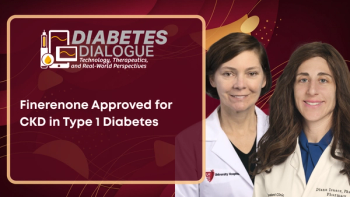
Diana Isaacs, PharmD, and Natalie Bellini, DNP, discuss the FDA's recent approval of Bayer's finerenone in concomitant CKD and T1D.
Igudesman discusses her presentation at ENDO 2026, during which she covered the importance of managing obesity with lifestyle changes in patients with T1D.
Shifting understanding and technological advancements have led to a significant change in how
Presented at the
Igudesman has been at the helm of several studies evaluating the effects and efficacy of new methods of managing aspects of T1D; in particular, a 2022 paper focused on the effects of dietary changes on the conflicting aspects of weight and glycemia. This earlier publication emphasizes the impact that non-pharmacological interventions can have on this disease.2
“I think the real issue is having tools to address the rising prevalence of obesity in patients with type 1 diabetes,” Igudesman told HCPLive in an exclusive interview. “I think that goes back to not really having a robust evidence base of weight loss interventions, including lifestyle, diet, and exercise interventions, that are effective and safe in T1D, as well as in relevant subgroups.”
In her presentation at ENDO, Igudesman highlighted multiple gaps across the spectrum of T1D knowledge, from lifestyle interventions to long-term management. She discussed the framework she had created to encapsulate these issues, titled AIM.1
The A in this framework stands for adding diet interventions, as well as other lifestyle interventions focused on weight management. In Igudesman’s previous publications, she and a team of investigators implemented interventions such as hypocaloric low carbohydrate, hypocaloric moderate low fat, and Mediterranean diets without calorie restrictions to determine their effects on weight loss in T1D. These strategies resulted in substantial weight loss and HbA1c maintenance or improvement without boosting hypoglycemia among included patients.1,2
The I in the AIM framework stands for integrating cardiometabolic risk factors beyond weight. Igudesman specifically highlights fat distribution and insulin resistance, as these individual factors can directly impact organ health outside of T1D and bring about comorbid diseases. Additionally, blood lipids and cholesterol levels can influence cardiometabolic risk.1
The M in this framework stands for measuring diet, which Igudesman identifies as an increasingly critical factor in managing obesity. While medications like GLP-1 receptor agonists are growing more and more prevalent, their effects are often reversed after treatment discontinuation if patients fail to maintain lifestyle interventions in both diet and exercise. Additionally, Igudesman highlights the historically well-supported knowledge that diet quality has a direct effect on both weight and cardiometabolic risk, making it a central component of not only obesity care, but all cardiometabolic disease.1
Igudesman also acknowledges the technological advancements that have been made in T1D management and care in recent years. Continuous ketone monitors and automated insulin delivery systems have optimized care access and simplified treatment, addressing both possible extremes of T1D between hypoglycemia and ketosis. Igudesman believes that these devices may support future research into the more behavioral methods of managing the disease, as the more dire risks are now more easily averted.1
“These new technologies like continuous ketone monitors are priming the field to prescribe adjunctive pharmacotherapies like SGLT2 inhibitors more safely, because the converse of hypoglycemia is an increased risk of ketosis,” Igudesman said. “Those are the two sides of the coin that I think we need to be thinking about, and I believe new tools are coming to market that are going to help in those efforts.”
Editors’ Note: Igudesman reports no relevant disclosures.