Key Takeaways:
- The 2027 GOLD report mostly refines existing guidance, adding more on the evidence and importance of mucus plugs.
- Revised wording around early, mild, and pre-COPD aims to encourage earlier diagnosis and trials before major lung damage.
- GOLD keeps unlicensed biologics such as tozorakimab out of its algorithm, so clinicians should follow their local licensing.
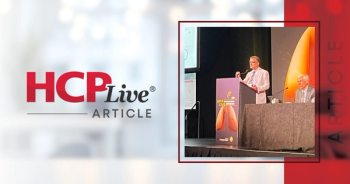
The Global Initiative for Chronic Obstructive Lung Disease (GOLD) presented its 2027 report at the GOLD 2026 COPD International Conference in Philadelphia, where Alvar Agustí, MD, and Claus F. Vogelmeier, MD, reviewed the annual update to its global strategy related to COPD diagnosis, management, and prevention.¹
The update comes about as late-stage biologic data outpace regulatory approval. Tozorakimab, an anti-interleukin (IL)-33 monoclonal antibody, reduced annualized moderate to severe exacerbations among former smokers by 29% and 34% compared with placebo in the replicate phase 3 OBERON and TITANIA trials, published in The New England Journal of Medicine.²
Results for astegolimab, an anti-ST2 monoclonal antibody blocking IL-33 signaling, were mixed. The phase 2b ALIENTO trial met its primary end point with a 15.4% reduction in annualized exacerbation rate, while the phase 3 ARNASA trial showed a numerical 14.5% reduction without statistical significance, according to Roche.³
Neither agent is licensed for COPD, creating a gap between published evidence and prescribing access for clinicians reading the 2027 report. Outside of biologic drugs, the report’s refinements touch on clinical questions common in practice, including the interpretation of mucus plugs and the definitions used for earlier forms of disease.
Dave Singh, MB BChir, MA (Cantab), MRCP, MD, FBPhS, FERS, known for his work as professor of clinical pharmacology and respiratory medicine at the University of Manchester and as a member of the GOLD Science Committee, has led more than 300 clinical trials of new treatments for asthma and COPD as medical director of the Medicines Evaluation Unit. Singh sat down with HCPLive at the GOLD 2026 COPD International Conference to discuss the 2027 report’s key refinements and how clinicians should interpret biologic evidence GOLD acknowledges but does not yet recommend:
HCPLive: What are your overall reflections on the GOLD 2027 updates?
Dave Singh, MD: The GOLD 2027 updates have included, I think, in many cases a refinement of the information that could better help the clinician. Maybe not a groundbreaking advance based on studies in the last year, but a chance to better describe areas that are common in clinical practice. So, for instance, mucus plugging. There’s been more information on that, and we’ve had a chance to put more into the document about the evidence and importance of mucus plugs.