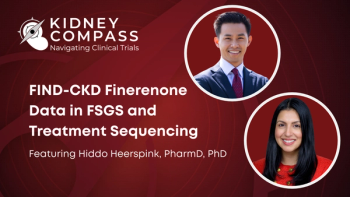
Hiddo Heerspink, PharmD, PhD, joins Brendon Neuen, MBBS, PhD, and Shikha Wadhwani, MD, MS, to unpack finerenone’s FIND-CKD data in FSGS.
A nephrologist describes how DaVita’s community CKM screenings prepare people before they ever reach a physician.
Closing the gap in early detection of
Through the program, DaVita works with local YMCAs, Bridge of Life and other community partners to offer free screenings for hypertension, diabetes and kidney disease in familiar neighborhood spaces. DaVita reported preliminary data from its 2026 events in Greater Houston and Los Angeles. Among nearly 1,000 people screened, 64% had a blood pressure reading indicating hypertension, 8% had diabetes and 6% had a result indicating stage 3a or later CKD.¹
“If you said the foundation of learning effectiveness is trust, then you’ve got a big gap to get across, if the people in the office or the people in the health care system don’t understand how big a gap it is,” Van Wyck said.
At the program’s cardiovascular-kidney-metabolic (CKM) screening events, participants arrive as members of their community rather than as patients. Volunteers at registration collect urine samples and fingersticks for creatinine and blood glucose. Nurses, dietitians and social workers then see each person in turn, filling small gaps in understanding along the way.
“By the time the person gets to the physician educator, to me, they’re not scared,” Van Wyck said. “They are open. They have learned a lot. They have not been preached to.”
Van Wyck said he introduces himself as a kidney doctor who is not the person’s doctor, then asks an open-ended question about who they are. That lets each person start where they are. He described the work as deeply fulfilling for a physician educator because it comes without electronic medical records, billing clocks or a running schedule.
In Van Wyck’s view, the value of the encounter reaches beyond the individual screened.
“This person returns to their communities, to their families and to their friends and to their neighbors and starts to spread the word because they have confidence in the place they were just at,” Van Wyck said. “I think in the long run, that may be the single most important part of that experience.”
Editor’s Note: Van Wyck reports relevant disclosures with DaVita.