FDA expands marstacimab approval to children and patients with inhibitors, backed by new BASIS trial data.

Stacey Rifkin-Zenenberg, DO, on gene therapy vs stem cell transplant and when to refer for sickle cell disease.
Curative treatment for
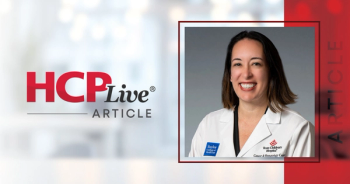
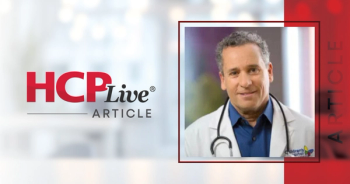
In this Q&A, Stacey Rifkin-Zenenberg, DO, MS, FAAP, FAAHPM, Section Chief of Pediatric Pain and Palliative Care and a pediatric hematologist/oncologist at Hackensack, breaks down how clinicians should approach that decision: when a matched sibling donor still makes transplant the faster route, what specific criteria determine gene therapy eligibility, and why the conversation about curative options shouldn't wait until a patient is in crisis.
Rifkin-Zenenberg also discusses what early outcomes from gene therapy are showing so far, and what questions remain unanswered as more patients move through treatment — insight that has direct implications for how and when community hematologists refer patients for specialized evaluation.
Rifkin: I think that in the last few years, gene therapy has become more common as a curative therapy that's offered to sickle cell patients. Bone marrow transplant really was the standard of care since the early '80s, starting with a patient who had sickle cell and leukemia and was cured of both. Since then, there's been a push to have patients go to bone marrow transplant, and this was for our most severe patients. Recently, the standard of care is: if you have a sibling who matches you, you have the opportunity to be transplanted. The thing is, there's a good percentage of patients that don't have a sibling and don't have a good donor, and that's where gene therapy came from. Gene therapy is using the patient as their own donor for this treatment. It's been very successful — there are a few companies doing it, there are multiple qualified treatment centers across the United States now, and most insurances will pay for it. Because of that, we hope this will become a more common therapy for patients.
Rifkin: That's a great question. Still, the standard of care is: if you have a matched sibling — meaning it's a tissue match, not a blood group match — that would be the pathway you'd go. If you do not have a matched sibling, then depending on the patient, gene therapy is definitely a great option. But gene therapy does take a longer period of time — it usually takes about nine to 12 months to actually happen. So if the patient is very sick, an allogeneic transplant may be an option because it can be done quicker. But it also depends on the patient's donors outside their family and the availability of those donors.
Rifkin: I think everybody should be talking to their patients when they're babies about both of these options, and that sickle cell patients have the opportunity in their lifetime to have either one of these options. For patients who undergo gene therapy, the criteria really is the same as when patients were undergoing clinical trials — having four painful crises or other types of acute crises that sickle cell patients can have in the last two years. Patients who have SS, who have S beta thalassemia, can also qualify for gene therapy. That really is the criteria, and that's the criteria most insurance companies are also going by. For a transplant, again, it really depends on how severe the sickle cell is, how sick the patient is, and then what donor availability is — that could be an option also.
Rifkin: There's so many. I think what we're now seeing is that most of the patients who have received gene therapy are actually transformed — their sickle cell is transformed, they don't have crises. I'd like to see how they do as they go through time with their clinical organ function, and how they're also doing from a psychosocial point of view.
Rifkin: What I would send to community hematologists is that if you have a sickle cell patient, I think it should be standard of care to discuss this when you meet them — after the newborn screen — and if you don't meet them then, whenever you do meet them, talk to them and give them the option of pursuing it if you're not at a qualified treatment center.
Editor’s Note: Rifkin reports relevant disclosures with Bluebird Bio and Vertex Pharmaceuticals Incorporated.