Articles by Iltefat Hamzavi, MD

Panelists discuss how key research gaps include pediatric studies, understanding disease progression to enable early intervention, managing acute flares, addressing cosmetic concerns from scarring and hyperpigmentation, and highlight educational resources available through the HS Foundation, medical conferences, and specialized training programs.
Panelists discuss how the pipeline includes promising therapies like sonelokimab (an IL-17A/F nanobody with potential for better tissue penetration), various JAK inhibitors, IL-1α/β inhibitors, OX40 ligand blockers, and B-cell targeted therapies that may address disease heterogeneity and offer hope for patients with treatment-resistant disease.
Panelists discuss how they monitor patients through early follow-up visits at 1 to 3 months to assess medication access, manage cutaneous adverse effects, check liver function tests, and use educational handouts and pharmacy support to counsel patients on expected benefits vs risks while maintaining treatment adherence.
Panelists discuss how JAK inhibitors show promise for specific HS phenotypes, including patients with milder disease with inflammatory nodules, those with severe trunk/buttock disease, and systemically ill patients, and may work synergistically with IL-17 inhibitors in combination therapy for the most severe cases without additive infection risk.
Panelists discuss how secukinumab’s long-term data show sustained efficacy over 2 to 4 years with low immunogenicity, allowing patients to stop and restart therapy without loss of response—unlike TNF inhibitors—and demonstrate that some initial nonresponders improve significantly with extended treatment duration.
Panelists discuss how cutaneous adverse effects from IL-17 inhibitors, including eczematous rashes and fissures occurring in about 10% of patients, can be effectively managed with topical immunomodulators, antifungal prophylaxis, and patient counseling to maintain treatment adherence and prevent discontinuation.
Panelists discuss how 2-year bimekizumab data demonstrate that nearly half of patients achieve complete clearance (HiSCR100) with peak efficacy around 6 months, sustained improvement over time, and manageable safety concerns primarily involving cutaneous reactions like eczematous rashes that can be treated topically.
Panelists discuss how the 2 approved IL-17 inhibitors—secukinumab (IL-17A) and bimekizumab (IL-17A/F)—differ in their mechanisms, with bimekizumab potentially offering faster responses and greater impact on drainage but higher cutaneous adverse effects, while secukinumab provides a slightly better skin safety profile with slower but sustained improvement.
Panelists discuss how IL-17 emerged as a key inflammatory driver in HS pathophysiology, with IL-17 inhibitors offering strong efficacy and favorable safety profiles compared with TNF inhibitors, making them increasingly preferred as first-line biologic therapy except in patients with inflammatory bowel disease.
Panelists discuss how surgery plays a critical role in removing persistent draining sinus tunnels that don’t respond fully to anti-inflammatory medications, and explain their approach of combining biologics with surgical interventions rather than sequencing treatments, stacking therapies aggressively to achieve faster disease control.
Panelists discuss how treatment approaches vary by disease severity, with biologics becoming standard for patients with moderate to severe disease while milder cases receive antibiotics, hormonal therapies, and lifestyle interventions, emphasizing the need for flare management plans and patient education about treatment expectations.
Panelists discuss how societal factors like embarrassment and limited health care access contribute to diagnostic delays of 6 to 7 years despite HS being clinically straightforward to identify and describe the profound impact on patients’ lives beyond sterile quality of life measures, including loss of relationships, careers, and life milestones.
Panelists discuss how HS develops from a combination of genetic predisposition and environmental exposures, leading to immune-based inflammation in skin folds, and explain clinical diagnosis methods, including Hurley staging and assessment of inflammatory lesions.
This September 22 Savvy Conversations episode features a conversation on vitiligo and its impact on patients of diverse skin types.

Iltefat Hamzavi, MD, explores key areas of patient communication that may shape adherence and outcomes in patients with vitiligo.

Seemal R. Desai, MD, examines the mechanisms of JAK inhibitors and why these agents play an important role in the treatment of vitiligo.
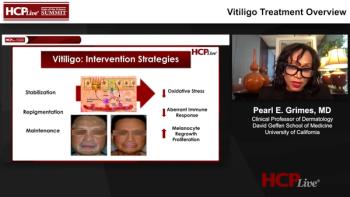
Pearl E. Grimes, MD, discusses intervention strategies for vitiligo, including stabilization, repigmentation, and maintenance. She also explores factors that impact therapeutic outcomes.

John E. Harris, MD, PhD, reviews factors that shape prevalence of vitiligo and also explores the impact of vitiligo on patient quality of life.
