

Both antihistamines are indicated for treatment of chronic idiopathic urticaria, yet olopatadine demonstrates better clinical improvements and fewer adverse events.
Jonathan Alicea is an assistant editor for HCPLive. He graduated from Princeton University with a degree with English and minors in Linguistics and Theater. He spends his free time writing plays, playing PlayStation, enjoying the company of his 2 pugs, and navigating a right-handed world as a lefty. You can email him at [email protected].
Both antihistamines are indicated for treatment of chronic idiopathic urticaria, yet olopatadine demonstrates better clinical improvements and fewer adverse events.

Current therapies focus on relief of symptoms, but there is still an unmet need to address and target the molecular defects of hypertrophic cardiomyopathy.

The methodologies used to screen sickle cell disease are also able to detect alpha-thalassemia, which is currently not a core condition of the United States Recommended Uniform Screening Panel.

The new drug allows for flexible dosing so as to address individual patient needs.

Countries, including the USA, have shown a stagnation or a small increase of deaths linked to NCDs.

Manan Pareek, MD, PhD gives an overview about what is currently known about COVID-19 and cardiovascular risk.

At recommended adherence rates, automatic AI screening technology for diabetic retinopathy is a preferred strategy over conventional eye care professional screening.

Investigators report on a post-hoc analysis of the EMPA-REG OUTCOME trial that assesses the efficacy of the SGLT-2 inhibitor in patients with obstructive sleep apnea.

These guidelines set by ESC and EAS 2019 established treatment goals for LDL-C, non-HDL-C, and Apo-B in patients at high risk for cardiovascular disease.

The new equation model has shown to be more accurate than the Framingham Lifetime Risk equation and Pooled Cohort Equation.
New data shows that high BMI individuals who were in the lowest polygenic score quintile had a 5-fold greater risk of diabetes than those with low BMI and a high polygenic score.

According to late breaking data, younger women exhibit a decreased risk for heart attack mortality due to estrogen’s protective effect

This underscores a need to reinvent cities and address environmental risk factors that are associated with increased risk for cardiovascular diseases.

Studies have shown that heat-related cardiovascular events have increased over recent years.
New cohort data shows that at least 40% of COVID-19 positive patients had CV risk factors, such as diabetes and hypertension.

Dapagliflozin and empagliflozin are shown to minimize CV events in patients with heart failure and a reduced ejection fraction.

Investigators did note that belief in statin use was weaker in patients with confirmed statin associated muscle symptoms when compared with non-SAMS patients.
Accurately assessing lifetime risk in patients with developing atherosclerosis may help reduce CV disease risk earlier in life.

The CLEAR Harmony open-label extension study reports on the long-term effects of BA treatment for hypercholesterolemia.

Up to 91% patients who received maximum dosage of the drug achieved a triglyceride level of <150 mg/dL, according to new data presented at ESC 2020.

Investigators simulated baseline CV risk and predicted potential risk reduction among a cohort of evolocumab users across Europe.

COVID-19 positive patients with COPD demonstrated a greater risk for hospitalization, ICU admission, and need for invasive mechanical ventilation compared with non-COPD patients.

J. John Mann, MD, discusses potential next steps for further assessment of ketamine's antidepressant effects.
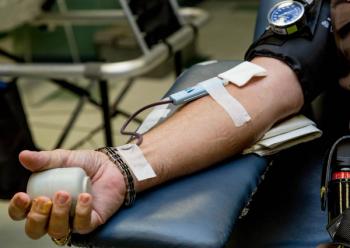
Blood supply shortages have underscored a need to develop new strategies which limit transfusions and triage blood products.
This is the first and only FDA-approved cysteamine eye drop formulation, which is self-applied 4 times daily during waking hours.

In the placebo-controlled study, both treatment groups experienced similar rates of severe asthma worsening and mean time to exacerbation.
J. John Mann, MD, discusses findings in a new study that uncovers the mechanisms behind Ketamine's antidepressant effect.
J. John Mann, MD, compares esketamine nasal spray to intravenous administration and explains the drawbacks of the newly approved treatment method for MDD.

Results of the study suggest that patients with premature and extremely premature ASCVD are at risk for a higher accrued lifetime morbidity.

There was no observed difference in proportion of disease progression between sildenafil combined with pirfenidone and placebo treatment groups.