

Positive Phase 1b/2a trial results for RT001 in patients with Friedreich’s ataxia were published this morning in the online journal Movement Disorders.
Positive Phase 1b/2a trial results for RT001 in patients with Friedreich’s ataxia were published this morning in the online journal Movement Disorders.

A survey recently conducted among adults with hereditary spastic paraparesis showed that constipation, alternate constipation and diarrhea, fecal incontinence, and voiding dysfunction are among the considerable problems faced by the patient population.

Rigel announced that the U.S. FDA approved fostamatinib disodium hexahydrate (Tavalisse) tablets for the treatment of thrombocytopenia in adult patients with chronic immune thrombocytopenia.

Burosumab (Crysvita) was approved this morning by the U.S. FDA to treat adults and children ages 1 year and older with x-linked hypophosphatemia (XLH), a rare genetic variation of rickets.

This morning, Shire announced the expanded U.S. FDA approval of Vonvendi, a recombinant von Willebrand factor, for the treatment of bleeding in adults with von Willebrand disease in surgical settings.
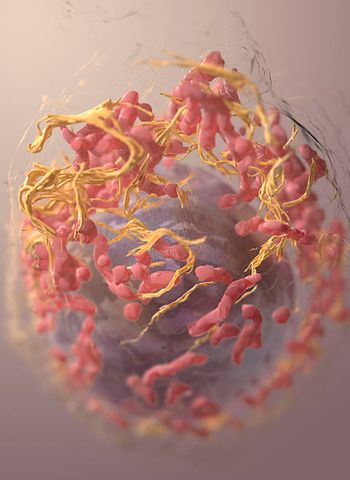
Data presented at the 2018 American Association for Cancer Research Annual Meeting show that a new combination could provide long-term, systemic responses in patients with advanced melanoma.

This morning, the U.S. FDA provided full approval to Boehringer Ingelheim for idarucizumab (Praxbind), its specific reversal agent for dabigatran etexilate mesylate (Pradaxa).

This morning, Galapagos announced the design of its global Phase 3 program of GLPG1690 in patients with idiopathic pulmonary fibrosis (IPF).

The angle of the superior cerebellar artery outlet can be useful for monitoring the progression of basilar artery dolichoectasia in patients with Pompe, according to results in the Orphanet Journal of Rare Diseases.

Positive clinical results from Phase 1 and Phase 1/2 open-label extension studies of givosiran were presented by Alnylam at the European Association for the Study of the Liver 53rd Annual International Liver Congress.

On Thursday, GlaxoSmithKline (GSK) announced that it will be transferring its portfolio of approved and investigational gene therapies to Orchard Therapeutics in exchange for a 19.9% stake in the company.

NGM Bio announced this morning that it will be highlighting data from its Phase 2 clinical trial of NGM282 in patients with primary sclerosing cholangitis at The International Liver Congress.

The U.S. FDA granted Fast Track Designation for RP6530 (Tenalisib). Rhizen Pharmaceuticals S.A. is developing the drug for the treatment of patients with relapsed and/or refractory cutaneous T-cell lymphoma.

Marshall Summar, chief of the Division of Genetics and Metabolism at Children’s National Health system, discusses the success of the Children’s National Rare Disease Institute in 2018.

Pfizer announced that it has begun a Phase 1b clinical trial for PF-06939926, its mini-dystrophin gene therapy candidate, intended for boys with Duchenne muscular dystrophy.

The Phase 2 CARDINAL study is evaluating bardoxolone methyl (bardoxolone) in patients with chronic kidney disease because of Alport syndrome.
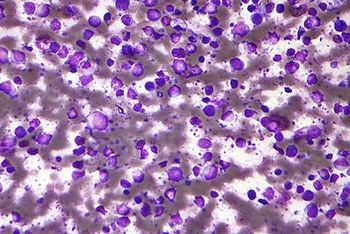
Results from a new study led by researchers in the CCR at the NCI could potentially explain why some patients with diffuse large B-cell lymphoma respond to treatment and others don’t.

Results from a study published in Nature Communications offer potential treatment targets for melorheostosis, often referred to as “dripping candle wax” bone disease.

Data from the article, “Fabry disease in the Spanish population: oberservational study with detection of 77 patients,” suggests that enzymatic screening for Fabry disease in risk populations assisted in identifying undiagnosed patients.

This morning, it was announced that everolimus (Afinitor DISPERZ) has become the first therapy to be specifically approved by the U.S. FDA to treat patients aged 2 years and older with tuberous sclerosis complex (TSC)-associated partial-onset seizures.

André the Giant, examines the life and work history of the WWE Hall of Famer. Unbeknownst to many, his size was the result of gigantism, a disease caused by excess growth hormone. The condition led to his eventual diagnosis with acromegaly, a rare endocrine disorder.

A new provisional patent was filed by Nutra Pharma Corporation to protect the intellectual property surrounding their development of a drug intended to treat amyotrophic lateral sclerosis.

Early this morning, Reviva Therapeutics announced that the U.S. Food and Drug Administration has granted orphan drug designation to its clinical stage drug candidate RP5063, in development for the treatment of idiopathic pulmonary fibrosis.

When taken early in a pregnancy, mifepristone can end a pregnancy that is less than 49 days along. Another notable trait of the drug, though, is its ability to control the high blood sugar in patients with Cushing syndrome who have type 2 diabetes and have either failed surgery or are not candidates for it.

Rare Disease Report tries to keep its audience at the forefront with the latest news from the hematological and oncological spaces. This new infographic provides 5 little-known facts about MPNs that might not necessarily be covered in news articles from RDR or other media outlets.
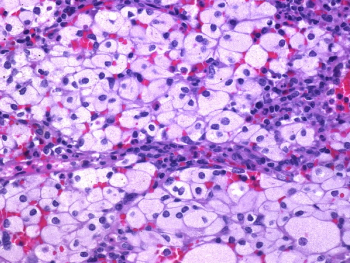
Tarekegn Geberhiwot, MD, of the Institute of Metabolism and Systems Research and colleagues had an article published in the Orphanet Journal of Rare Diseases, outlining the development of clinical management recommendations for Niemann-Pick disease type C.
Molecular characteristics that link the genomic profiles of squamous cell carcinomas from 5 areas of the body have been uncovered by a team of researchers supported by the NIH.

Treatment with nivolumab, followed by ipilumab, produced significantly higher overall survival and objective response rates than sunitinib alone among intermediate- and poor-risk patients with previously untreated advanced renal-cell carcinoma.

Researchers Clive Svendsen, PhD and Samuel Sances of the Cedars-Sinai Board of Governors Regenerative Medicine Institute in Los Angeles note that spinal neuron development can be initiated by the human brain’s tiniest blood vessels.