

Patients taper their own inhalers, and payers approve on exacerbations alone. The panel closes on where the evidence runs out and where documentation and advocacy take over.
Patients taper their own inhalers, and payers approve on exacerbations alone. The panel closes on where the evidence runs out and where documentation and advocacy take over.
With an anti-alarmin option that does not require a biomarker, selection could have become simpler. Dr. Hanania explains why it stays multifactorial, and why he waits before judging response.
Clinicians define control as no exacerbations and no hospital stays. Dr. Ross argues patients define it differently, and that the gap between the two should drive treatment decisions.
Evidence places biologics at GINA Step 5, and that is where reimbursement holds them. Dr. Hanania and Dr. Wechsler examine the case for moving earlier, and what it would require.
Seven approved agents across four targets, spanning two decades of approvals. Dr. Wechsler maps the class, then names the 40% of exacerbations it still does not prevent.
Biologics have displaced a procedure that once filled the fellowship schedule. The panel weighs what replaced aspirin desensitization, and how sinus surgery rates changed with it.
Not every patient with nasal polyps is allergic, and no test reliably separates those who are. The panel discusses how referral patterns skew what each specialist believes.
Anatomy separated the sinuses from the lungs, and specialty training reinforced the split. The panel makes the case that the evidence describes a single organ with one disease process.
The assumption that anti-alarmin therapy is the answer for low T2 disease meets the trial evidence. Dr. Wechsler walks through where the efficacy signal actually concentrates.
Alarmins are now leading therapeutic targets, yet no biomarker measures them. Dr. Hanania explains what blocking TSLP reveals downstream, and where the real measurement gap lies.
Dr. Wechsler and Dr. Ross describe how they read overlapping results and what they weigh when no single marker dominates.
A treatable trait is easier to endorse than to define. The panel works through what qualifies, and why extrapulmonary traits deserve the same attention as the airway itself.
Phenotype, endotype, and treatable trait are used loosely and often interchangeably. The panel defines each term and tests where the boundaries between them break down.
One cytokine sits above the rest. Dr. Hanania explains why TSLP earns the label of master regulator, and why blocking it reaches inflammation that current therapies cannot.
The airway epithelium is no longer understood as a passive wall. The panel traces how a barrier is now thought of as an immune organ, and what that shift means for severe asthma.
Hanania explains how IL-33 inhibitors including itepekimab and astegolimab may uniquely benefit COPD exacerbation.
Following CHEST 2025, Hanania discusses the progress being made toward more tailored, patient-oriented care in airway disorders.
Hanania discusses the pooled BOREAS and NOTUS post hoc data showing dupilumab protects lung function before and after COPD exacerbations.
Hanania discussed the rationale and findings of the BOREAS and NOTUS studies.
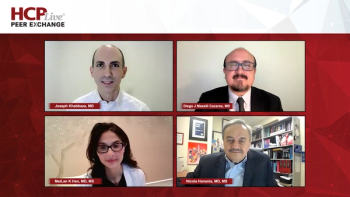
Panelists discuss the ongoing challenge of engaging patients, providers, and families in understanding the long-term risks of frequent oral corticosteroid use in chronic obstructive pulmonary disease (COPD), emphasizing the importance of clear communication about serious adverse effects—including mental health and cardiovascular risks—and the role of electronic medical records in early intervention; they note that patients often feel well between exacerbations and may undervalue steroid-sparing strategies, so personalized education focusing on preventing future harm is key, and express optimism that new biologics offer promising options to reduce exacerbations and steroid dependence, highlighting the evolving, hopeful landscape of COPD care.
Panelists discuss the introduction of 2 biologics for patients with chronic obstructive pulmonary disease (COPD) with high blood eosinophils and frequent exacerbations as a major advancement, highlighting their ability to reduce exacerbations and steroid use; they note differences in dosing schedules, inflammatory markers, and patient preferences that influence therapy choice, emphasize the role of shared decision-making amid cost and insurance challenges, and acknowledge that trial and error may be needed to personalize treatment while calling for more research to optimize biologic use.
Panelists discuss the importance of early identification of patients with chronic obstructive pulmonary disease (COPD) at risk for exacerbations through targeted clinical questioning about recent hospitalizations, emergency visits, and steroid or antibiotic use, noting that many patients underreport or misunderstand exacerbations; they emphasize patient education, improved communication across multiple providers, and the integration of electronic medical records and patient portals as key strategies to enhance monitoring, ensure timely treatment escalation, and ultimately reduce exacerbation frequency and severity.
Panelists discuss common barriers to timely escalation of chronic obstructive pulmonary disease (COPD) treatment, including infrequent follow-up visits, fragmented care across multiple providers, and delayed communication of exacerbations or hospitalizations, as well as therapeutic inertia stemming from competing clinical priorities and insufficient patient education; they emphasize the need for integrated, proactive strategies such as shared electronic medical records, rapid posthospitalization follow-up, care coordination, and enhanced patient engagement to overcome these challenges and optimize treatment adjustments.
Panelists discuss the critical factors guiding therapy escalation in chronic obstructive pulmonary disease (COPD), emphasizing thorough evaluation of symptoms, exacerbation history, and medication adherence; they highlight the foundational role of standard inhaled therapies and nonpharmacologic interventions like pulmonary rehabilitation and smoking cessation, while noting that newer treatments, including biologics, are reserved for patients with persistent exacerbations despite optimized care, with decisions shaped by shared decision-making and personalized considerations such as inhaler technique and delivery method to improve outcomes and quality of life.
Panelists discuss the nuanced relationship between chronic obstructive pulmonary disease (COPD) and asthma through the lens of type 2 inflammation, emphasizing that while both diseases share inflammatory pathways and a treatable trait, they remain distinct conditions with differing manifestations and treatment responses; they highlight that asthma-COPD overlap affects 15% to 20% of patients, but type 2 inflammation is a separate COPD subtype rather than evidence of dual diagnosis, underscoring the importance of precise phenotyping to guide personalized treatment strategies that balance efficacy, safety, and patient-specific factors.
Panelists discuss the prevalence and complexity of type 2 inflammation in chronic obstructive pulmonary disease (COPD), noting that blood eosinophil counts—using thresholds of 150 to 300 cells/µL—identify roughly 30% to 50% of patients with this phenotype, while emphasizing that not all elevated eosinophil cases reflect true type 2 inflammation; they highlight additional markers like allergen sensitization and immunoglobulin E (IgE), the association of type 2 inflammation with increased symptoms and exacerbations, and the ongoing need for refined phenotyping and targeted therapies to address the heterogeneity of COPD inflammation.
Panelists discuss the emerging recognition of type 2 inflammation in a subset of patients with chronic obstructive pulmonary disease (COPD) , highlighting differences from asthma in eosinophil thresholds and therapeutic responses, the roles of key cytokines IL-4, IL-13, and IL-5 in driving airway inflammation and remodeling, and the promise and challenges of targeting these pathways with biologics to improve outcomes while emphasizing the need for further research to understand the distinct inflammatory mechanisms in COPD.
Panelists discuss the variability of blood eosinophil counts in chronic obstructive pulmonary disease (COPD), emphasizing the impact of factors such as corticosteroid use, infections, comorbidities, and smoking on their interpretation, and highlight the importance of considering these influences and monitoring trends over time to guide personalized treatment decisions effectively.
Panelists highlight that while blood eosinophil counts are valuable for guiding chronic obstructive pulmonary disease (COPD) treatment, real-world challenges like fluctuating levels, incomplete symptom tracking, and fragmented care hinder their consistent use, underscoring the need for better data integration and clinician education.
Panelists discuss the growing role of blood eosinophils as a key biomarker in chronic obstructive pulmonary disease (COPD) management, highlighting their utility in guiding inhaled corticosteroid and biologic therapy decisions, the benefits of tracking longitudinal trends to improve accuracy, and the potential for integrating emerging biomarkers like FeNO to further personalize treatment despite current limitations.

May 17th 2024
May 24th 2024
May 17th 2024

