






















































I thought I lost a patient a few weeks ago. No, he didn't die, but after his office visit, I had the distinct impression that he might not come back. My job is to take care of my patients' health. But sometimes I'm just the messenger.
I thought I lost a patient a few weeks ago. No, he didn't die, but after his office visit, I had the distinct impression that he might not come back. My job is to take care of my patients' health. But sometimes I'm just the messenger.

Robert Matheny, MD, discusses a technology that enables a person's own stem cells to repair damaged cardiovascular tissues by serving as scaffolding.
A novel mitral valve clip was proven to be as safe and effective as open-chest surgery in selected patients with mitral valve regurgitation.
There's a concept in healthcare insurance where all risks in a community of interest, a market, are pooled - community rating; and then there's experience rating where the healthy are advantaged in more ways then one and the sick are marginalized, paying disproportionately more into the pool just to have a seat at the table.

Splenic artery aneurysm is the most common form of visceral artery aneurysm. Most present asymptomatically with incidental findings on CT or ultrasound which are diagnostic, although about 20% present with vague left upper quadrant abdominal pain. Treatment should be aimed at preserving splenic function whenever possible and endovascular treatments offer a less invasive option to patients than open surgical ligation or resection.
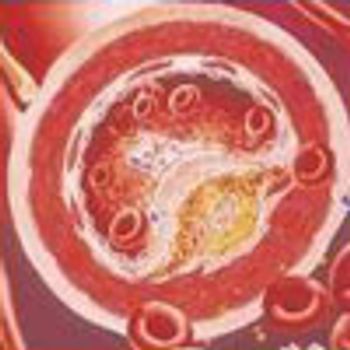
This CME activity examines the science of atherosclerotic disease development and discusses the cost-effective benefits of primary and secondary prevention of atherosclerotic disease.
Using a mouse model of atrial fibrillation, researchers at Chiba University Graduate School of Medicine, Japan, have discovered that mast cells contribute to atrial fibrosis and atrial fibrillation.
As the mean BMI in the U.S. edges higher, I thought that a discussion of 2 recent analyses regarding lipids was pertinent to the season.

Below are select statistics on the prevalence, incidence, and mortality rates associated with angina pectoris in the US.
A study from Johns Hopkins has found that "routine prescription of extended-release niacin, a B vitamin (1,500 milligrams daily), in combination with traditional cholesterol-lowering therapy offers no extra benefit in correcting arterial narrowing and diminishing plaque buildup in seniors who already have coronary artery disease."

In his July 2009 editorial, Dr. Robert C. Like, MD, MS, wrote about the importance of creating "communities of practice" and the increasing role of the Web and collaboration in facilitating the development of learning networks. Here, he continues this discussion by sharing some perspectives from the field of library science about the impact of the Internet on clinical practice and public health.
The results of a study that looked at the competing effects on left ventricular hypertrophy (LVH) of hypokalemia and treatment with hydrochlorothiazides (HCTZ) in hypertensive patients were presented Monday, November 15 at the American Heart Association Scientitifc Sessions 2009.

Researchers are finding that interactive game systems like Nintendo's Wii are especially helpful for people with chronic health conditions. Playing the games increases physical activity and can even improve the ability to care for oneself.

The weight gain that is often seen in children taking antipsychotic medications can also have a negative impact on metabolic factors in those children.
What is the best way to draw an activated partial thromboplastin time when a patient is receiving heparin therapy and has a central venous catheter?

"The Vine that Ate the South" may one day be known as "The Vine that Fought the Metabolic Syndrome," according to University of Alabama at Birmingham researchers.

Scientists from the University of Heidelberg Hospital have discovered why thicker blood may simultaneously increase and decrease an individual’s risk for heart attack and stroke.

The decreasing age of onset of hypertension in the general population paired with increasing life expectancy has resulted in an increased incidence of this disorder, which will likely culminate in higher rates of morbidity and mortality in the future.

Drug-induced diseases and serious adverse drug effects can alter therapeutic plans and greatly affect patient outcomes. Many medications are known to have a narrow therapeutic index and to require close patient monitoring.
This week the news is abuzz with the potential FDA crack-down on some over-the-counter pain medications like Tylenol, as well as Tylenol-containing prescription medications.

A 68-year-old gentleman with known end-stage renal disease and chronic atrial fibrillation is being evaluated in the emergency department because of generalized weakness for 24 hours.

Official reports note that Michael Jackson went into cardiac arrest before being rushed to the hospital.
The questions asked in this article can assist candidates prepare for the Maintenance of Certification Exam in Cardiovascular Disease.

Cardiogenic shock continues to be a major complication of acute myocardial infarction, with in-hospital mortality approaching 70% to 80% for patients who are managed medically.

The authors report an unusual case of a patient presenting with such severe intermittent vasospastic constriction of the brachial artery that it resulted in symptoms of decreased blood supply.