
News|Videos|October 20, 2026
4 Lines of Evidence Behind Dropping TB Testing for IL-17, IL-23 Inhibitors
Author(s)Andrew Blauvelt, MD , Joseph Merola, MD, MMSc
Fact checked by: Tim Smith
Basic science, trials, real-world data, and FAERS reports show little TB reactivation risk with IL-17 and IL-23 inhibitors, supporting new NPF/IPC guidance.
Advertisement
Episodes in this series
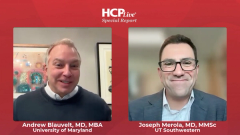
A joint position statement from the National Psoriasis Foundation (NPF) and the International Psoriasis Council (IPC) addresses tuberculosis (TB) testing with interleukin (IL)-17 and IL-23 inhibitors. It draws on 4 distinct bodies of evidence. In the second segment of this HCPLive Special Report, 2 of the statement’s co-authors walked through that evidence and how newer trial designs are reinforcing it.
They were Andrew Blauvelt, MD, MBA, adjunct professor in the Department of Dermatology at the University of Maryland School of Medicine, and Joseph F. Merola, MD, MMSc, chair of the Department of Dermatology at UT Southwestern Medical Center.
What Do Basic Science and Clinical Trials Show About TB Risk?
Blauvelt explained that the authors first reviewed basic science data, including mouse models. Some studies have hinted that IL-17 or IL-23 may contribute to TB pathogenesis, but he said that evidence does not hold up under close review. When IL-12 signaling is intact, it appears to be the dominant factor in TB control. IL-23 appears to play a role only when IL-12 is deficient.
The group then examined clinical trial data across all available IL-17 and IL-23 inhibitors. Blauvelt acknowledged a limitation: trial participants are selected. They must test negative for TB or be treated for latent TB infection (LTBI) before enrolling.
How Do Real-World and Postmarketing Data Support the Statement?
To address that gap, the authors turned to real-world evidence, which has grown substantially in recent years. Blauvelt noted that the passage of time is a strength of the paper, since the data needed to support the statement did not exist earlier. He said cases are essentially absent across that literature. The single reported case occurred with an IL-17 inhibitor 14 months after starting treatment, and that rate falls below the background rate of TB reactivation in the general population. The final component was the FDA Adverse Event Reporting System (FAERS), which likewise yielded virtually no cases.
How Are Newer Trials Changing the Picture?
Merola added that a prospective element now strengthens this picture. Trials of icotrokinra, an oral targeted peptide that blocks the IL-23 receptor, allowed patients with a history of LTBI to stay on treatment, and no reactivation was observed. He said the resulting label makes the drug easier for both patients and prescribers to use. He hopes this approach will influence how future studies are designed.
Merola closed the segment with a question about IL-12/23 inhibitors such as ustekinumab. These drugs were not covered in the statement but may see renewed use as biosimilars enter the market.
Advertisement
Related to this article
Yoseph Dalia, MD, discusses diagnosing and treating pseudofolliculitis barbae, its occupational impact, and barriers to care in skin of color.
Catch up on any data and key clinician perspectives presented at the Heart Failure Society of America Annual Scientific Meeting 2026.
Diana Isaacs, PharmD, and Natalie Bellini, DNP, discuss a major breakthrough with the Twiist insulin pump and the recent ADA/EASD T2D guidelines.
At Fall Clinical 2026, Aaron S. Farberg, MD, shares how gene expression testing guides melanoma and atopic dermatitis care and what Ameluz PDT adds.
A roundup of updates spanning PsO, atopic dermatitis, alopecia areata, vitiligo, palmoplantar pustulosis, cutaneous sarcoidosis, and discoid lupus.
FDA approves bepirovirsen after phase 3 trials show 19% achieved functional cure at 24 weeks off all hepatitis B treatment.
Preview 8 late-breaking studies and HCPLive's investigator interviews at ASN Kidney Week 2026, spanning IgAN, dialysis, transplantation, and CKD.
Todd Schlesinger, MD, discusses Ameluz PDT for sBCC, adjuvant cemiplimab, remibrutinib for symptomatic dermographism, and nonsurgical skin cancer care.
Advertisement
Advertisement