
Opinion|Videos|July 22, 2026
Building Therapeutic Alliance and Addressing Access Barriers in CSU
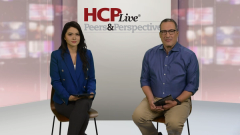
In this episode titled “Building Therapeutic Alliance and Addressing Access Barriers in CSU,” the panel focuses on practical strategies for empowering both patients and clinicians earlier in the CSU care journey.
Advertisement
Episodes in this series
Segment summary: In this episode titled “Building Therapeutic Alliance and Addressing Access Barriers in CSU,” the panel focuses on practical strategies for empowering both patients and clinicians earlier in the CSU care journey. Effective communication is framed around three things patients want when they present with CSU: relief of symptoms, an explanation for why this happened, and a sense of control over their condition. Confidently explaining that CSU is autoimmune rather than allergic is emphasized, since most patients arrive assuming a food allergy is to blame.
Rather than directly contradicting that belief, the panel validates it by introducing newer evidence that diet does play a role, but through salicylate sensitivity rather than true allergy; patients are advised to avoid NSAIDs, aspirin, and other salicylate-containing products, acetaminophen remains safe, and following a low-salicylate diet has been shown in a randomized, placebo-controlled trial to reduce disease severity. This reframing builds a therapeutic alliance by addressing all three of the patient’s underlying concerns without delaying initiation of effective therapy, while still allowing referral to allergy specialists for patients who request it.
The conversation closes on real-world access barriers: it is considerably easier to secure the dermatology-focused biologic and the oral BTK inhibitor for patients because office staff are well versed in those approval processes, whereas the allergy-focused anti-IgE biologic is comparatively harder to navigate due to limited internal experience with its support programs. Both speakers note the added logistical burden of mandated post-injection observation periods for the biologics, despite the absence of any reported anaphylaxis cases in CSU patients receiving these therapies. The episode reinforces that addressing patient concerns directly and removing avoidable access friction are just as important to good outcomes as selecting the right medication. In the next episode, “Emerging Therapies on the Horizon for CSU,” the panel previews investigational agents in the CSU pipeline, including a novel mast cell-depleting antibody and next-generation BTK inhibitors.
Advertisement
Related to this article

A new analysis of 4 major trials has revealed the association between lower SBP and higher TTR and the risk of recurrent stroke after intracerebral hemorrhage.

Data from the phase 2a BIRCH trial demonstrated the treatment’s improvements in mRS and NLR, positioning it for a late-phase trial in the future.

A new analysis of the BRIDGE-TNK trial has demonstrated that patients with cardioembolism are more likely to derive benefit than those with large artery atherosclerosis.
Check out highlights from news published on day 3 of CHEST 2026, spanning COPD, pulmonary embolism, pulmonary hypertension, and AI.
At CHEST 2026, Retno Ariza Soemarwoto, MD, discusses curcumin’s effect on IL-17 in COPD, bioavailability, and what a guideline-ready trial needs.

FDA approves bepirovirsen after phase 3 trials show 19% achieved functional cure at 24 weeks off all hepatitis B treatment.
Preview 8 late-breaking studies and HCPLive's investigator interviews at ASN Kidney Week 2026, spanning IgAN, dialysis, transplantation, and CKD.

Todd Schlesinger, MD, discusses Ameluz PDT for sBCC, adjuvant cemiplimab, remibrutinib for symptomatic dermographism, and nonsurgical skin cancer care.
Advertisement
Advertisement
Trending on HCPLive
1
FDA Approves Bepirovirsen for Chronic Hepatitis B
2
VERDICT Links Vedolizumab Disease Clearance to Fewer UC Complications
3
5-Year ADlong Data on Lebrikizumab for Eczema, With Stephan Weidinger, MD, PhD
4
ASN Kidney Week 2026 Preview: 8 Late-Breakers We’ll Unpack With the Investigators
5