Real-world COMPETE SWITCH CV data at EASD 2026 linked semaglutide 2 mg escalation to 6% lower MACE risk vs switching to tirzepatide in T2D.
Our Endocrinology Month in Review for December 2024 highlights recent headlines in diabetes and endocrinology and 4 new episodes of Diabetes Dialogue.
As the year met its end in December,
December highlights included new data on the benefit of tirzepatide for obesity management, particularly over semaglutide, as well as mifepristone’s effect on hemoglobin A1c (HbA1c) in difficult-to-control type 2 diabetes (T2D), and two new US Food and Drug Administration (FDA) approvals, including the first daily generic glucagon-like peptide-1 receptor agonist (GLP-1 RA) for T2D and a new treatment for a rare genetic endocrine condition.
On December 04, 2024, Eli Lilly and Company announced tirzepatide (Zepbound) bested semaglutide 2.4 mg (Wegovy) for weight loss in the head-to-head SURMOUNT-5 trial.These results showed tirzepatide contributed to a mean body weight reduction of 20.2% vs 13.7% achieved with semaglutide, representing a 47% greater relative weight loss at 72 weeks.
Tirzepatide also bested semaglutide on 5 key secondary endpoints, with 31.6% of people taking tirzepatide achieving a body weight reduction of at least 25% compared to just 16.1% of those taking semaglutide, according to the company.
On December 12, 2024, Corcept Therapeutics announced the primary endpoint was met in the treatment phase of the randomized, placebo-controlled Phase 4 CATALYST trial, showing the benefit of mifepristone (Korlym) in patients with hypercortisolism and difficult-to-control T2D.
CATALYST’s initial phase found hypercortisolism exceedingly common, with approximately 1 in 4 patients exhibiting endogenous hypercortisolism. Those treated with mifepristone in the second phase achieved clinically meaningful and statistically significant improvements in HbA1c, representing a decrease from the baseline of 1.47%, compared with 0.15% for placebo (placebo-adjusted reduction, 1.32%; P <.0001).
On December 13, 2024, the FDA approved Neurocrine Biosciences’ crinecerfont (Crenessity), a new treatment to be used in conjuction with glucocorticoids for classic congenital adrenal hyperplasia (CAH) in adults and children aged 4 years and older. Based on two randomized, double-blind placebo-controlled trials, crinecerfont demonstrated significant reductions in glucocorticoid doses while maintaining control of androstenedione levels.
This approval marked an important step in advancing treatment options for individuals with the rare genetic disorder. The drug label included a warning for acute adrenal insufficiency or adrenal crisis if a patient does not receive an adequate dose of glucocorticoid replacement therapy in situations linked to an increased cortisol need.
On December 23, 2024, the FDA approved the first once-daily generic GLP-1 RA referencing liraglutide 18 milligram/3 milliliter (Victoza), indicated for improving glycemic control in adults and pediatric patients aged 10 years and older with T2D as an adjunct to diet and exercise. Awarded to Hikma Pharmaceuticals, this approval marked the second generic approval for a GLP-1 receptor agonist in 2024, following a November approval for a generic referencing exenatide (Byetta).
Liraglutide was initially approved as an adjunct to diet and exercise to improve blood sugar control in adults with T2D based on the landmark LEAD program, with a label expansion in 2017 for reducing the risk of 3 major adverse cardiovascular events and an additional expansion in 2019 for treatment of pediatric patients 10 years or older with T2D.
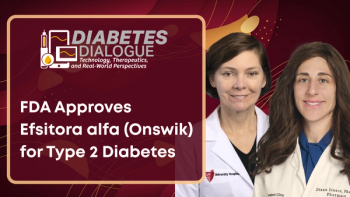
In December 2024, HCPLive Endocrinology launched 4 new episodes of our flagship podcast, Diabetes Dialogue: Technology, Therapeutics, & Real-World Perspectives. These episodes highlighted clinically relevant updates in diabetes technology, a historical perspective on the 25th anniversary of continuous glucose monitoring (CGM), how practice updates and new technologies reshaped CGM use in 2024, and the efficacy and safety of new drugs for obesity management.
In this episode, hosts discuss the collaboration between Dexcom and Oura Ring, expanded compatibility of Omnipod 5 with Freestyle Libre 2, and Simplera CGM integration with the InPen.
In celebration of surpassing 100 episodes, Diabetes Dialogue hosts sat down with Irl Hirsch, MD, a professor of medicine at the University of Washington to discuss the 25th anniversary of CGM in 2024, focusing on the revolutionary impact on diabetes care since its introduction by MiniMed in 1999.
In a special episode of Diabetes Dialogue for our This Year in Medicine series, our hosts recapped headlines and practice updates related to continuous glucose monitoring (CGM) from the past year, with a focus on regulatory news from Medtronic, Dexcom, Abbott, and Senseonics.
In this episode, hosts explored the efficacy of MariTide for obesity management, the head-to-head comparison of semaglutide vs. tirzepatide in SURMOUNT-5, and concerns about GLP-1 agonist compounding.